

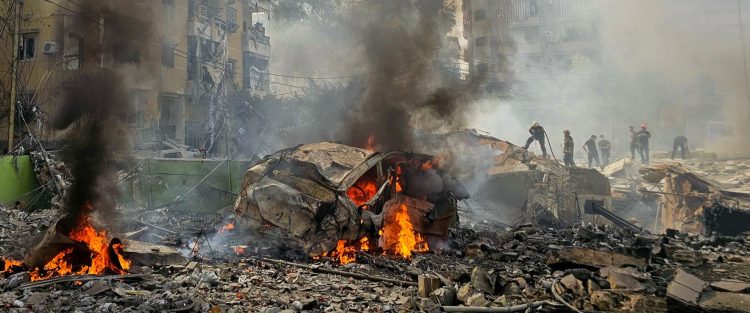
Israel Strikes Deep Into Lebanon
On April 27, 2025, the Israel Defense Forces (IDF) carried out a rare airstrike deep inside Beirut, Lebanon, targeting a Hezbollah weapons facility. The strike hit a warehouse in the Dahiyeh district, an area long known as a Hezbollah stronghold. Israeli Prime Minister Benjamin Netanyahu and Defense Minister Israel Katz confirmed that the facility was being used to store precision-guided missiles, which they said posed a direct threat to Israel’s security.
Before the strike, the IDF issued evacuation warnings to residents in the nearby Hadath neighborhood, advising civilians to move at least 300 meters away from the targeted site. Video footage from the scene showed large columns of smoke rising after the attack. Lebanon’s Civil Defense later reported that fires caused by the strike were put out and, importantly, that no injuries were reported.
So far, Hezbollah has not issued a public response to the strike. Lebanese President Joseph Aoun, however, quickly condemned the attack and called on the United States and France to intervene and pressure Israel to stop its military actions, claiming that continued strikes threaten to destabilize the region.
This latest strike comes despite a ceasefire agreement that was reached in November 2024, which had led to a sharp drop in hostilities between Israel and Hezbollah. Although Israeli forces have maintained a near-daily operational tempo in southern Lebanon, attacks inside Beirut itself have been rare. This was only the third such strike in the Lebanese capital since the ceasefire took effect. The last significant strike in Dahiyeh happened earlier this month on April 1.
Israeli officials made it clear they will not allow Hezbollah to stockpile weapons in Beirut and warned that the Lebanese government is ultimately responsible for allowing these threats to develop on its soil. According to Israeli sources, the United States was informed about the operation beforehand.
While the strike avoided civilian casualties, it has raised international concerns about the durability of the ceasefire and the risk of wider conflict. Western diplomats are closely watching the situation, aware that continued escalation could quickly unravel what little stability remains along the Israel-Lebanon border.
Russia Arrests Bombing Suspect
Russian authorities have announced the arrest of a man accused of carrying out a car bombing that killed Lieutenant General Yaroslav Moskalik, a senior military officer, just outside Moscow. The suspect, identified as Ignat Kuzin, was arrested by Russia’s Federal Security Service (FSB) and accused of working as an agent for Ukrainian special services.
According to Russian officials, Kuzin acquired the general’s Volkswagen Golf, rigged it with a homemade bomb sourced from a Ukrainian weapons stash in the Moscow area, and remotely detonated the device from Ukraine.
General Moskalik, who served as the deputy head of the Russian General Staff’s main operational department, was killed instantly. Russian investigators claim Kuzin has confessed to terrorism charges, admitting he was paid by Ukraine’s Security Service to carry out the attack, although there are questions about whether the confession was given under duress.
Russian state media aired footage showing Kuzin in custody discussing his alleged recruitment. Authorities also released images and video that they say tie him directly to the bombing. This marks the second time in four months that Moscow has blamed Ukraine for the assassination of a senior Russian officer, following the December 2024 car bombing that killed Lieutenant General Igor Kirillov, head of Russia’s chemical weapons division.
Ukrainian officials have remained silent on this latest incident. The FSB claims this killing is part of a broader campaign by Ukrainian intelligence to target Russian military leadership as the conflict between the two countries grinds on.








COMMENTS