

In Massachusetts, Representative Jim Hawkins filed a bill that would ban any law enforcement officer, including ICE, from wearing face coverings while out in public doing their duties. The only exceptions? Medical masks or SWAT operations. Anyone breaking the rule could face a misdemeanor charge. In California, Senator Scott Wiener put forward a similar measure. His concern: masked agents showing up at homes and businesses are scaring the hell out of people. It’s hard to tell if they’re cops, vigilantes, or something worse.
Over in Washington, Representative Nydia Velázquez took it to the federal level with the “No Masks for ICE Act,” which would prevent agents from wearing masks when interacting with the public. Other Democrats in Congress are backing similar efforts. Meanwhile, cities and states from New York to California are considering local bans, trying to get ahead of what they see as federal overreach wrapped in a black balaclava.
Supporters of these laws say it’s simple: if you’re enforcing the law, the public should know who you are. Police officers don’t typically hide their faces—even when they’re arresting dangerous criminals. So why should ICE agents get to play dress-up when they’re serving papers or picking people up for immigration violations?
ICE doesn’t see it that way. Officials argue that agents have become prime targets for threats, harassment, and online attacks—especially in politically charged areas. They say the masks help protect identities and families from being doxxed or worse. With tensions around immigration already sky-high, ICE claims the safety of its personnel has to come first.
There’s another wrinkle here—the legal fight. Can states really tell federal agents how to operate? That’s a constitutional question that could land in the Supreme Court. The last time we saw this kind of anti-mask legislation was decades ago, aimed at groups like the Ku Klux Klan. But those laws were never meant to rein in federal agents.
As of July 2025, none of these proposals have become law, but they’re moving through legislatures in several states. It’s shaping up to be a showdown between local transparency and federal muscle. And if the bills pass, ICE may have no choice but to show its face.
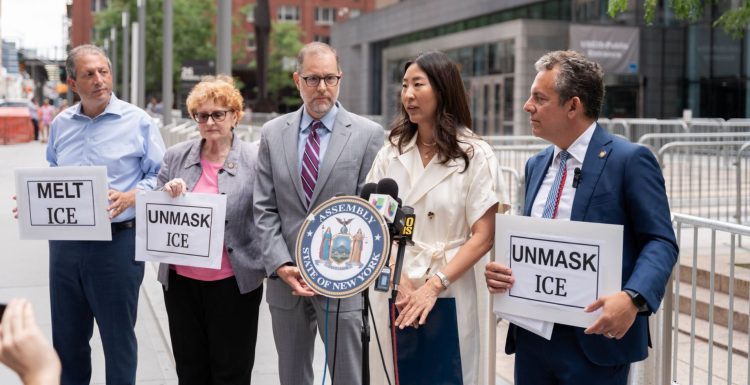
BREAKING: Rep. Dan Goldman (D) just introduced the “No Secret Police Act,” which prohibits ICE and border agents from wearing face coverings to shield their faces and identities.
He claims it “resembles Soviet Russia.”
ICE agents have seen a 500% increase in vioIent threats and… pic.twitter.com/SlFGffukUN
— Libs of TikTok (@libsoftiktok) June 26, 2025
Ukrainian Drone Barrage Shuts Down Moscow Airports, Strands 60,000 Travelers
In the early hours of July 19 and stretching into the next day, Ukraine launched what Russian officials are calling their biggest drone assault to date—and it sent Moscow into a tailspin. The skies over the Russian capital lit up as more than 230 Ukrainian drones were reportedly intercepted across the country, dozens of them aimed squarely at Moscow. The onslaught was so relentless that all four of the city’s major airports were shut down and reopened ten times in 24 hours. That’s not a typo—ten times. The constant threat forced Russian air traffic controllers into a round-the-clock game of aerial whack-a-mole.
At least 140 flights were canceled outright. Thousands more were diverted, mostly to Pulkovo Airport in St. Petersburg. The end result? Roughly 60,000 passengers left stranded, parked in terminals, sitting on the tarmac, or rerouted hundreds of miles from their original destinations. Fires reportedly broke out in areas like Zelenograd, northwest of downtown Moscow, after some drones slipped through and hit targets on the ground.
Russian air defenses were clearly overwhelmed. As soon as the skies were declared safe, another wave of drones would come in, forcing another lockdown. It wasn’t until 4 a.m. on July 20 that Moscow’s airports resumed regular operations—at least for now.
This latest strike marks the fourth straight night of Ukrainian drone attacks on the capital and signals a serious escalation in Kyiv’s long-range capabilities. It’s no longer just the front lines seeing action—Russia’s heartland is getting hit, and Moscow’s vulnerability is on full display.
🚀 For three days straight, Ukraine’s drones have targeted military sites around Moscow! ✈️ The result? Airports closed, flights canceled, and even Turkish Airlines is pulling out. The war has come home, and now #Moscow is a no-fly zone 🛑 #StandWithUkraine… pic.twitter.com/9O6tmWwMWa
— Anna_From_Ukraine_Official (@AnnaFromUA_YT) July 19, 2025








COMMENTS