

The Israel Defense Forces called it a massive wave of strikes, targeting tunnel infrastructure and weapons depots. Gaza health officials reported at least 18 fatalities, with early counts ranging into the 20s, including civilians sheltering at a school. Prime Minister Benjamin Netanyahu convened a security meeting and ordered tough measures against truce violators, while stopping short of formally ending the ceasefire. Israel also halted aid deliveries, a move that will deepen an already dire humanitarian picture.
Hamas denied any role in the Rafah incident and said its armed wing remains bound by the ceasefire. A senior official accused Israel of searching for a pretext to resume major operations. The group also claimed its communications in Rafah have been cut for months, a line that distances the leadership from local actions on the ground.
Part of the friction flows from the ceasefire’s thin geography and messy reality. Gaza authorities have warned for days about lethal encounters near a boundary they call the Yellow Line, a zone without clear physical markers. Those allegations have piled up since the truce took effect and feed the dispute over who is breaking what and where.
The politics are as hard as the terrain. The ceasefire text green-lit on October 9 and activated on October 10 tied security calm to hostage returns, phased Israeli drawdowns, and aid access. That framework was already faltering over the recovery of remains and the status of the Rafah crossing. Today’s strikes and the aid pause strain it further.
For civilians, the fear is simple. If the truce buckles, the clock resets to air alerts, rubble searches, and another scramble for food and medicine. Israel’s suspension of aid and the continued closure posture at Rafah will punish the population first, long before any battlefield verdict. Diplomats are working the phones, but phones do not move trucks. The ceasefire only survives when both sides decide it is more useful than the next shot. Tonight, that balance looks fragile.
🇵🇸🇮🇱 Trump’s deal is not working. The Israeli Air Force has struck the southern Gaza Strip after the attack on the TAZAL there. pic.twitter.com/uUCeh4JeP1
— The world is patriots.🇺🇸🇷🇺 (@bertalanzoli) October 19, 2025
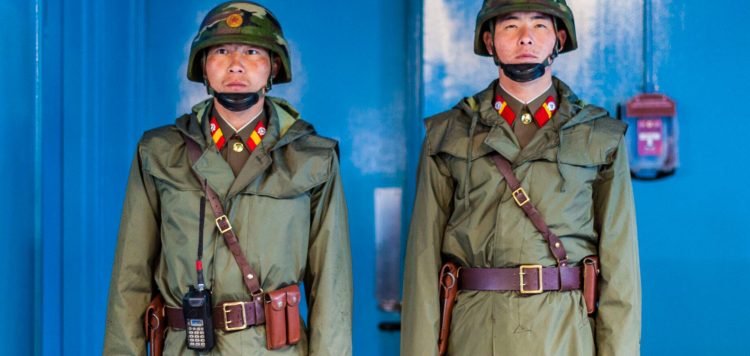
A Lone North Korean Soldier Slips the DMZ. The Message Is Bigger Than One Man.
A single North Korean soldier threaded his way through the most surveilled strip of earth on Sunday and asked to stay. South Korea’s Joint Chiefs say he crossed the central section of the Demilitarized Zone, was tracked in real time, and taken into custody without incident. He told authorities he wants to resettle in the South.
Direct crossings like this are rare for a reason. The DMZ runs roughly 248 kilometers long and four kilometers wide, a lethal maze of mines, tank traps, wire, sensors, and rifles on both sides. Most escapees take the northern route into China and then filter through a third country before reaching Seoul. Since the Korean War, an estimated 34,000 people have made it to the South. Almost none crossed the land border.
The last confirmed case of a uniformed defector on foot came in August 2024 on the eastern front. Today’s soldier came through the center, which tells you he knew the ground and the patterns. Training, familiarity with lanes, and luck matter when every wrong step can set off steel and fire. South Korean troops secured him as they have in past incidents and moved him into questioning.
Intelligence officers will want everything he knows. Order of battle notes. Rotations. Mine belt gaps. Morale. Even small details can sharpen a picture built from satellites and signals. South Korean officials have already begun the standard investigation to confirm identity, motive, and any immediate security concerns. Pyongyang will hate the optics. One soldier’s feet voting with his life cuts through propaganda in a way no leaflet ever could.
The timing is political as well as human. South Korea’s new president, Lee Jae-myung, took office in June promising a steadier, more conciliatory line toward the North. The North has not bought in. Missile work continues, border friction flares and cools, and hotlines sit cold. This case will test Lee’s resolve to stay measured while squeezing every ounce of intelligence value from the defector.
Strip away the geopolitics and you are left with an individual who picked a window, stepped through a minefield, and made it. South Korea will decide his future. The rest of us should read the signal. Even on the quietest day along that fence, people on both sides make choices that shape the next one. Today, one man chose a better life in the South and reached it alive.
North Korean soldier defects to South Korea across heavily fortified border https://t.co/ip1pjk2iiL pic.twitter.com/Ueptrfnune
— New York Post (@nypost) October 19, 2025
JCPOA Clock Hits Zero. Tehran Says the Rules No Longer Apply.
The clock on the Iran deal ran out on October 18, and Tehran wasted no time saying the guardrails are gone. Iran’s Foreign Ministry declared every limit and extra monitor tied to the 2015 Joint Comprehensive Plan of Action null and void. Officials framed it as the natural end of a ten-year arrangement blessed by UN Security Council Resolution 2231.
The original bargain traded deep curbs on enrichment and stockpiles for sanctions relief and intrusive inspections by the International Atomic Energy Agency. Washington walked in 2018 and reapplied pressure, and Iran answered by chipping away at compliance. What was once a controlled program became a moving target that outlived the paper that held it.
Europe tried one last throw late this summer with a snapback push that sought to revive UN sanctions. Tehran dismissed it as legally hollow since the deal’s term was expiring anyway. Iran, joined by Russia and China, sent the United Nations a joint letter stating that Resolution 2231 has now terminated in full. Lawyers can fight over process. On the ground, the effect is simple. The old constraints no longer bind.
The inspectors are watching a narrower lane. Recent IAEA board reports detail reduced cooperation and unanswered questions that keep confidence low about what Iran is doing and where. Western governments say that it looks like a weapons pathway. Tehran says the work is peaceful and tied to energy needs. Neither side is taking the other’s word for it, which is why the reporting trail matters.
Diplomacy is still on the table, at least in public statements. Iranian officials say they remain open to talks even as they deepen ties with Moscow and Beijing on civilian nuclear projects and infrastructure. In Washington and in European capitals, the line is the same as it has been for years. Come back to negotiations and prove the program is peaceful. The politics around that ask are harder today than they were yesterday.
Here is the strategic picture. The most ambitious nonproliferation deal of the past decade has expired while trust is near zero and regional tension is high. That is a recipe that puts commanders on edge and markets on notice. If there is a way back, it will come from verifiable steps that rebuild confidence in small bites instead of sweeping promises. In the meantime, everyone will act as if the margin for error has shrunk, because it has.
⚠️ IRAN’S NUCLEAR PROGRAM IS BACK ONLINE ⚠️
Tehran has officially declared it is no longer bound by the 2015 Iran Nuclear Deal (JCPOA) — ending all restrictions on uranium enrichment, stockpiles, and weapons research.
“All provisions… are considered terminated,” announced… pic.twitter.com/bSeTehIh02
— Mossad Commentary (@MOSSADil) October 18, 2025








COMMENTS