

The dispute arose after three Minnesota Democrats were denied entry to an Immigration and Customs Enforcement (ICE) facility near Minneapolis earlier this month, days after an ICE officer fatally shot US citizen Renee Good.
The administration says the policy is a new agency action distinct from one Cobb blocked in December, while plaintiffs argue it unlawfully obstructs congressional oversight as lawmakers negotiate DHS funding ahead of a January 30 deadline.
Trump Slams UK Chagos Deal, Ties Diego Garcia to Push for Greenland
US President Donald Trump on Tuesday criticized Britain’s agreement to transfer sovereignty of the Chagos Islands, including Diego Garcia, to Mauritius, calling it an act of weakness that threatens national security.
Trump said the move jeopardizes the strategically important US-UK military base on Diego Garcia in the Indian Ocean and argued it underscores why the United States must acquire Greenland.
Donald J. Trump Truth Social Post 01:38 AM EST 01.20.26 pic.twitter.com/RTn8xXK2Vi
— Commentary Donald J. Trump Posts From Truth Social (@TrumpDailyPosts) January 20, 2026
Britain and Mauritius reached the deal last year, allowing Mauritius to take sovereignty while Britain retains control of the base under a long-term lease, an arrangement previously welcomed by the US government.
British officials defended the agreement, with senior minister Darren Jones saying it ensures the base can operate for the next century and cannot be reversed.
Trump Threatens 200% Tariff on French Wine Over Peace Board Snub
US President Donald Trump said Tuesday he will impose a 200 percent tariff on French wines and champagnes after French President Emmanuel Macron declined to join Trump’s proposed Board of Peace initiative.
Trump made the remarks when asked about Macron’s refusal, saying the tariff would pressure France to participate, though he added membership was optional.
A source close to Macron confirmed France does not plan to join at this stage.
BREAKING: Donald Trump threatens a 200% tariffs on French wine and Champagne over France’s intentions to decline invitation to join his Board of Peace
— Ed Krassenstein (@EdKrassen) January 20, 2026
Trump unveiled the Board of Peace last year as part of efforts to end the war in Gaza and later expanded its scope to include resolving global conflicts. Invitations sent last week to about 60 countries outline a role that requires members to contribute $1 billion for participation beyond three years.
Governments have reacted cautiously, with diplomats warning the plan could undermine the United Nations.
Trump also said he has invited Russian President Vladimir Putin to join the initiative.
Mexico Seeks Assurances After US Military Movements Raise Sovereignty Concerns
Mexican President Claudia Sheinbaum addressed public and political concerns on Monday over recent US military activity near Mexico, after Washington issued a flight advisory citing military operations in the eastern Pacific, and a US military transport plane appeared at Toluca airport.
The concerns emerged after the US attack on Venezuela and renewed rhetoric about possible action against Mexican drug cartels.
Sheinbaum said Mexico received written assurances that no US military flights would enter Mexican airspace and that the Federal Aviation Administration advisory did not affect Mexico. She explained the Toluca landing as a logistical operation authorized by Mexico’s defense secretary to transport Mexican officials to the United States for training, which she said did not require Senate approval.
#Nacionales | 🚨❗️ Hace unas horas aterrizó un avión de transporte táctico de la Fuerza Aérea de Estados Unidos en Toluca, hecho que ha generado decenas de comentarios en redes sociales. pic.twitter.com/zcLcBxmVFN
— Plano Informativo (@Planoinforma) January 18, 2026
Opposition lawmakers questioned the lack of advance notice, highlighting sensitivities over sovereignty.
Both governments said they remain committed to bilateral security cooperation, with senior officials set to meet Friday to address cartel violence and the cross-border flow of fentanyl and weapons.
Latin America’s Left Faces Rising Pressure to Crack Down on Gangs
Progressive leaders across Latin America are facing mounting pressure to adopt tougher security policies as crime persists and US President Donald Trump pushes a hardline regional agenda.
The pressure intensified after El Salvador President Nayib Bukele’s 2022 crackdown on gangs led to a sharp drop in homicides and strong domestic approval, making his approach popular with voters and conservative leaders across the hemisphere.
Trump has praised Bukele, designated Latin American criminal groups as terrorist organizations, threatened military action, and escalated confrontations with governments in Mexico, Colombia, and Guatemala.
In Guatemala, President Bernardo Arévalo declared a 30-day state of emergency after prison riots and the killing of 10 police officers, allowing limits on certain constitutional rights.
Similar shifts are underway in Mexico and Colombia, where leaders elected on promises of holistic, reform-based security strategies are turning to more forceful measures under voter frustration and US pressure.
Analysts say Bukele’s model appeals because it projects immediate toughness, even as critics warn of human rights abuses and question its long-term effectiveness.
World Economic Forum Opens in Davos With Record Global Leadership Turnout
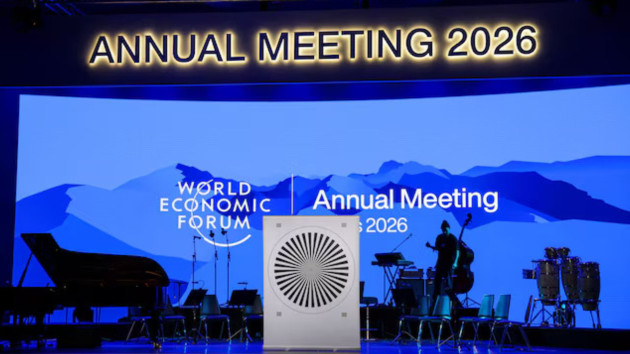
Leaders from around the world converged in Davos, Switzerland, on Monday for the World Economic Forum’s 56th Annual Meeting, drawing nearly 3,000 participants from more than 130 countries under the theme “A Spirit of Dialogue.”
The event runs January 19–23 and brings together top government officials, business executives, technologists, and civil society figures to discuss pressing global issues, including geopolitics, economic growth, technology, and cooperation.
Close to 400 political leaders, including around 65 heads of state and government, and roughly 850 chief executives are attending, marking record levels of participation. US President Donald Trump is among the high-profile figures speaking this week, alongside other prominent leaders and CEOs.
Leaders from across government, business and civil society are gathering in #Davos for the Annual Meeting.
Our live blog brings you real-time coverage alongside the essential context: key pre-reads, early media signals and the highlights you need to know before the main… pic.twitter.com/sdkmltJfTo
— World Economic Forum (@wef) January 19, 2026
Organizers scheduled over 200 sessions to tackle topics such as economic uncertainty, innovation and the responsible use of artificial intelligence (AI).
Critics note skepticism about Davos’ impact on inequality and climate action even as delegates seek solutions to shared global challenges.
Bulgaria’s President Radev Resigns as Political Crisis Deepens
Bulgarian President Rumen Radev announced on Monday that he will resign from his largely ceremonial post, becoming the first head of state to step down in the country’s post-communist history.
Radev said he will submit his resignation to the Constitutional Court on Tuesday, with Vice President Iliana Yotova set to assume the role for the remainder of the mandate under the constitution.
The move comes as Bulgaria faces a prolonged political crisis after mass anti-corruption protests last month forced the resignation of a center-right government led by the GERB party.
🛑 Bulgarian President Rumen Radev announced that he will submit his resignation as head of state
⚈ Bulgarian Vice President Iliana Iotova is expected to assume the presidency for the remainder of the term https://t.co/KWdjHh4t6j pic.twitter.com/9Ft3Fuy6MC
— Anadolu English (@anadoluagency) January 19, 2026
Radev, a vocal opponent of the outgoing government, supported the protests and has signaled he may run in an expected snap election or form a new political party. His decision follows failed efforts to form a new government and ahead of what would be Bulgaria’s eighth parliamentary election since 2021, as the European Union and NATO member struggles with political instability.
Russian Strike Knocks Out Power and Water in Parts of Kyiv
Russian forces launched a combined drone and missile attack on Kyiv early Tuesday, damaging infrastructure and disrupting essential services in the Ukrainian capital, city officials said.
Mayor of Kyiv Vitali Klitschko reported that a strike on the east bank of the Dnipro River cut power and water supplies, hit a non-residential building, and injured one person.
Images shared on Telegram showed high-rise apartment buildings left without electricity. Tymur Tkachenko, head of Kyiv’s military administration, said the attack also damaged a storage facility and set several cars on fire.
🔴 Overnight, Russia launched a massive strike on Ukrainian cities, killing at least two and wounding dozens.
Kyiv, Dnipro, Odesa region, Zaporizhzhia, and Kharkiv were hit, with power, water, and heat cut to thousands, high-rises damaged, and critical infrastructure set… pic.twitter.com/anVzaEanmR
— UNITED24 Media (@United24media) January 20, 2026
The strike is part of Russia’s ongoing campaign against Ukraine’s capital and critical infrastructure.
Eastern Poland Airports Reopen After Military Flight Operations
Airports in Rzeszów and Lublin in eastern Poland reopened Tuesday morning after temporarily suspending operations to allow military aircraft to operate freely, the Polish Air Navigation Services Agency said.
The closures occurred as Polish armed forces carried out routine military flights, according to the Operational Command of the Polish Armed Forces. Spokeswoman Ewa Zlotnicka said there was no threat to Polish airspace and declined to specify the type of aircraft involved.
The brief suspension reflects standard coordination between civilian aviation authorities and the military during planned operations.
Kim Jong Un Fires Vice Premier Ahead of Key Party Congress
North Korean leader Kim Jong Un dismissed Vice Premier Yang Sung Ho on Monday for mismanaging the machine-building industry, according to state media, as Pyongyang moves to tighten discipline before a major ruling party congress.
The Korean Central News Agency (KCNA) said Kim blamed Yang for “man-made confusion” and economic losses tied to delays and waste during a modernization project at the Ryongsong Machine Complex in northeastern North Korea.
Kim said irresponsible officials squandered funds and labor, increasing the burden on the munitions sector. He said he had warned Yang in December but saw no improvement, prompting his removal.
North Korea’s Kim purges vice premier, slams ‘incompetent’ officials
➡️ https://t.co/YCOUWh5FPx pic.twitter.com/gzVeuqEiDi— FRANCE 24 (@FRANCE24) January 20, 2026
The dismissal comes as North Korea prepares for its first Workers’ Party congress in five years, expected in January or February, where Kim plans to set new economic and state goals amid ongoing sanctions, economic strain from the pandemic, and continued prioritization of weapons programs.
South Korea Probes Civilian Drone Incident After North Korea Complaint
South Korean President Lee Jae Myung said Tuesday that a gap in the country’s monitoring system may have allowed a civilian-operated drone to fly into North Korean airspace, raising risks of heightened tensions on the Korean Peninsula.
The comments followed North Korea’s claim earlier this month that a South Korean drone entered its airspace, with Pyongyang releasing photos it said were taken by the aircraft.
South Korean police said a task force is questioning a civilian suspect as part of an ongoing investigation.
Lee warned that such actions could provoke serious conflict and harm South Korea’s economy, calling for a full inquiry and stronger safeguards. He said anyone found responsible could face criminal charges, as his administration continues efforts to improve relations with North Korea despite repeated rebuffs from Pyongyang.
Sources: News Agencies








COMMENTS