

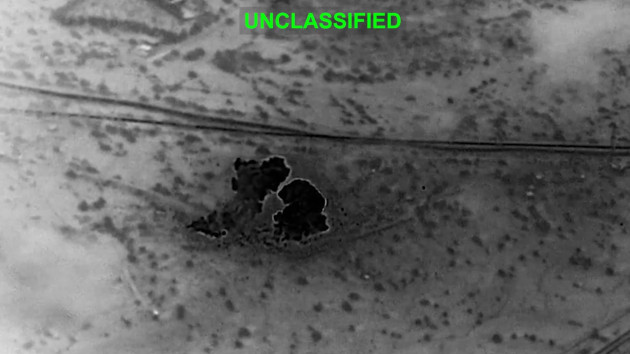
The missile launches came hours after South Korean Prime Minister Kim Min-seok met US President Donald Trump in Washington and expressed hope for renewed diplomacy with Pyongyang.
Saturday’s tests suggest the window for talks remains narrow.
In recent weeks, North Korea has hardened its tone. Kim Yo Jong, the sister of leader Kim Jong Un, warned earlier this week that US–South Korea exercises threaten the North’s security and could bring “terrible consequences.”
🚨🇺🇸🇰🇷🇰🇵 North Korea’s leader’s sister, Kim Yo Jong, on the Freedom Shield exercise conducted by the U.S. and South Korea:
Any challenge to North Korea’s security will have serious consequences. pic.twitter.com/9saTx1YCH9
— Defence Index (@Defence_Index) March 10, 2026
Pyongyang has also condemned recent US and Israeli strikes on Iran while voicing support for Tehran’s leadership.
The message from Saturday’s launches was familiar.
When allied forces train, North Korea answers with missiles. And for now, the cycle continues.
Pakistan Warns Taliban Over Cross-Border Drone Attacks
Pakistan’s President Asif Ali Zardari said on Saturday that Afghanistan’s Taliban government had “crossed a red line” by launching drones at civilian areas, warning of “grave consequences.”
The attacks are part of the deadliest fighting yet between the two neighbors, which erupted late last month and show no sign of stopping despite Chinese and Turkish mediation efforts. Pakistani forces intercepted Friday’s drones, but debris injured two children in Quetta and two other civilians elsewhere.
The Afghan Taliban accused Pakistan of airstrikes in Kabul and eastern provinces, reporting six civilians killed and 15 wounded. Kabul also claimed its forces struck military sites near Islamabad and northwestern Pakistan. Pakistan denied targeting civilians, saying its operations focus on Pakistani Taliban militants and their networks.
From cross-border air strikes to captured outposts on the Durand Line, the Afghanistan-Pakistan frontier is on edge.
Here’s what you need to know pic.twitter.com/6tiZinQDEt
— TRT World (@trtworld) March 13, 2026
A roadside bomb killed seven Pakistani police officers in Lakki Mawat on Friday, underscoring the intensity of the conflict. Pakistan accuses the Afghan Taliban of harboring militants who stage attacks across the border and cooperating with India, a claim Kabul denies.
Afghanistan’s Defense Ministry said Saturday it captured a Pakistani post in Kunar and Nangarhar provinces, killing 14 Pakistani soldiers. Pakistan called the claim false. Prime Minister Shehbaz Sharif’s spokesman, Mosharraf Zaidi, said the Taliban’s propaganda will not end Islamabad’s counterterrorism operations.
Pakistan Launches Over 270 Missile and Artillery Attacks on Kunar in the Past 48 Hours
Ziaurrahman Spin Ghar, the Information Director at the Kunar Department of Information and Culture, said in a statement that the Pakistani military regime has fired more than 270 missiles at… pic.twitter.com/2djSUxsHbi
— TOLOnews English (@TOLONewsEnglish) March 14, 2026
China is pushing for restraint. Foreign Minister Wang Yi urged both sides to avoid force, warning that it threatens regional stability. Chinese mediators are shuttling between the countries to promote dialogue, while Afghanistan maintains that peace talks remain the only solution.
Russian Missile and Drone Strikes Hit Kyiv Region Amid US Focus on Iran
A combined Russian missile and drone attack killed at least four people and wounded 15 in Kyiv’s region on Saturday, Ukrainian officials said. Three of the wounded are in critical condition.
The strikes hit four districts, damaging residential buildings, schools, businesses, and key infrastructure, regional head Mykola Kalashnyk reported on social media. Ukrainian President Volodymyr Zelenskyy said the main targets were energy facilities, with Russia launching roughly 430 drones and 68 missiles.
Russia’s Defense Ministry said the attacks targeted energy and industrial sites supporting Ukraine’s armed forces, along with military airfields.
The assaults came as the US postponed Russia-Ukraine talks due to the war in Iran. Analysts say Moscow may hope the Middle East conflict diverts Western attention, strains NATO support for Kyiv, and boosts global energy prices to its advantage.
Zelenskyy urged Western partners to focus on increasing air defense missile production, warning that Russia could exploit the Middle East war to inflict further destruction in Ukraine. He also criticized a 30-day US waiver on Russian oil sanctions, saying it could provide Moscow $10 billion for the war.
Зараз у Київській області, на Сумщині, Харківщині, Дніпровщині та Миколаївщині триває ліквідація наслідків масованого російського удару. Залучені всі необхідні служби. Основною мішенню для росіян була енергетика Київського регіону, але є, на жаль, також влучання та пошкодження… pic.twitter.com/GAR8hnmcr0
— Volodymyr Zelenskyy / Володимир Зеленський (@ZelenskyyUa) March 14, 2026
Kyiv responded with its own strikes. Ukrainian drones hit an oil refinery and Port Kavkaz in Russia’s Krasnodar region, damaging infrastructure and wounding three people. Russian authorities said 87 Ukrainian drones were shot down overnight, including 16 over Krasnodar and 31 over the Sea of Azov. Moscow restricted flights at three major airports as a precaution.
The attacks illustrate the growing intensity of the conflict while Russia and Ukraine continue to claim gains on the front line. Both sides remain locked in a war that extends from Kyiv to southern
Russia, with the war in the Middle East adding a new layer of strategic calculation.
Iran Threatens UAE Ports as War with US and Israel Enters Third Week
Iran urged civilians on Saturday to evacuate the Middle East’s busiest port, Jebel Ali, and two others in the United Arab Emirates (UAE), signaling its first open threat to non-US assets in a neighboring country. Tehran accused the US of launching strikes on Kharg Island from UAE soil. No evidence was provided.
Hours later, there were no attacks on Dubai or Abu Dhabi ports. A fire broke out at Fujairah port after debris from an intercepted Iranian drone struck an oil facility.
Iran’s Foreign Minister Abbas Araghchi said US attacks on Kharg Island and Abu Musa Island originated from locations near Dubai and Ras Al-Khaimah. He said Iran would try to avoid populated areas. US Central Command (CENTCOM) declined to comment, and the UAE made no statement.
Last night, U.S. forces executed a large-scale precision strike on Kharg Island, Iran. The strike destroyed naval mine storage facilities, missile storage bunkers, and multiple other military sites. U.S. forces successfully struck more than 90 Iranian military targets on Kharg… pic.twitter.com/2X1glD4Flt
— U.S. Central Command (@CENTCOM) March 14, 2026
Iran has fired hundreds of missiles and drones at Gulf neighbors, claiming to target US assets, though some civilian facilities have been hit. US President Donald Trump warned that further interference with oil transit through the Strait of Hormuz could put Iran’s energy infrastructure at risk.
Tehran’s joint military command reiterated it would retaliate against any strikes on its oil assets. Iranian media said recent attacks on Kharg Island hit military targets, not oil infrastructure.
US CENTCOM said its strikes destroyed missile and naval storage facilities. Israel also announced another wave of attacks on Iran, hitting more than 200 military targets in 24 hours.
A missile struck the US Embassy compound in Baghdad on Saturday. No one claimed responsibility. The State Department warned citizens to leave Iraq immediately.
NEW: The United States struck over 90 military targets, including missile and naval mine storage facilities, on Kharg Island on March 13. US President Donald Trump stated that the United States did not target Iranian oil infrastructure on the island.
More Key Takeaways:
An OSINT… pic.twitter.com/W7JSgJVfsx— Institute for the Study of War (@TheStudyofWar) March 14, 2026
Meanwhile, the US is reinforcing its presence in the region. About 2,500 Marines from the 31st Marine Expeditionary Unit (MEU) and the amphibious assault ship USS Tripoli (LHA-7) are en route to the Middle East, joining a naval buildup that includes the USS Abraham Lincoln (CVN-72) and eight destroyers. The Marines can support embassy security, civilian evacuations, and disaster relief.
The message from Tehran is clear. Iran is escalating threats across the Gulf while the US and Israel target military and energy sites. The world watches as tensions over oil and regional security mount.
Editor’s Note: Details in this story reflect the latest information at publication and may change as events evolve.








COMMENTS