

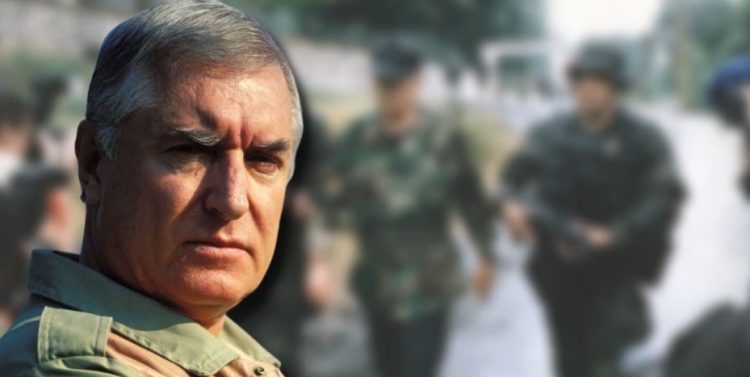
Middle East Operations
Denard’s mercenary activities weren’t confined to Africa. Throughout the 1960s, he also spent considerable time in the Middle East. Between 1963 and 1964, he led royalist forces against Egyptian-supported republican factions in Northern Yemen, reportedly with covert British intelligence support. Leveraging Yemen’s mountainous terrain, Denard demonstrated his adeptness in guerrilla warfare, gaining respect as a versatile and capable mercenary. The conflict served as an early proving ground for Arab Cold War dynamics, pitting Nasser’s pan-Arabism against conservative monarchies backed by the West.
Denard explored opportunities in Oman and the United Arab Emirates, where foreign military advisors were in demand to help train national security forces. He reportedly sought connections with influential Middle Eastern figures, including the Shah of Iran. Though his efforts to build lasting ties in the region never matched his success in Africa, they reflected his ambition to expand his influence and tap into a new market—one that promised far more wealth than his traditional African clients.
Comoros: A Mercenary’s Kingdom
Denard’s longest-lasting impact came in the Comoros Islands. Following independence from France in 1975, the islands descended into political instability. Initially aligned with President Ahmed Abdallah, Denard was sidelined when Abdallah was overthrown by socialist revolutionary Ali Soilih. Soilih’s radical, anti-French regime threatened longstanding ties with Paris, prompting covert interest in his removal. By 1978, Denard, reportedly acting on the advice of Jacques Foccart, France’s influential “Mr. Africa,” returned with 43 mercenaries to carry out a nighttime assault on Moroni, capturing Soilih, who was later killed under suspicious circumstances.
With Abdallah restored to office, Denard solidified his position as the regime’s enforcer and, in practice, its central authority. He organized a 500-man presidential guard composed largely of foreign mercenaries and local recruits loyal to him personally. Backed quietly by France and sustained in part by Comoros’ limited resources, Denard built what amounted to a private army. Over the next decade, his influence extended deep into Comorian society, blurring distinctions between occupation and governance.
During his rule, Denard entrenched himself in Comorian society not just as a military powerbroker but as a political fixture. He formally converted to Islam, married locally, and acquired extensive property holdings, presenting himself as a naturalized part of the national fabric. Behind this facade, he positioned Comoros as a strategic node in Cold War politics, cultivating ties with apartheid South Africa and facilitating covert logistics that helped both Pretoria and Paris evade international scrutiny. Though Abdallah remained the official head of state, Denard’s reach extended into nearly every sector, including security forces, commerce, and the judiciary.
By late 1989, a combination of international pressure and internal unrest began to erode Denard’s grip on power. Amid growing tension, President Abdallah was killed during a confrontation involving Denard’s presidential guard. Denard himself was injured in the ensuing chaos. France responded swiftly, deploying 3,000 troops to the islands and forcing Denard to flee to South Africa, effectively ending his direct rule.
Final Coup Attempt and Legal Battles
Despite his advancing age, Denard launched one final coup attempt in September 1995, code-named “Operation Kaskari.” At 66, he and roughly 30 mercenaries landed in Comoros, seized control of Moroni, and placed President Said Mohamed Djohar under house arrest. The operation underscored Denard’s continued ability to mobilize loyal operatives and exploit the islands’ chronic instability.
No longer tolerant of Denard’s foreign exploits, France responded with Operation Azalee, deploying approximately 600 troops, including Foreign Legionnaires, naval commandos, and paratroopers, in a rapid amphibious intervention. Within 48 hours, Denard and his men surrendered without a fight. The failed coup marked the end of an era, both for Denard and for the age of mercenary-led regime change in the post-Cold War world.
The failed 1995 coup reignited legal scrutiny of Denard’s long record of interference in Comoros. In 1999, French prosecutors charged him in connection with President Abdallah’s 1989 death, alleging involvement in the assassination. But the case unraveled after the Abdallah family withdrew as civil plaintiffs, and public interest faded.
Denard returned to court in 2006 to face charges for the 1995 coup attempt. Testimony from former intelligence officials, political figures, and his own associates confirmed what many had long suspected: elements within the French government had quietly supported his operations.
He was convicted, but his five-year suspended sentence was reduced to one year on appeal. Due to his failing health, he never served a day. The leniency of the outcome, combined with revelations of official complicity, reignited debate in France over its post-colonial entanglements and the use of deniable assets in foreign policy.
Death and Legacy
Bob Denard died on October 13, 2007, after a long battle with Alzheimer’s disease. His passing marked a quiet end to one of the most infamous mercenaries of the 20th century, a man whose career left a lasting imprint on the shadow wars of post-colonial Africa.
For decades, Denard moved through conflicts where state interests, personal ambition, and covert agendas overlapped. Though never formally sanctioned, his operations often aligned with the goals of powerful states. To some, he was a committed anti-communist who took on the jobs official forces could not. To others, he was a destabilizing force, an opportunist who profited from chaos and left fragile states in his wake.
Was he a government agent, or simply an agent of convenience? Denard blurred the line between mercenary and proxy, building a career in the spaces where deniability thrived. In the end, his life reflected more than just the story of one man. It highlighted how foreign powers waged their battles through proxies, mercenaries, and deniable agents across the Cold War’s fault lines, especially in Africa.








COMMENTS