

By mid-2025, the National Security Council granted the army sweeping authority along the border. Crossings closed. Trade collapsed. Cambodia accused Thailand of choking local livelihoods; Thailand accused Cambodia of harboring criminals. Diplomatic patience evaporated.
Then the shooting began.
The first major flare-up in July wasn’t a skirmish—it was a real military confrontation. Cambodia opened with rockets and mortars; Thailand answered with heavy artillery and, most tellingly, F-16 airstrikes. For Cambodia, a country without a single fighter jet or capable air defense system, that was a brutal reminder of the military imbalance that defines this conflict.
Thailand is a mid-tier regional power with around 360,000 active personnel, modern artillery, functioning mechanized units, and an air force that can dominate regional skies. Cambodia’s forces are brave but under-equipped, relying on T-55 tanks, Soviet-era APCs, and towed artillery systems whose best years were during the Cold War.
This isn’t a symmetrical confrontation. Cambodia can fire rockets; Thailand can erase positions. Cambodia can inflict local pain; Thailand can escalate strategically. Both sides know exactly where they stand.
Ceasefires—like the one Washington and Kuala Lumpur brokered—don’t last long because the incentives don’t align. All it takes is a landmine blast in Sisaket or Cambodian claims of Thai troops firing into a village for everything to unravel. Once accusations start, the domestic politics on both sides make restraint look like weakness.
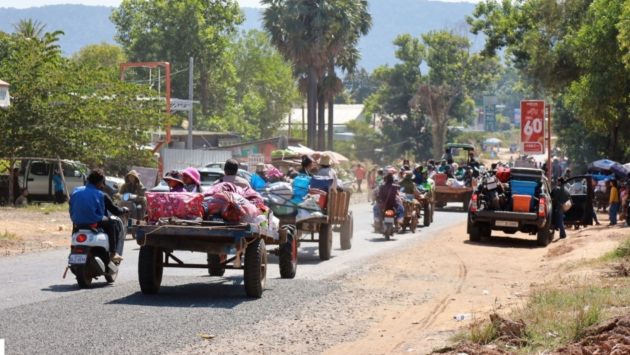
And so, every few weeks, the border lights up again. Artillery one day, airstrikes the next. Civilians displaced, statements issued, blame traded. ASEAN pretends to mediate; neither side really listens.
From Phuket, the contrast is stark. Here, people sip iced coffees, train at gyms, and plan weekend beach trips. A few hundred kilometers north, two long-standing rivals are exchanging fire rooted in colonial maps, modern criminality, and political ego.
This isn’t Ukraine. The geography is different, the stakes smaller. But the underlying pattern is familiar: resentment layered onto grievance, distorted by crime, accelerated by miscalculation, and held together by governments that cannot afford to look soft.
I didn’t come to Thailand looking for another conflict. Yet here I am, watching one unfold on the notifications bar across the top of my screen. War doesn’t need to follow you to be present. It exists everywhere borders are contested, where criminal economies thrive, and where old wounds sit close enough to the surface that one spark is enough.
You wake up expecting ordinary life. And then you remember how thin the line between calm and chaos really is.
—
** Editor’s Note: Thinking about subscribing to SOFREP? You can support Veteran Journalism & do it now for only $1 for your first year. Pull the trigger on this amazing offer HERE. – GDM








COMMENTS