

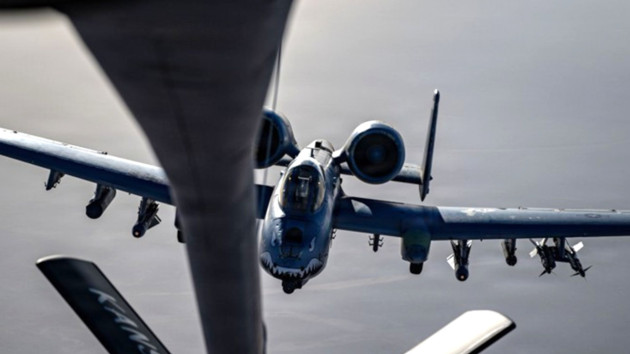
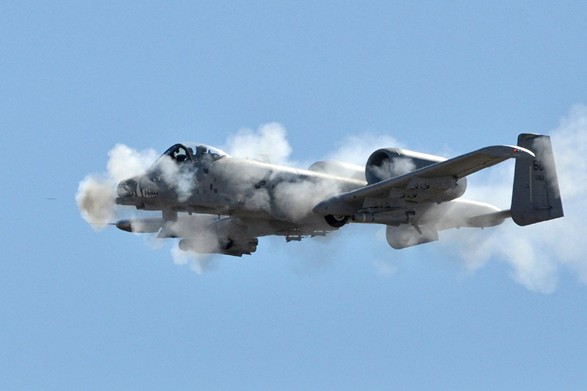
On June 18, 2013, the Obama administration brusquely inactivated the very last remaining, A-10C Warthog unit in Europe, the 81st Fighter Squadron at Spangdahlem Air Base, Germany. However, rotating, Warthog deployments to Eastern Europe began in 2016, in response to Russian aggression against Crimea and Ukraine in 2014, and similar threats against Poland and the Baltic States, reinforcing the huge mistake of withdrawing the 81st Fighter Squadron from Germany earlier.
In 2015, the same administration once again tried to prematurely get rid of the entire, single-mission, A-10C fleet, still attempting to replace them with F-35A stealth fighters.
The Army even offered to purchase the A-10s, due to their combat versatility, high weapons loads, psychological impact upon enemy forces, and other key factors, but they were bluntly told that there was “no chance” of that happening. The Air Force adamantly refused to sell any Warthogs, opting instead to place them all in storage at Davis-Monthan Air Force base in the Arizona desert, where there were already 50 A-10As and 124 A-10Cs in long-term storage.
Then came the A-10’s brilliantly successful, combat operations against ISIS terrorist forces in Iraq and Syria in 2015 and 2016 under Operation Inherent Resolve, in which the Warthogs struck enemy targets on an almost-daily basis. They were a vital part of Operational Tidal Wave II, the intensification of efforts to defeat ISIS. So, by January 2016, the Air Force was “indefinitely freezing” plans to retire the A-10C for the next several years, until at least 2022.
Ukrainian Defense Minister Oleksii Reznikov said in late March 2022, that he specifically asked the U.S. Secretary of Defense Lloyd Austin, of the Biden administration, for 100 surplus A-10Cs, noting their significant effectiveness against Russian tank columns, according to a December 23, 2022 article published at The War Zone.
Austin reportedly replied that his request “impossible,” and that the “old-fashioned and slow” Warthog would be a “squeaky target” for Russian air defenses, the article stated. This was despite the very obvious fact that the A-10 was exclusively designed to kill Russian tanks in a high-threat, World War III-type environment in Europe.
The Air Force clearly wants to retire all of its Warthogs within the next few years, whether that’s a wise decision or not. But the Ukrainian Air Force currently has an urgent need for close air support aircraft that excel at destroying Russian tanks.
A 2022 report from the Pentagon’s Office of the Director of Test and Evaluation on a controversial flyoff between the two aircraft in 2018 and 2019, only recently emerged, highly redacted, after having been effectively buried by the Biden administration. It showed that the F-35A Lightning II held no notable close air support advantages over the venerable A-10C.
As of 2026, there are still 95 A-10C Warthogs in active service, with the Air Force still pushing very hard to retire all of them by 2029, in favor of the F-35A stealth fighter, and Congress pushing back in favor of retaining the A-10 until about 2040.
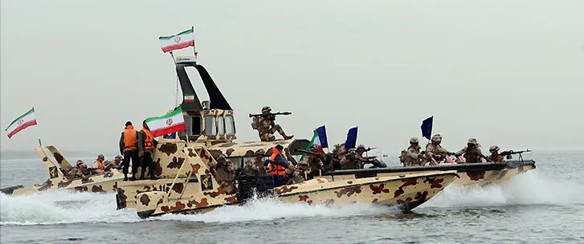
Today, deadly A-10C Warthogs based out of Muwaffaq al-Salti Air Base in Jordan, and Al-Dhafra Air Base in the United Arab Emirates (UAE), are operating for “overwatch” of shipping in the Persian Gulf, and to intercept Iranian Shahed-136 kamikaze attack drones. In addition, the A-10s have been flying from “austere” airfields as close as possible to the Straits of Hormuz, striking at least six different types of IRCG fast-attack boats and numerous coastal, anti-ship missile sites.
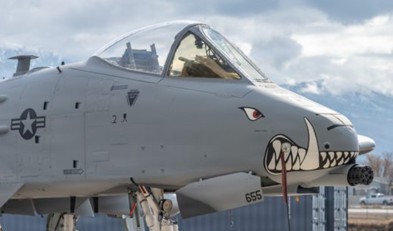
The remaining A-10Cs are flown primarily by the 74th “Flying Tigers,” 75th “Tiger Sharks,” and 76th “Vanguards” Fighter Squadrons (to soon be replaced by F-35As) at Moody Air Force Base, Georgia, all bearing shark’s-teeth nose art for the historic, “Flying Tigers” wing, and apparently by the 45th “Hoosier Hogs” and 47th “Dogpatchers” Fighter Squadrons from Arizona. In fact, the very last A-10C to emerge from depot-level maintenance on February 12, 2026, bears the distinctive, “Warthog” nose art of the 47th Fighter Squadron.
The A-10C Warthogs flown over Iran are using artificial intelligence (AI) algorithms to analyze targets and suggest the best weapon/platform pairing (GAU-8/A cannon or AGR-20B/F missile) within just eight seconds, compared to 16 minutes for a human operator using manual tables.
The A-10’s renewed, combat operations in the volatile, Persian Gulf region should serve as a “wake-up call” for Congress and the U.S. Air Force calling for its retirement. Dan Grazier, a Stimson Center senior fellow and the director of the nonprofit’s national-security reform program, stated that, “The longer the A-10 exists, the more impressed I am with that aircraft…when you design a weapon system that is stripped down, and all the decisions that were made in the course of its design were all made for matters of military effectiveness, you get a really effective aircraft.”








COMMENTS