Albrecht Dürer’s engraving “Knight, Death, and the Devil,” created in 1513, stands as a powerful work of art that transcends its visual beauty to delve into profound themes of morality and human experience. The knight, a symbol of valor and chivalry, rides forth calmly and resolutely, accompanied by a faithful dog that represents loyalty and companionship. However, looming behind him are sinister figures: Death, depicted as a skeletal entity, and a devilish creature that embodies temptation and evil. This juxtaposition not only illustrates the eternal conflict between good and evil but also reflects the complexities of life’s journey, particularly for those in positions of leadership.
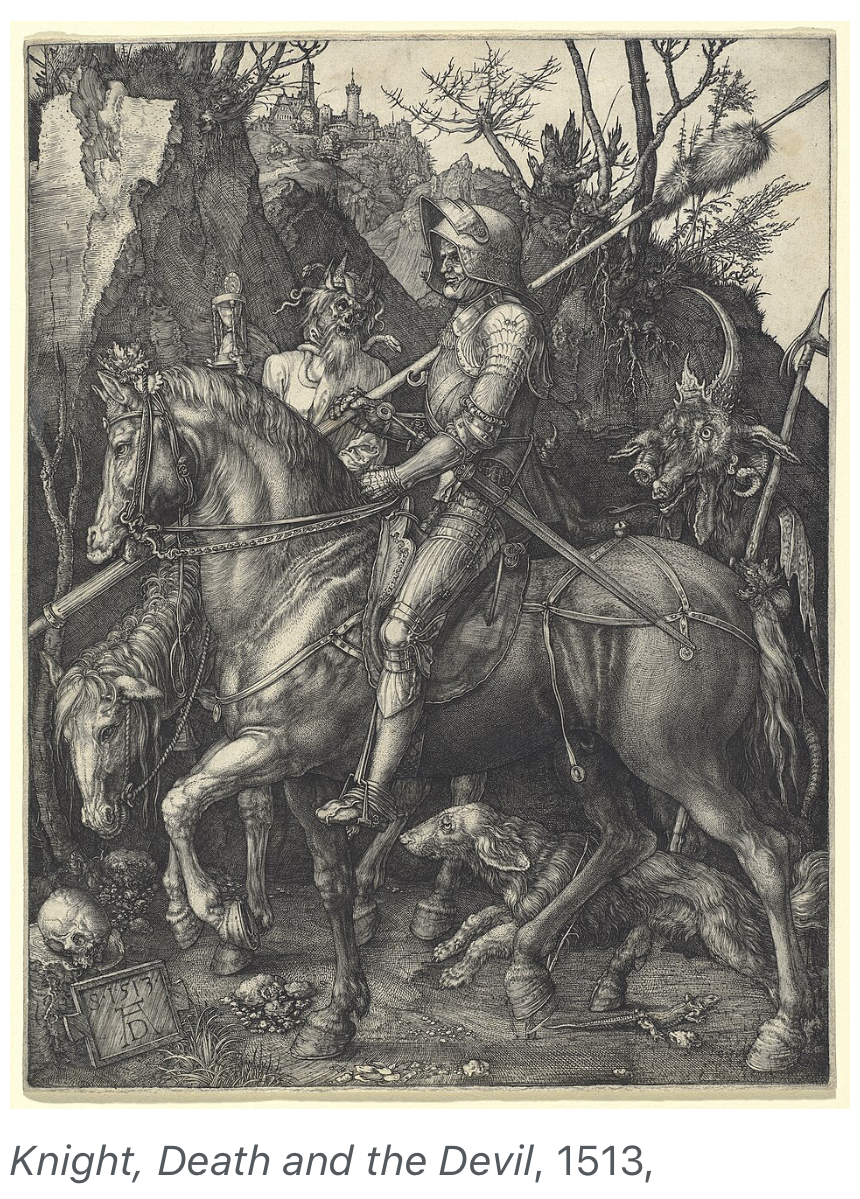
In today’s world, the image of the knight resonates deeply, particularly when considered through the lens of military leadership. The engraving serves as a metaphor for the journey that military leaders undertake, navigating the treacherous terrain of values and principles while contending with the ever-present temptations of political influence. The knight’s steady demeanor symbolizes the resolve required to uphold integrity amidst external pressures, a quality that has become increasingly vital in contemporary military leadership.
The notion of the “political chameleon” emerges in this context, illustrating how some leaders have adapted their beliefs and principles to align with the shifting tides of political ideology. This adaptability, while sometimes seen as a pragmatic approach, can lead to a dilution of core values and ethical compromise. Just as the knight remains steadfast against the dark forces that stalk him, modern military leaders must resist the temptation to change their principles in the face of political expediency.
General George Catlett Marshall serves as an exemplary figure in this discourse, embodying the ideal of servant leadership within the military. Marshall’s leadership during World War II was marked not only by tactical brilliance but by a profound commitment to ethical principles and the welfare of his subordinates. He illustrated that true leadership is not merely about command but about serving the greater good without losing sight of one’s morals. In contrast to the political chameleons of today, Marshall remained unwavering in his values, navigating the complexities of military strategy and politics without succumbing to ethical betrayal.
In viewing Dürer’s engraving, we see a powerful reminder of the challenges faced by leaders throughout history. The knight stands resolute, not merely confronting death and evil but also symbolizing the internal struggle inherent in leadership. This struggle encompasses maintaining one’s values against the seductive allure of political power and the potential for moral compromise.
As we consider the responsibilities of military leadership in our contemporary landscape, it becomes imperative to draw lessons from the past. Leaders must aspire to emulate figures like General Marshall, who achieved success not through the expedient adoption of popular views but through steadfast adherence to values that promote ethical conduct and servant leadership.
In conclusion, “Knight, Death, and the Devil” challenges us to reflect on the nature of leadership in the face of adversity and temptation. The engraving captures not only the historical tensions of the Renaissance but also offers timeless insights into the ethical struggles that leaders continue to face today. As we navigate an increasingly complex political landscape, the call for integrity and principled leadership—much like that exemplified by Marshall—remains ever critical. The knight’s legacy is a reminder that true valor lies in confronting the darkness without losing one’s way, ensuring that the journey toward a noble life remains steadfast and resolute.
Donald C. Bolduc
Already have an account? Sign In
Two ways to continue to read this article.
Subscribe
$1.99
every 4 weeks
- Unlimited access to all articles
- Support independent journalism
- Ad-free reading experience
Subscribe Now
Recurring Monthly. Cancel Anytime.










COMMENTS