

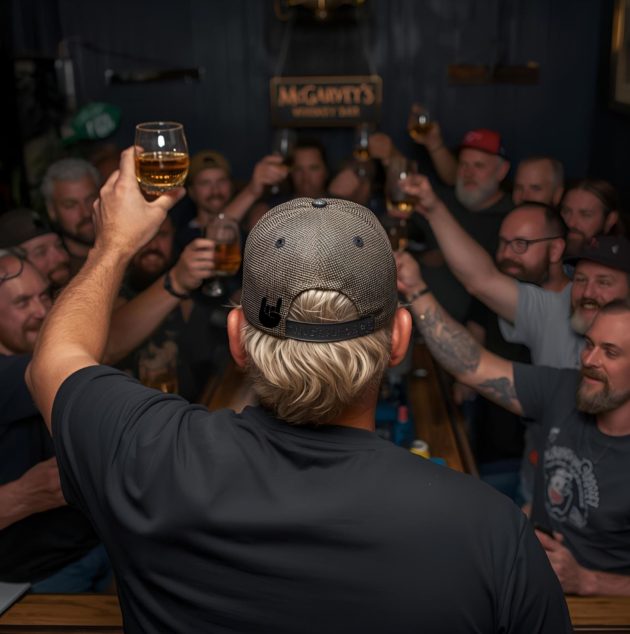
McGarvey’s was packed for a Thursday. Marcus had forgotten how many people showed up on Jake’s night. The corner stool, Jake’s stool, was empty, like always. Nobody sat there. Unspoken rule. Cordova was in his booth with Brandon’s guitar. A few younger guys Marcus didn’t recognize clustered near the dartboard. Bobby Ames held court at the end of the bar, probably telling someone about Slot 001 for the ten-thousandth time.
Coltrane saw Marcus and motioned toward the back room. “Come on.”
The back room was small…storage, spare kegs, jukebox parts. Coltrane closed the door behind them.
“You found something,” Coltrane said, not a question.
Marcus handed him the CD and the tape. “Jake was recording himself. Talking about the jukebox, about the people he met here. And he was playing my music in the background the whole time. Recordings from my old band. Stuff I made during undercover work. He kept everything.”
Coltrane stared at the CD. Listening intently.
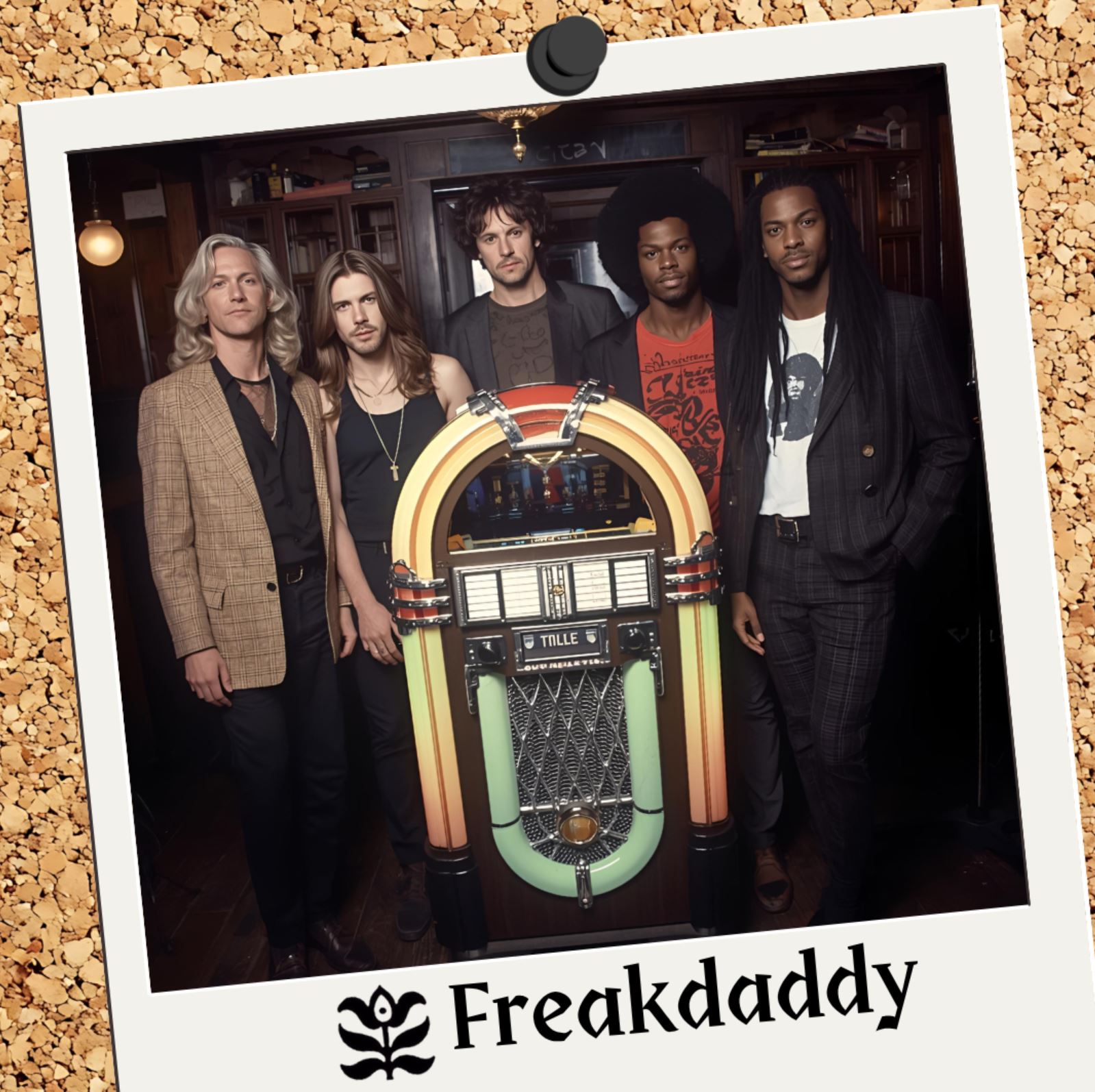
“We were signed to a major label after a SXSW conference in ’92. Lead singer torpedoed it all. Band fell apart. I joined the academy a year later.” Marcus’s voice cracked slightly. “Jake was at that ‘South-by’ show. I never knew. He told the tape that he thought he was watching me become a rockstar.”
“Damn, kid.”
“Freakdaddy was a multi-cultural outfit. Brothers from different walks, coming together to find meaning in our music. This cut, Electric City, is a song about injustice. Tells the story of an innocent man being sent to the electric chair. A line with him screaming futilely into the jailhouse void, in a desperate game he can’t win.” Marcus paused, the realization hitting him. In that momentary silence, he saw how perfectly this mirrored Jake’s battle.
“In the Electric City, He knows he’s gonna die soon, but doesn’t want to. It’s telling. Ironic, even. I think of the pain Jake and the others felt that wasn’t their fault. We recorded it as a demo. I gave Jake a copy and then forgot about it. He kept it for over thirty years. It’s on the recording. It’s playing while he talks about Eric Vasquez, about being caught between identities and not knowing how to find his way back.” Marcus met Coltrane’s eyes. “This is Jake’s song. This is what goes in Slot 184.”
Coltrane held the CD as if it were made of glass. “You know what this means, right? Once it’s in that jukebox, it’s permanent. Every time someone plays it, they’re playing it for Jake. You’ll hear yourself, your younger self, your old band, and you’ll remember all of this.”
“I know.”
“And you’re okay with that?”
Marcus thought about the tape. About Jake’s voice saying his music was my tether. About all the Thursdays Jake spent here, listening to other people’s grief because his own was too heavy to name.
“Yeah,” Marcus said. “I’m okay with it.”
Coltrane nodded slowly. “Then let’s do this right.”
They gathered everyone. Cordova, Bobby Ames, the regulars…even a few guys Marcus had interviewed for other slots. Coltrane poured drinks: Whiskey for those who could handle it, beer for everyone else.
Marcus stood near the jukebox, CD in hand, and tried to find words.
“My brother, Jake, sat at this bar every Thursday for two years,” he started. “He listened to your stories. He learned about every person on this jukebox, who they were, how they died, why their song mattered. He never wrote any of it down. He just listened. I think it helped him find a language for something he couldn’t explain.”
The bar was silent.
“Jake died three months ago. Not deployed. Not in combat. He died here, in Fayetteville, because the war followed him home and he couldn’t outrun it.” Marcus’s hands shook. “Coltrane told me it’s tough to get a slot when you don’t die over there. But I think that’s exactly why he needs one. Because the jukebox isn’t just about where you die, it’s about what you carry. And Jake carried all of you.”
Bobby Ames hollered from the back. “Damn right!”
“This special song,” Marcus continued, holding up the CD, “is by my old band, Freakdaddy. Jake kept a recording of it for over thirty years. He was playing it two days before he died, talking into a tape recorder about being the dogman, transformed by experience, and not knowing how to get back. He surrounded himself with my music while he tried to find words for his pain.”
Marcus’s voice broke. Cordova looked away. Even Coltrane’s weathered face showed something close to emotion.
“So, this is Slot 184. For Staff Sergeant Jake Chen, United States Marine Corps. My brother. Your Thursday regular who sat at that corner stool and listened when nobody else would.”
Coltrane took the CD, opened the jukebox with a key Marcus hadn’t noticed before, and carefully installed it. He wrote, Slot 184 – “Electric City” – Freakdaddy, on a fresh index card and slid it into place. “You want to play it first?” Coltrane asked.
Marcus nodded. He fed the jukebox quarters with shaky hands and punched in 1-8-4.
The opening distorted-funk guitar riff hit with a closed fist. Then the band blasted in with that massive sound. Freakdaddy, in their prime, Marcus’s drums driving the raw grooves. Vocals, angrily singing of monstrous injustice. Paralyzed between truth and lies.
Marcus heard himself… years younger. Full of hope. Not yet a cop, not yet undercover, not yet someone living between identities. Just a determined musician wanting to create something impactful.
He thought about Jake listening to this merely two days before he died, using this as a soundtrack to his unraveling, all the hours Jake spent in the next room, in deployed spaces, in this bar, listening to Marcus’s music, and trying to hold on.
The song built to its climax. Aggressive. Intense. Resolute. The screaming guitars pleading for a respite.
And then it was over.
Silence. Stillness.
Bobby Ames stood and broke the silence with a raised glass. “To Jake Chen. He listened when the rest of us were too busy talking. May his song play louder and his memory live on!”
“To Jake,” everyone echoed with whiskey salutes.
They played it four more times. First for tradition. Then, because it was a badass tune they’d never heard before. Then somebody needed convincing that was really “quiet ‘ole Marcus” playing on that aggressive track. And, lastly, because nobody was ready to let it end.
Later, after most had left the bar, Marcus sat at Jake’s corner stool for the first time. Coltrane poured him a Coors Light without asking.
“You did good, kid.”
“I should’ve seen it,” Marcus said. “I should’ve known he was drowning.”
“Maybe. But you were drowning too. Deep undercover work ain’t that different from combat. Risking death to become someone else for a noble cause, potentially forgetting who you were.” Coltrane leaned against the bar. “Jake came here to be around people who got it. I think it gave him two more years he might not have had otherwise. And that’s meaningful.”
Coltrane refilled his own glass. “And now he’s got a slot. He’s part of the jukebox community. Every person who walks through that door and asks about Slot 184 will learn about Jake Chen.”
Marcus looked at the jukebox, at the glowing Wurlitzer with its two hundred slots and one hundred eighty-four stories.
“Sixteen slots left.”
“Yeah.” Coltrane raised his glass. “But tonight, we’re one story richer.”
Cordova walked over, Brandon’s guitar in hand. He didn’t say anything, just slid into his corner and started playing along to Slot 047, “Wish You Were Here,” his Thursday ritual. Marcus closed his eyes and listened. Let the music wash over him. Let himself feel everything he’d been holding back.
His phone buzzed. A text from an unknown number.
This is Mitchell Webb. Heard you added Jake’s song tonight. Eric would’ve approved. Take care of yourself, Marcus. The dogman doesn’t have to run alone.
Marcus pocketed the phone and ordered another Coors Light.
On the jukebox, Slot 112 played. “Simple Man.” David Nguyen’s song. The medic with the musician uncle.
Then Slot 001. “Fortunate Son.” Jackie Ramos, Bobby Ames, and the ghosts of 1971.
Then Slot 167. “Dogman” by King’s X. Eric Vasquez, the PSYOP guy who got lost between identities.
And someone (Marcus didn’t see who) played Slot 184.
Freakdaddy’s original joint roared through McGarvey’s. Marcus heard himself again. Young. Hopeful. Unaware of everything that was coming.
But this time, he also heard Jake in the tune that had carried his brother through two years of Thursdays. The tether when nothing else could hold.
The song ended.
The bar kept breathing.
And Marcus finally understood what his brother had been searching for all along:
Proof that someone was listening.
Marcus started showing up on Thursdays. He didn’t interview anyone for a while. Just sat at Jake’s stool, nursed a Coors Light, and listened to the jukebox.
Coltrane never charged him, but Marcus always tipped huge. Cordova nodded when he walked in. Bobby Ames bought him a Jameson once and told him he had his brother’s eyes.
The jukebox glowed in the corner of McGarvey’s, patient and permanent.
And Marcus Chen, musician, cop, brother, chronicler of the dead, finally understood what it meant to be part of something that would outlast them all.
THE END
Epilogue:
The worn composition notebook sits on a shelf behind the bar at McGarvey’s, available to anyone who asks. Its pages scribed by different hands, telling different truths, ensuring legacies.
Slot 184 has been played 1,247 times since its addition. Each play is a conversation Jake never got to finish. Sometimes by strangers who just dig the sound. Sometimes by vets who knew Jake. Sometimes by Marcus, who shows up on Thursdays, orders a Coors Light…and remembers.
So, the jukebox keeps playing.
Translating the untranslatable.
And somewhere, in the space between the notes, everyone finally understands.
—
Editor’s Note: This is Part 6 of 6 in a multi-part series of Tegan Broadwater penned pieces. – GDM

If you liked this story (and I know you did), please check out T’s popular book, “Life in the Fishbowl.” In it, he documents his time as a deep undercover cop in Houston, where he took down 51 of the nation’s most notorious Crips.
He donates all profits to charities that mentor children of incarcerated parents.
—
Tegan Broadwater is an entrepreneur, author, musician, former undercover officer, podcast host, and positive change-maker.
Learn more about his latest projects at TeganBroadwater.com
Tegan’s Music (Artist name: Tee Cad)
Spotify: https://open.spotify.com/artist/5LSl3h5TWN1n4ER7b7lYTn?si=o7XaRWEeTPabfddLEZRonA
iTunes: https://music.apple.com/us/artist/tee-cad/1510253180
YouTube: https://www.youtube.com/@teecad/releases








COMMENTS