

Frank Meeks passed away in 2004 at the age of 48. He never saw what his accidental discovery would become.
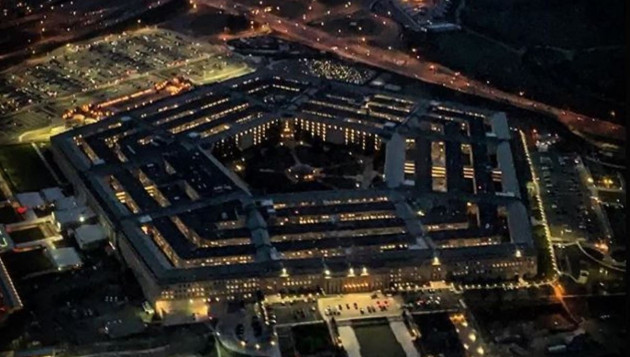
In August 2024, someone created an X account called the Pentagon Pizza Report. Its mission: monitor Google Maps “popular times” and “live visit” data for pizza shops near the Pentagon and flag unusual spikes in real time. No insider access. No classified sources. Just a guy watching a publicly available map and counting how many people are standing inside a Papa John’s at midnight.
Then came PizzINT (yes, that’s its real name). Short for Pizza Intelligence. It’s a full real-time dashboard that tracks foot traffic at pizza shops, cross-references delivery app trends, and visualizes the data on a map. The OSINT community, the open-source intelligence world that monitors publicly available information to piece together what governments won’t say, adopted it immediately. Part serious tool, part magnificent internet absurdity.
Worldwide military installations are now live in PolyGlobe.
Zoom in, filter, and see the full picture. https://t.co/7w4VkZf7F2 pic.twitter.com/3xv4oIDRxX
— Pentagon Pizza Watch (@pizzintwatch) February 26, 2026
And they didn’t stop at pizza. Analysts started tracking what they call the “Bar Index,” monitoring foot traffic at nightlife spots near the Pentagon. The logic is elegant: if the bars are dead on a Thursday night and the pizza shops are slammed, those staffers aren’t out having a good time. They’re in the building. Planning something.
On June 12, 2025, around 7 PM Eastern, the Pentagon Pizza Report flagged a massive surge in activity at four pizza restaurants near the Pentagon. An hour later, Israel launched a major bombing campaign against Iran.
Ten days later, on June 22, the account flagged high activity at a Papa John’s near the Pentagon at 10:38 PM. One hour later, President Trump announced Operation Midnight Hammer… U.S. stealth bombers struck three Iranian nuclear enrichment facilities.
A pizza tracker called two of the most significant military operations of 2025 before the news broke.
And now it happened yet again. As tensions between Washington and Tehran escalated once more, the index resurfaced. Orders at Pizzato Pizza near the Pentagon spiked at 1:28 AM. The Pentagon Pizza Report flagged it. Hours later, the strikes were confirmed.
Naturally, the Department of Defense has denied the whole thing. A Pentagon spokesperson told Newsweek that the building has numerous internal food vendors available to late-night workers and that the Pizza Report’s timeline doesn’t align with actual events. Academics have called it confirmation bias. Skeptics point out that Google Maps tracks foot traffic, not actual pizza orders, and that a Friday-night surge could just mean a Nationals game let out early.
Fair enough.
But then Defense Secretary Pete Hegseth went on Fox News and, when asked about the account, said: “I’ve thought of just ordering lots of pizza on random nights just to throw everybody off. Some Friday night, when you see a bunch of Domino’s orders, it might just be me on an app, throwing the whole system off so we keep everybody off balance.”
Let that insanity sink in. The Secretary of Defense acknowledged the pizza tracker. Then joked about running counter-intelligence operations against it.
When you’re running psyops against a pizza app, the pizza app has won.
And then… the joke stops being funny.
Because we’re not the only ones watching that X account… every foreign intelligence service with an internet connection has access to the same Google Maps data, the same foot traffic spikes, the same PizzINT dashboard. If a guy in his apartment can call an airstrike an hour early, so can an analyst in Tehran. Or Moscow. Or Beijing.
Hegseth’s joke about ordering decoy pizzas? That might not be a joke at all. When a publicly available pizza tracker can function as a real-time early warning system for adversaries, counter-deception isn’t buffoonery. It’s a necessity.
CNN’s Wolf Blitzer, back when he was the Pentagon correspondent, once said it best: “Bottom line for journalists: Always monitor the pizzas.”
He was joking. Sort of.
Because here’s the real question underneath all of this, and it’s not really about pizza at all. We live in a world where a guy with a laptop and a Google Maps tab can track foot traffic outside the most secure military headquarters on the planet and predict kinetic operations before the press corps even wakes up. No clearance. No sources. No budget. Just publicly available data and pattern recognition.
The Pentagon spends billions on operational security. Billions. And a $14.99 large pepperoni keeps blowing the whistle.
Frank Meeks just wanted to sell pizza. He didn’t mean to become an intelligence asset. But the information was always there… sitting in the open, hiding in plain sight, dressed up in a cardboard box and smelling like mozzarella. The only thing that changed was that someone finally decided to pay attention.
Makes you wonder what else we’re accidentally broadcasting.
—
About the Author
“I don’t try to change minds… just deepen them.” – Tegan Broadwater
Tegan Broadwater spent 13 years with the Fort Worth Police Department, including two years assigned to the FBI working deep undercover inside a violent Crip organization. That operation, detailed in his book Life in the Fishbowl, resulted in 51 convictions. He has since founded Tactical Systems Network, an armed security & protection firm primarily staffed by veterans, is a creative writer and musician, and hosts The Tegan Broadwater Podcast. All book profits benefit children of incarcerated parents. Learn more at TeganBroadwater.com








COMMENTS