

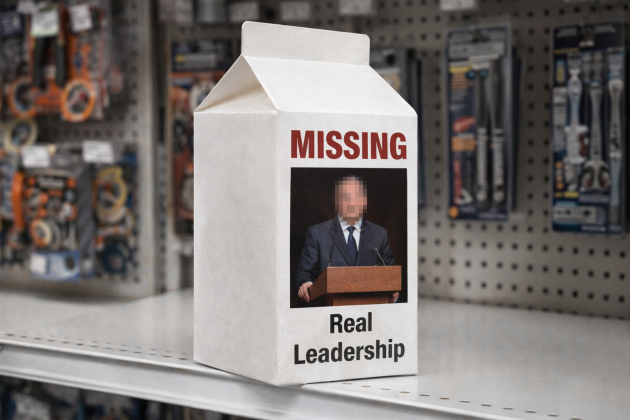
Forget politics. Forget left and right. Forget the last election… and the next.
Picture authentic leadership. The real kind. The kind you’ve seen, served under, or tried to become.
Below are four quotes from Niccolò Machiavelli, written 500 years ago. When principles as old as these stand, you know they’re drawn from our true human essence. Machiavelli was a misunderstood man with a unique disposition, an advisor to princes on power. Tortured and imprisoned, he was able to observe how power actually works and document it.
As you read on, ask yourself one question: Do I agree?
—
“The first method for estimating the intelligence of a ruler is to look at the men he has around him.”
You want to know what kind of leader someone is? Look at who they choose. Competence or loyalty. Challengers or applauders. Concessions or professions. The team reflects the leader.
Easy.
—
“He who wishes to be obeyed must know how to command.”
Command with clarity, confidence, and consistency. Skip the yelling, demanding, or simply functioning from a position of status. It’s the sergeant who never raised his voice because they never had to. You’ve met that person. You know the difference between someone who commands and someone who makes noise.
—
“A prince who is not wise himself will never take good advice.”
You can surround yourself with the smartest people on earth, but if your ego filters everything, good counsel dies on a vine. Good leaders know what they don’t know… and shut the hell up long enough to learn it.
—
“The best fortress is to be found in the love of the people, for although you may have fortresses, they will not save you if you are hated by the people.”
If the people you lead don’t trust you, neither the tallest walls nor titles will protect you. A leader without buy-in is just a wannabe standing in a room that’s already emptied.
Right? Good.
If you’ve led anyone or followed someone worth following, none of this is surprising or controversial. It’s just true. Water-is-wet stuff.
Now let’s reframe.
—
Apply these standards to the people asking for your vote.
Pick anyone on either side. Run them through the rubric you just agreed to.
Who do they surround themselves with?
Look at the cabinets, inner circles. Do you see experts who earned their seat, or donors who bought one? Advisors who challenge, or “yes-men” who manage? Do they have a team built for results, or a rewards program for loyalty?
Do they know how to command?
…or just function? Watch the press conferences. Is there clarity or volume? Is there genuine confidence or a rehearsed deflection? Where is the accountability? When was the last time you heard a good answer that wasn’t workshopped by a roomful of consultants?
Can they take advice?
When’s the last time one of them publicly changed their mind because someone was smarter or simply presented a better idea? When did they resist pivoting for the polls or genuinely recalibrate based on new information? Those are actions that command respect. We’re still waiting.
Are they loved, or tolerated?
Do people follow them, or vote against the other guy? Do people genuinely agree, or are they scared of retaliation? Would someone walk through a wall for them, or do they just feel they just have no other choice? There is a vast difference between a good leader and the lesser of two evils.
I’m not naming names. You don’t need me to. You’re already filling in the faces. Because this isn’t partisan. It’s an observation of our species.
—
Machiavelli had one more line. This one needs no explanation:
“Politics have no relation to morals.”
He wasn’t prescribing; he was describing. Yet, 500 years later, we still act surprised when it proves true.
—
So, I ask:
If those are basic leadership standards, and the people asking for your trust don’t meet them, why are you still listening? Moreover, why are you bickering on their behalf? Families split. Friendships trashed. For what?
This isn’t a leadership issue. It’s a shopping problem. We walk into the hardware store looking for milk and are frustrated when we can’t find any. Just as we look for leaders in a room full of politicians, we keep expecting character from a system that doesn’t reward it.
The men who hit the beach at Normandy didn’t wait for a press conference to define courage. Your dad, your coach, your sergeant, or your favorite teacher or boss never poll-tested integrity.
So, amidst a country filled with extremes, animosity, and even hate, who do you look to for answers? Someone out there is certainly worth following…and they ain’t near a podium.
—
Tegan Broadwater spent 13 years with the Fort Worth Police Department, including two years assigned to the FBI working deep undercover inside a violent Crip organization. That operation, detailed in his book Life in the Fishbowl, resulted in 51 convictions. He has since founded Tactical Systems Network, an armed security & protection firm primarily staffed by veterans, is a creative writer and musician, and hosts The Tegan Broadwater Podcast. All book profits benefit children of incarcerated parents. Learn more at TeganBroadwater.com








COMMENTS