

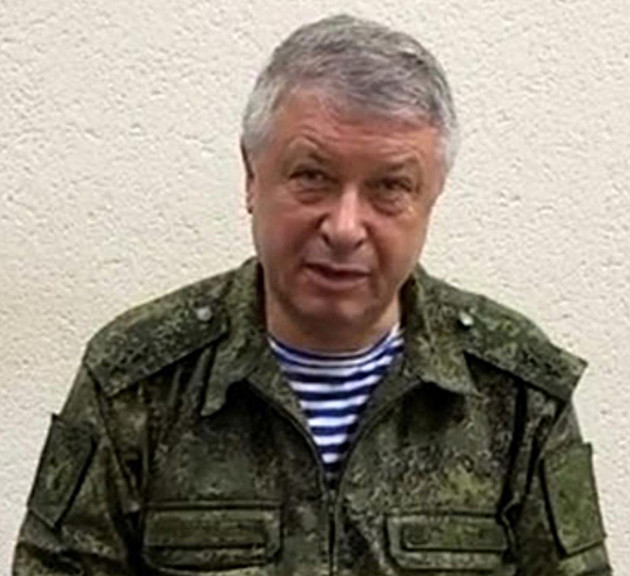
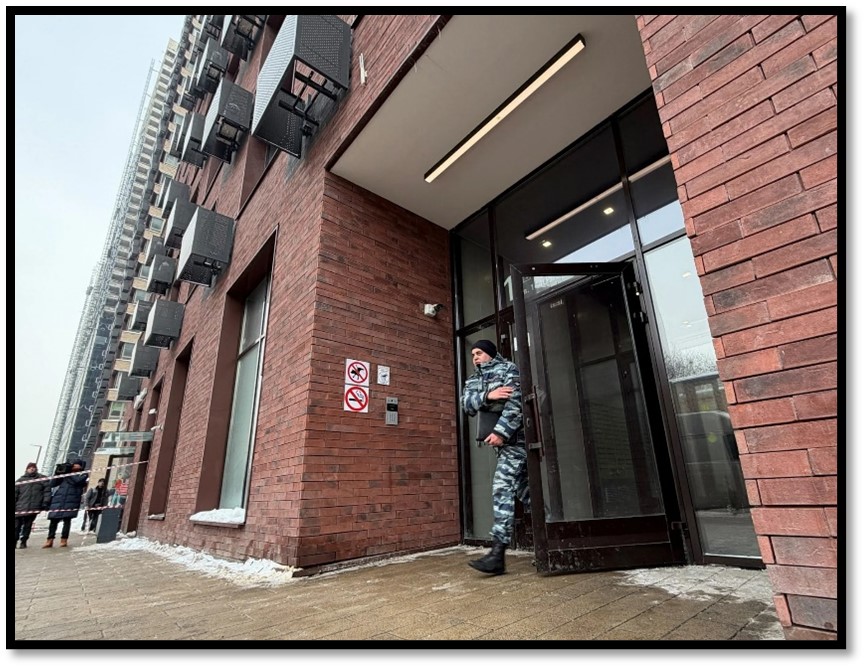
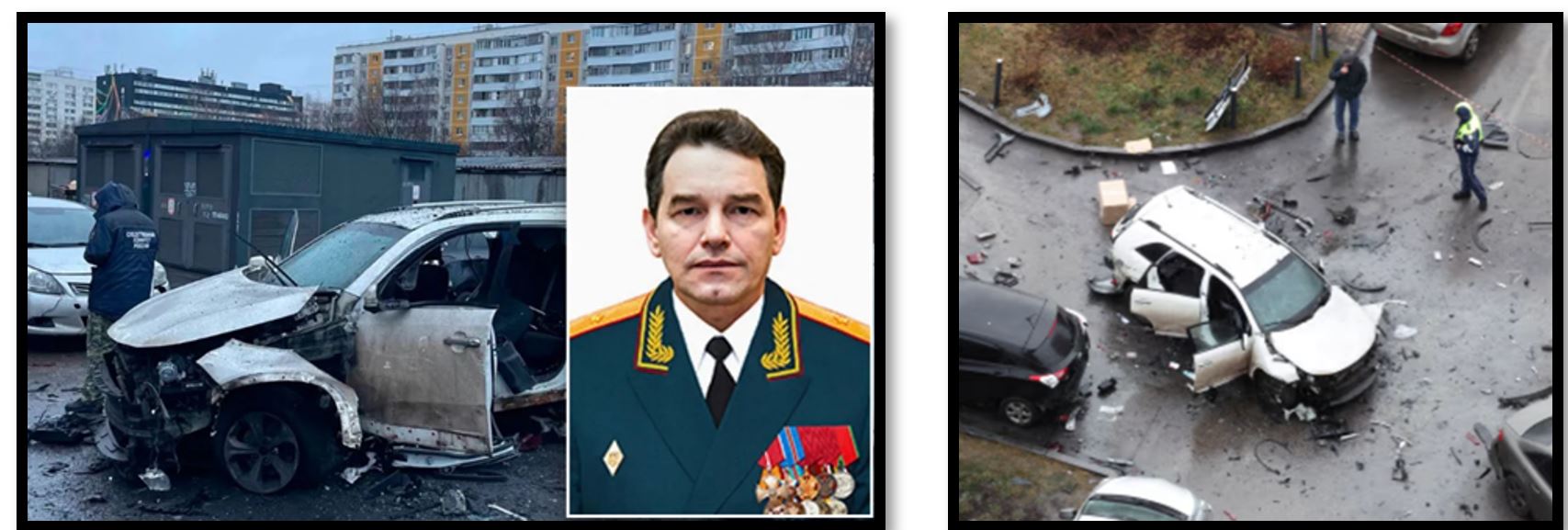
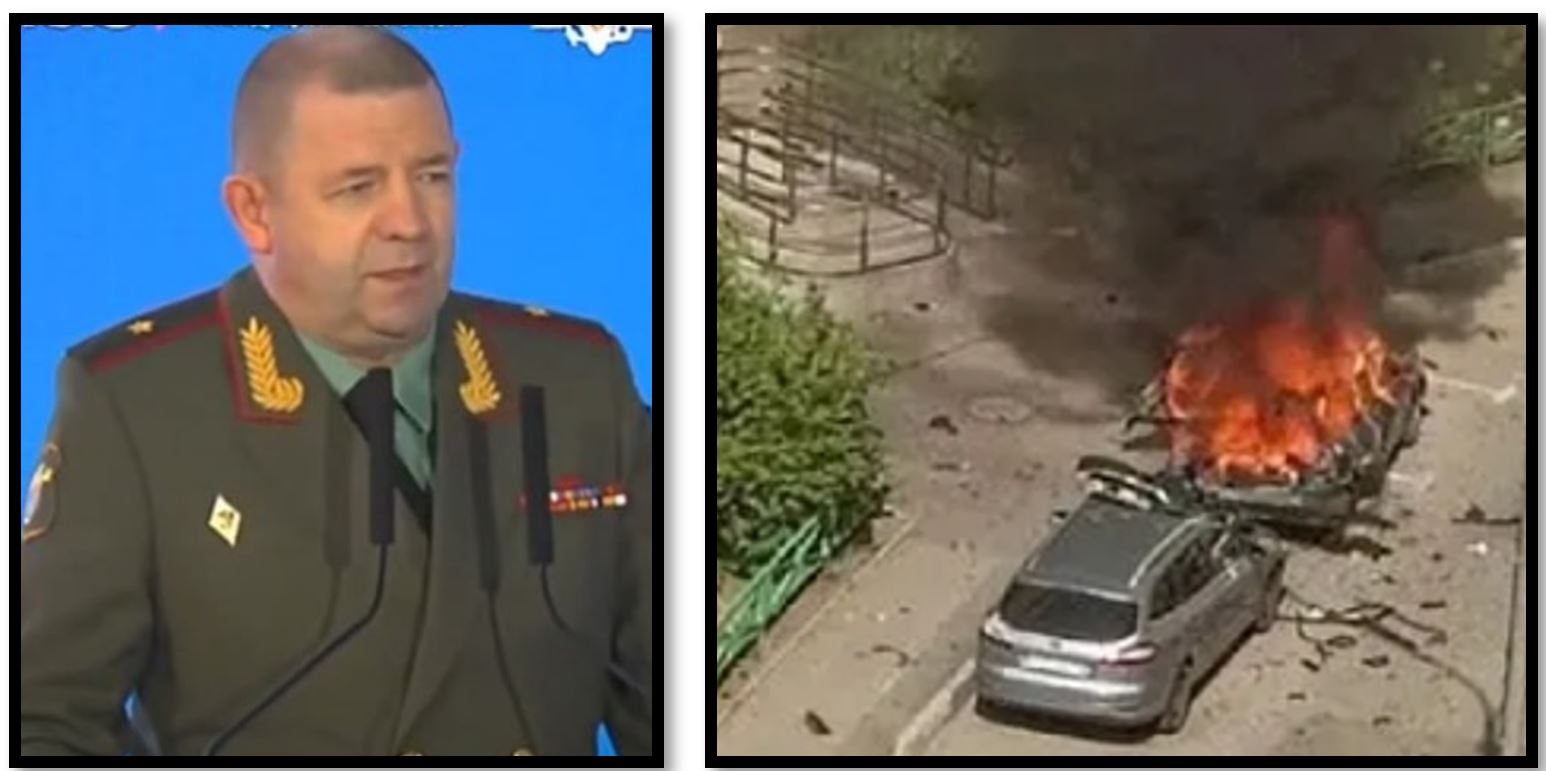
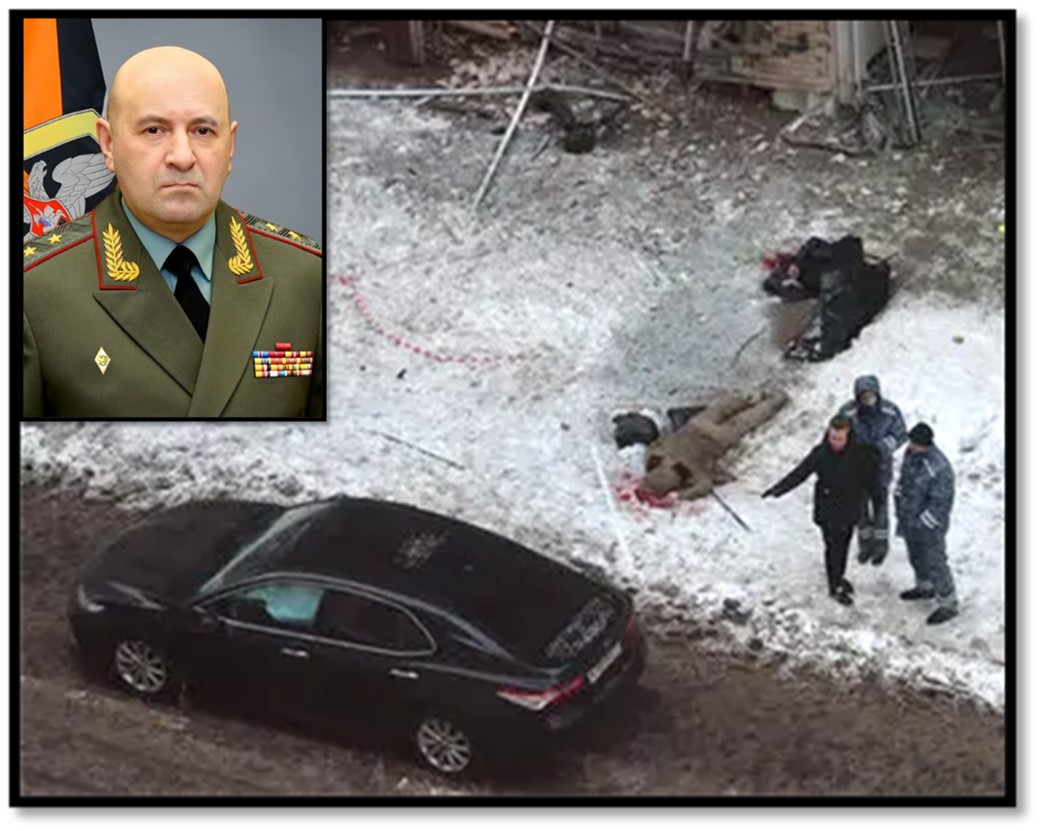

In fact, during the first eight months of 2025, the number of assassination attempts by Ukraine inside Russia had already exceeded the annual totals for 2022, 2023, and 2024, with late 2024 marking a notable turning point. Conversely, at least nine Russian assassination attempts between 2023 and August 2025 were poorly executed and relied upon less-than-competent local proxies.
According to Ukrainian government officials and news sources, President Volodymyr Zelenskyy has survived dozens of assassination attempts by Russian or pro-Russian agents during the war, including at least three that were foiled by Ukrainian security services. The most recent of these failed plots was apparently on May 5, 2024. In that light, it’s completely understandable that Ukraine is striking back against high-level Russian leaders, turning the tables against the aggressors.
The former Soviet Union, and current Russian Federation, has held a long-term interest in covert operations and mokroye delo, meaning “wetwork” or “wet affairs” (assassinations), and they developed two suppressed handguns for these specific purposes.
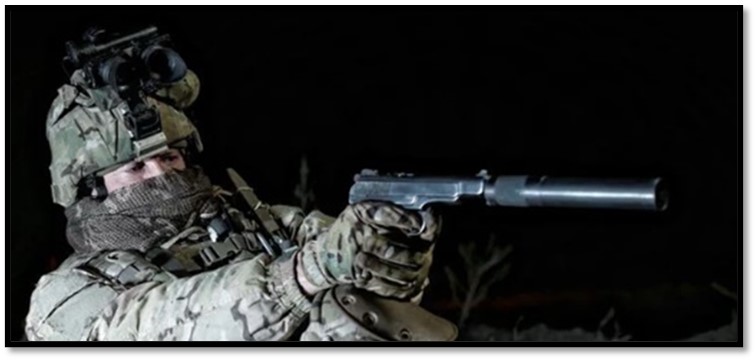
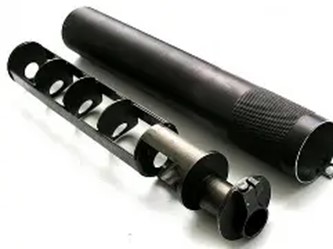
The Makarov PB (Pistolet Besshumniy, meaning “Silenced Pistol”) is a modified, Makarov service pistol in 9x18mm, with an eight-round magazine, integral suppressor stage, and screw-on, suppressor cylinder, produced from 1967 to the present day, most recently by the Kalashnikov Concern, the same company that manufactures the AK-47, AK-74, AK-104/105, and AK-12-series assault rifles. The Makarov PB is in widespread service with Russian and Ukrainian special operations forces and intelligence agencies.
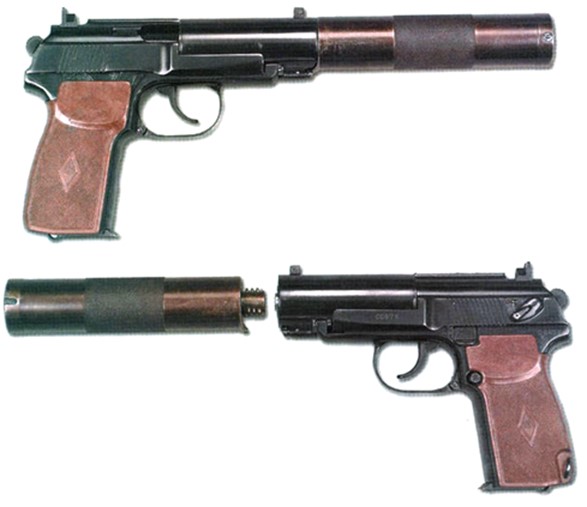
In fact, the infamous Makarov PB is the exact weapon used in the very recent Alekseyev assassination attempt, left behind at the scene, indicating a professional hit by someone, either Ukrainians, the Russian mafia, or some other group or individual. The assailant undoubtedly dropped his weapon so that he would not be caught or questioned by police later, with the incriminating handgun in his possession. It may have been directly supplied to him or was acquired on the flourishing black market in Russia, with an estimated 10 million illegal guns in circulation at any given time since 2021.
Gun crime is certainly on the rise there, with Rostov-on-Don, a gateway for troops heading to and from the war zone, reported as the most dangerous city in Europe for the past three years. One Interpol official candidly admitted in 2025 that, “There are too many gangsters, too much money to be made, too many other priorities.”
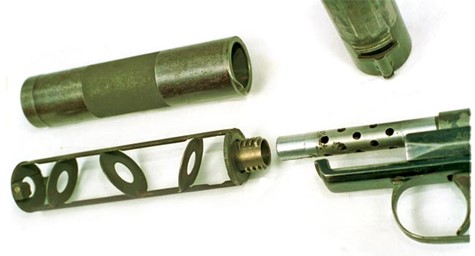
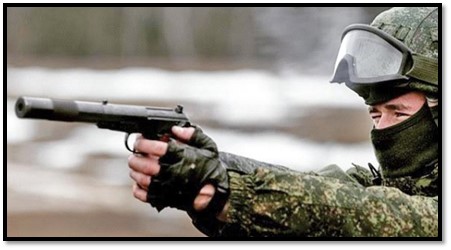
A Makarov handgun typically produces 158 decibels of sound upon firing, but the Makarov PB suppressor reduces this loud report to 127.5 decibels, which is still significant but several orders of magnitude quieter, even for a very crude, simple suppressor design, although numerous holes drilled through the barrel certainly help.
Russia says it has identified the prime suspect involved in the shooting of Alexeyev as Ukrainian-born, Russian citizen Lyubomir Korba, who immediately fled to the United Arab Emirates (UAE) after the shooting, but has been extradited back to Russia. Russia’s Investigations Committee (SK) claimed that Korba arrived in Moscow in late December 2025, “on assignment from Ukrainian intelligence services, to commit a terrorist attack,” but the Ukrainian government has reportedly denied involvement.
Somewhat different, but still in active service in very limited numbers, is the Stechkin APB (Avtomaticheskiy Pistolet Besshumniy, or “Automatic, Silenced Pistol”) machine pistol, a suppressed variant of the fully-automatic (12.5 rounds per second) Stechkin APS handgun in 9x18mm. Only 2,000 examples were produced from 1972 to 1973, yet it remains so popular with Russian special forces and paramilitary units that many are still in service today. The Stechkin APB has also been captured and frequently used by Ukrainian forces in the ongoing war.
It comes standard with a folding, wire stock, 20-round magazine, and crude-but-effective, offset suppressor, which slightly reduces the muzzle velocity of the ammunition from 1,050 feet per second to 950 feet per second, in exchange for a quieter report.
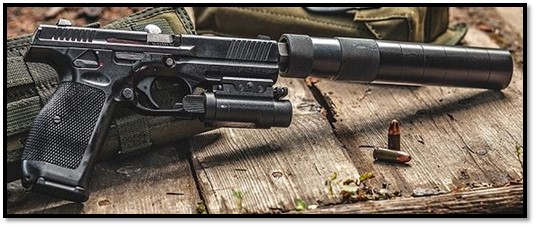
More recently, in 2021, the Kalashnikov/Lebedev MPL1 (PLK) service pistol in 9x19mm, with a 16-round magazine (19 rounds optional), was formally adopted by the Russian Rosgvardiya (National Guard) and Ministry of Interior special troops, firing an 83-grain, steel-core, armor-piercing projectile at a blazing 1,518 feet per second! It may be easily fitted with a titanium suppressor and other accessories.
However, Defense Express reported on December 10, 2023, that, “In reality, the Lebedev (MPL1) gun simply falls apart after firing, and after 384 shots, it must be sent to the workshop for maintenance…the screws tend to loosen after 20 shots…After 160 shots, the silencer sticks to the bushing and starts unscrewing alongside.”
So, even from the noted Kalashnikov arms factory, the quality control of the latest Russian firearms is seriously in question, and the older, simpler, more robust Makarov PB and Stechkin APB remain quite popular with special operations forces and intelligence agencies on both sides of the current war in Ukraine.
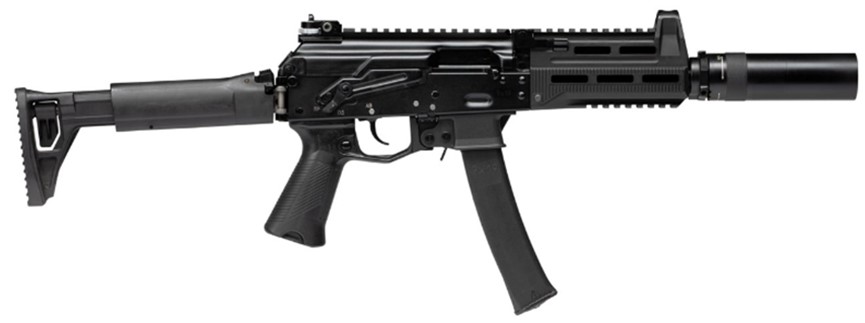
In addition, a slightly larger, yet still compact, weapon that is ideally suited for covert operations, such as assassinations, is the new (since July 2020), Kalashnikov PPK-20 submachine gun in 9x19mm, with a folding stock, a 9.17-inch barrel, 30-round magazine, and available suppressor, already seen in action in eastern Ukraine since 2022.
Then, in August 2021, the shorter, PPK-20U model was introduced, featuring a 7.15-inch barrel, with plans to issue this modern firearm as an aircrew survival weapon for Russian pilots, but it’s also a very compact, selective-fire weapon for special forces or paramilitary units.
These specialized, suppressed weapons have also found their way into the hands of the Russian mafia, and other criminal gangs, and with President Vladimir Putin wiping out much of the internal dissent within Russia through “accidents” (falling from high balconies seems to be a particular favorite), alleged “suicides” (often by gunshot to the back of the head), poisonings, car crashes, and other techniques, it’s often difficult to determine whether the untimely death of a high-level official was an internal elimination, or a Ukrainian hit team.
But this intentional, Russian ambiguity factor certainly works in favor of Ukrainian assassins in terms of plausible deniability, since they can point to the distinct possibility that a specific, targeted killing was carried out by the Russian government.
In any event, as senior analyst Nichita Gurcov at ACLED recently stated, “The duel of assassinations…is happening in parallel with the unravelling rules of engagement in conventional warfare…Unrestricted by the confines of the battlefield, this practice may become a self-sustaining spiral of violence.”








COMMENTS