What’s new and what’s confirmed
President Donald Trump said out loud what Washington usually keeps securely hidden in red-bordered file folders marked “Secret”. He has authorized the CIA to run covert operations inside Venezuela. The President framed it as a counternarcotics push and a response to Venezuela-based criminality. That admission came as the U.S. military carried out lethal strikes on suspected drug boats in the Caribbean beginning September 2, with at least five vessels destroyed and twenty-seven individuals killed, several originating from Venezuela. The White House has not publicly released evidence of narcotics on those craft.
The goal in Venezuela
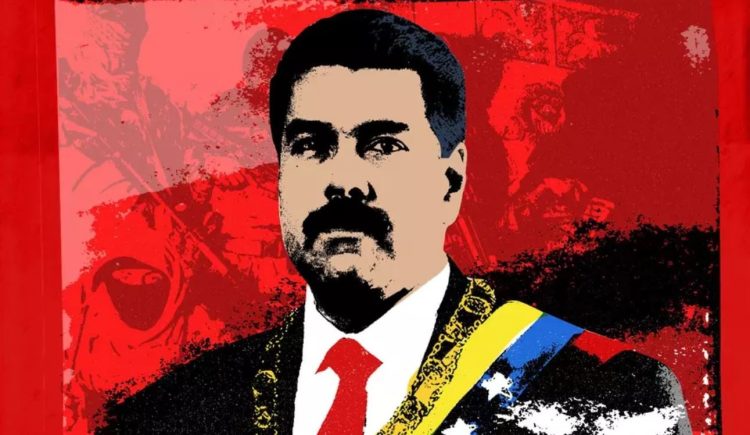
Publicly, the mission is about drugs. Privately, and by any sober reading of the moves on the board, it is a pressure campaign against Nicolás Maduro’s regime. Reporting describes a classified directive that empowers covert action, while the overt naval air campaign seeks to squeeze the cash pipelines that keep the Venezuelan security elite loyal. That aligns with independent analysis, which suggests that the deployment makes more sense as a political leverage than a purely drug policing measure.
Legally, any CIA covert action requires a presidential finding that the operation supports U.S. foreign policy and national security, documented in writing and briefed to Congress. That is black letter law. Whether the current rollout meets the spirit of oversight is the question roiling Capitol Hill.
The helicopters off Trinidad’s shoulder
Open source imagery and national security reporting this week show U.S. Special Operations helicopters working training profiles less than ninety miles from Venezuela’s coast, near oil platforms off Trinidad. The airframes identified look like MH-6 Little Birds and MH-60 Black Hawks, a signature of the 160th Special Operations Aviation Regiment (SOAR). Analysts believe many of these flights stage from the MV Ocean Trader, a converted commercial ship that serves as a floating base for special operations. The Pentagon will not comment.
Fox News has focused recent coverage on the broader Caribbean buildup and authorities for strikes, including an interview in which Defense Secretary Pete Hegseth asserted he has the authorizations he needs. Other outlets have documented the helicopter presence specifically. Take that combination together and you get the picture.
The drug routes are shifting and multiplying
In the chess match that is counternarcotics, the board is not static. UN and DEA material show cocaine flows adapting around pressure, with the eastern Caribbean acting as a trampoline between South America and the wider world. Trinidad and Tobago, Guyana and Suriname sit on an arc that traffickers use to hop maritime and air routes into the Antilles, West Africa, Europe and the U.S. mainland. When one corridor gets hot, cargoes move to semi-submersibles, go fasts, unregistered fishing craft, and short-hop air bridges. Expect more of that now.
If the current U.S. campaign reduces large maritime loads departing Venezuelan coasts, the market will seek costlier and more clandestine alternatives. That likely means higher reliance on smaller multi-leg runs through the Lesser Antilles, increased flights into remote strips in Guyana and Suriname, and a rebound of shipments aimed at Europe via West Africa, where enforcement and corruption gaps invite risk-taking. The strategic point is simple. Interdiction is a pressure tool. It does not end demand. It moves routes and raises prices.
What to expect next
Two tracks to watch. First, the maritime pressure campaign looks set to continue. SECDEF Hegseth has already signaled more operations against traffickers, and the administration has paired kinetic strikes with a bounty posture against Maduro’s inner circle. Second, the presence of Ocean Trader and Night Stalker helicopters near Trinidad suggests a ready option for precision raids or partner-enabled interdictions in littoral zones that stop short of crossing into Venezuelan airspace. The legal and political risk spikes if those lines are crossed.
This policy has drawn heat. Human rights groups and lawmakers question the legality of sinking suspect boats without public proof of contraband and without captures that yield prosecutions or intelligence. Venezuela has called it an unlawful intervention. The debate over authorities is not academic. It is the difference between police work at sea and a shadow war in the Caribbean.
The Gideon thread
If this sounds familiar, it should. In 2020, Jordan Goudreau and a small band of Venezuelan dissidents tried to sea glide into history with Operation Gideon, a failed incursion aimed at capturing Maduro. Two American former Green Berets (Luke Denman and Airan Berry) were among those captured. No rock solid evidence ever emerged that the U.S. government backed the plot. The fiasco became a cautionary tale in irregular warfare.
That story is now in a meticulously crafted documentary, Men of War, which follows the ill-fated scheme and its fallout. It is currently available to stream on Apple TV and Amazon Prime Video. For anyone trying to understand the combustible mix of ambition, desperation, and rumor that swirls around Caracas, it is required viewing.
Already have an account? Sign In
Two ways to continue to read this article.
Subscribe
$1.99
every 4 weeks
- Unlimited access to all articles
- Support independent journalism
- Ad-free reading experience
Subscribe Now
Recurring Monthly. Cancel Anytime.
Full Disclosure: I was asked to review early cuts of Men of War and comment on the content. The filmmakers honestly did a fine job with this one. The story is quite complicated and there are many, many players, but it is told in such a way that you can follow it from start to finish and make sense of what you witnessed. Then the processing begins. Was Jordan Goudreau a good guy or a bad guy? Maybe he just got in way over his head. Did he have backing from some of the highest offices in Washington? After watching the film, we are left pondering these and many other questions.
Bottom line
The White House has put both the spy service and the military machine in motion around Venezuela. The declared target is narcotrafficking. The obvious strategic objective is leverage against Maduro. Helicopters are flying close, a special operations mothership is in theater, and the boats that still dare to run are getting taken out faster than a Mallard at a Duck Dynasty family reunion. That is the state of play tonight.
This is a developing situation. Keep checking back with SOFREP for the latest on the Venezuela situation.
—
Editor’s note on sourcing: This piece is grounded in on-the-record statements, statutory text, and reporting from AP, The Washington Post, Reuters, UNODC, and publicly available datasets. Where Fox News is cited is for authorities and posture, while the helicopter presence near Venezuela comes from outlets that published the imagery and analysis.










COMMENTS