

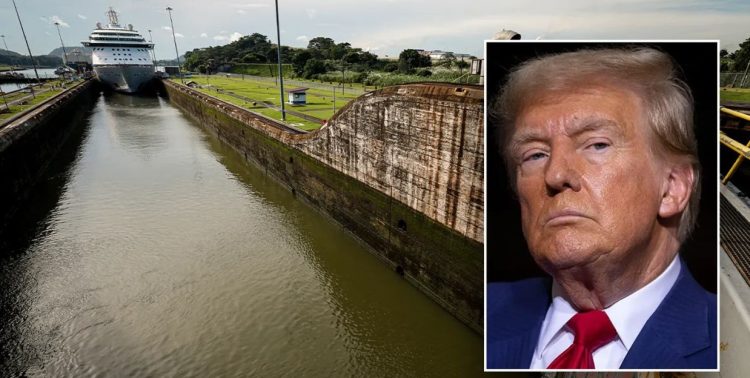
Moreover, this kind of operation would require a justification under international law, which is unlikely to hold water. Most likely, U.S. allies in the Western Hemisphere would balk at such a move, further isolating America on the global stage. Let’s be clear: I really doubt that President Trump plans on using military force to retake the Panama Canal. I’m sure he would much prefer the Panamanians to simply return it to us if he deems it necessary.
That said, there’s historical precedent for U.S. intervention in Panama. In 1989, Operation Just Cause saw American forces topple Manuel Noriega’s regime, citing threats to American lives and democracy. While Trump’s rhetoric stops short of advocating outright invasion, his words have evoked memories of that era.
Diplomatic Fallout: A Regional Domino Effect?
Trump’s comments have already strained U.S.-Panama relations. Panamanian President Laurentino Cortizo has called for calm but warned that any attempt to undermine Panama’s sovereignty would be met with resistance.
Other Latin American nations are watching closely. Many still harbor resentment over decades of U.S. interventions in the region, and a move on the Panama Canal could reignite anti-American sentiment. Nations like Brazil, Mexico, and Argentina—key regional powers—might see this as a justification to further distance themselves from Washington and align more closely with Beijing or Moscow.
The broader international community isn’t likely to sit idly by either. A U.S. move to reassert control over the canal could escalate tensions with China and Russia, both of whom would see this as a direct challenge to their interests.
President-Elect Donald J. Trump suggested in a Post earlier on Truth Social, that if Panama decides to act against American Cooperation and Interests, then he will demand that the Panama Canal is placed back under the Control of the United States. pic.twitter.com/LEJXNXlX0M
— OSINTdefender (@sentdefender) December 22, 2024
The Political Angle: Campaign Promise or Genuine Threat?
Trump’s statements about the Panama Canal could be chalked up to political bluster, designed to rally his base with visions of American strength and resolve. But even as a rhetorical device, it’s a risky, if not surprising, play.
If this threat is serious, it represents a major shift in U.S. foreign policy—one that prioritizes unilateral action over multilateral cooperation. Such a move could define not just Trump’s presidency but also America’s role in the world for years to come.
Final Thoughts
For well over 100 years, the Panama Canal has been an international symbol of geopolitical power and influence. Trump’s talk of “taking it back” reflects a broader debate about America’s place in an increasingly multipolar world.
From a military perspective, securing the canal is plausible but fraught with risks. Diplomatically, it’s a powder keg waiting to explode. And politically, it’s a gamble that could either galvanize Trump’s supporters or alienate key allies.
In the end, the question isn’t whether the U.S. can take back the Panama Canal. It’s whether the risks are worth it—and whether the nation of Panama will bow to the will of the United States or not.








COMMENTS