

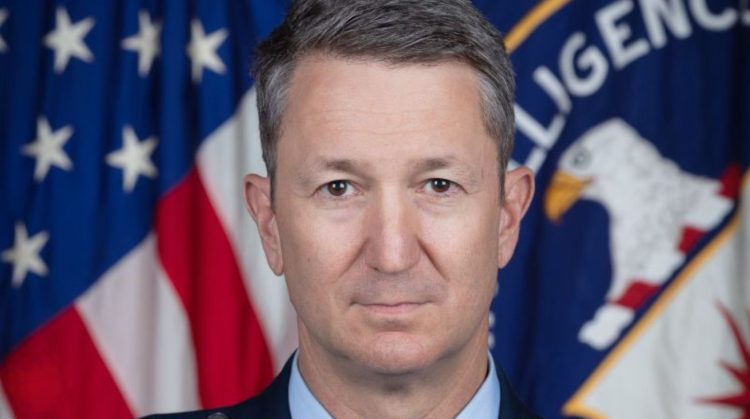
While the position carries immense influence, it’s important to understand that the Chairman’s role is advisory in nature. The actual chain of command runs from the President to the Secretary of Defense and then directly to the combatant commanders in the field. He does not exercise command over any military forces.
A Career Built in the Cockpit and the Pentagon
Lt. Gen. Dan “Razin” Caine has built a distinguished career that started in a fighter jet and led him to the highest levels of the Pentagon. His service record reflects a rare combination of combat experience as a fighter pilot and strategic leadership in some of the Department of Defense’s most sensitive programs.
Caine graduated from the Virginia Military Institute in 1990. He began his military career flying the F-16 Fighting Falcon, eventually logging more than 2,800 flight hours, including over 150 hours in combat. He took part in several major military operations, including Operation Southern Watch, the Iraq War, and Operation Inherent Resolve.
As an instructor pilot and weapons officer for both the 138th and 121st Fighter Squadrons, Caine trained the next generation of combat aviators. In the aftermath of the September 11 attacks, he played a key role in the air defense mission over Washington, D.C., helping to protect the nation’s capital from potential threats.
During the 2003 invasion of Iraq, Caine contributed to strategies aimed at countering the threat of Iraqi Scud missiles, demonstrating his operational and tactical expertise. His aggressive and skilled flying earned him the nickname “Razin Caine,” a call sign that stuck with him throughout his career.
Caine’s talents extended well beyond the cockpit. At the Pentagon, he served as Director of Special Programs at the Department of Defense Special Access Program Central Office. In this position, he advised the Secretary of Defense on some of the military’s most classified and sensitive programs, all of which required stringent access controls.
From 2021 to 2024, Caine took on another critical national security role as the Associate Director for Military Affairs at the Central Intelligence Agency (CIA). There, he worked to bridge the gap between intelligence gathering and military operations, strengthening cooperation between the two worlds.
Additionally, Caine held senior leadership positions within Joint Special Operations Command (JSOC) and contributed to other classified efforts tied to special operations and unconventional warfare. His expertise in strategic planning, counterterrorism, and national defense policy also led him to serve on the Homeland Security Council and work as a White House Fellow. In those roles, Caine helped shape key elements of U.S. counterterrorism strategy and broader national security policies.
Caine seems to have it all. Little wonder President Trump picked him for such an important position.

Returning from the Private Sector
After retiring from the Air Force in December 2024, the new CJCS didn’t slow down. Instead, he shifted his focus to the private sector, building valuable experience in both entrepreneurship and national security consulting. Today, he brings that real-world business perspective back with him to the Pentagon.
During his brief period of military retirement, Caine served as Chairman of Voyager Space’s National Security Advisory Board. In that role, he provided guidance on defense and space technology solutions critical to U.S. national security. He also worked as a venture partner at Shield Capital and Ribbit Capital, helping guide investments in cutting-edge technologies like artificial intelligence, cybersecurity, and space innovation.
He further expanded his influence by advising Thrive Capital, a venture firm led by Joshua Kushner, where he offered strategic insights into technology investments with potential military applications. Beyond his advisory roles, Caine also rolled up his sleeves as an entrepreneur. He co-founded successful businesses such as RISE Air and Mayday Holdings, scaling operations and driving growth in the aerospace, defense, and healthcare industries.
Reflecting on his time in the private sector, the new chairman has said that it taught him “a different kind of grit” — the kind required to navigate risk, lead diverse teams, and innovate in competitive markets. As he returns to military service, the general has made it clear that he intends to apply that entrepreneurial mindset to his leadership of the Joint Chiefs. He has publicly stated that one of his top priorities will be modernizing the Pentagon’s notoriously outdated acquisition systems and improving the military’s ability to integrate new commercial technologies into defense operations.
Secretary of Defense Hegseth publicly endorsed Caine’s nomination, calling him “a warfighter first and always.” Hegseth added, “Dan Caine understands that our military exists to fight and win wars — not to serve as a social experiment.”
Confirmation Hearings and Pushback
Of course, General Caine’s confirmation as Chairman of the Joint Chiefs of Staff didn’t come without controversy. Sometimes, Democrats can be as cantankerous as Nancy Pelosi stuck in coach (all 25 “no” votes came from Democrats). His nomination and approval sparked heated debate in the Senate, with many lawmakers questioning both the circumstances of his selection and his qualifications for the role. Senator Elizabeth Warren of Massachusetts was particularly critical, arguing that the removal of Brown — the highest-ranking Black officer in the U.S. military — and Adm. Lisa Franchetti — the highest-ranking female officer — sent what she called “a chilling message about who is and who is not welcome in our military.”
During his confirmation hearings, Caine repeatedly emphasized his commitment to staying apolitical and providing honest, professional military advice to President Trump. He told senators that he intended to uphold the military’s traditions and serve as a nonpartisan leader.
When pressed by Democratic Senator Elissa Slotkin about whether he would resist unlawful orders from the president, Caine responded clearly, saying, “It is my duty and the job that I have, yes.”
One of the key points of concern during the hearings was Caine’s unconventional path to the position. Unlike most previous Chairmen, Caine had never served as a service chief or a combatant commander — both typically considered prerequisites for the job. Because of this, his appointment required a special waiver from Congress to bypass these requirements. The Senate voted to bring him back to active duty and promote him to a four-star general so he could assume the role of Chairman of the Joint Chiefs of Staff.
Adding to the tension were media reports alleging that Caine had once worn a red “Make America Great Again” hat during a meeting in Iraq. Caine firmly denied these claims during his testimony, stating that he had never worn any political merchandise while in uniform or out of it.
Much of the broader concern surrounding Caine’s nomination had less to do with him personally and more to do with President Trump’s larger shake-up of the Pentagon’s leadership. In addition to removing Brown and Franchetti, Trump dismissed five other admirals and generals, leading critics to accuse the administration of trying to stack senior military positions with personal loyalists rather than independent-minded officers committed to the Constitution.
An outlier, Senator Jack Reed (D-RI), Chairman of the Armed Services Committee, ultimately supported Caine’s nomination, calling him “qualified, experienced, and committed to the rule of law.”
Challenges Ahead
Now comes the hard part — steering a sprawling Pentagon bureaucracy known more for red tape than rapid action. For all his combat credentials, General Caine will need every bit of that “Razin” edge to cut through the politics, process, and inertia standing between today’s military and tomorrow’s fight.








COMMENTS