

Dialogue is never harmful in principle, but previous rounds of NATO-Russia talks did not prevent Crimea, Donbas, or the 2022 invasion. Talks without leverage become stalling mechanisms.
5 “Ukraine will receive reliable security guarantees… treated as an attack on the transatlantic community.”
This mirrors the language of collective defense, but without automatic triggers. Ukraine already had a security assurance: the Budapest Memorandum, signed when it surrendered the world’s third-largest nuclear arsenal. That did not prevent Russia from attacking in 2014 or 2022. Guarantees that depend on political will are inherently unstable.
6. “Ukraine’s armed forces capped at 600,000.”
This resembles the restrictions imposed on defeated aggressors after World War II. Ukraine is the victim of aggression, not the perpetrator. Limiting the military of the country under threat creates structural vulnerability.
7. “Ukraine enshrines permanent NATO neutrality.”
In a more balanced agreement, this might be negotiable. But the truth remains: NATO membership is the only credible deterrent Ukraine could ever have. Everything else depends on the goodwill of distant capitals.
8. “NATO agrees not to station troops in Ukraine.”
On its face, this is reasonable. But it raises an obvious question: who enforces the peace? If not NATO, then who—China? A UN mission without Russian cooperation? The ambiguity weakens the clause.
9. “European fighter jets will be stationed in Poland.”
Ukraine’s air force needs to operate from Ukrainian territory to respond quickly to threats. Basing jets in Poland would slow reaction times and place Ukrainian air defense under constant political dependency. The clause reflects a misunderstanding of air-power logistics.
10. U.S. conditions on the security guarantee.
Several triggers void the guarantee the moment Ukraine does anything Russia could frame as provocation. Meanwhile, Russia would face consequences only after another major invasion. The asymmetry is obvious.
11. EU membership eligibility.
Reasonable and consistent with Ukraine’s longstanding European trajectory.
12. Reconstruction package.
These provisions are largely sound. They mirror what Ukraine will need regardless of the war’s final settlement: infrastructure rebuilding, energy modernization, and private-sector growth.
13. Reintegration of Russia into the global economy and the G8.
This restores Russia’s pre-war privileges with minimal accountability. It signals the West’s willingness to move on even if Russia remains unchanged. That is not how deterrence works.
14. Frozen funds redistributed into joint U.S.-Russian ventures.
Transforming frozen Russian assets into a profit-sharing venture is politically unrealistic. It also risks turning accountability for war into a business opportunity.
15. A joint U.S.-Russian security working group.”
This implies inspectors or monitors from the aggressor operating on Ukrainian soil. That is unacceptable for any sovereign state, let alone one recently invaded.
16. Russia will “enshrine non-aggression in law.”
Russia has violated every major treaty it signed with Ukraine. A domestic law will not restrain the Kremlin if strategic conditions change.
17. Renewal of nuclear arms control treaties.
Arms control is crucial. Extending New START or a successor treaty benefits both sides.
18. Ukraine reaffirms non-nuclear status.
This simply reinforces the Budapest framework, which Russia already violated. Ukraine gives up leverage while Russia gives up nothing.
19. Zaporizhzhia Nuclear Plant operated 50:50 under IAEA supervision.”
The IAEA already maintains a presence, but Russia has routinely used the plant as leverage. A 50:50 arrangement would give Moscow ongoing influence over Ukraine’s energy stability. This is less a compromise than a built-in veto.
20. Educational and cultural “tolerance” measures.
This is one of the most troubling clauses. Russia has repeatedly used the language of “Nazism” to describe ordinary expressions of Ukrainian national identity. Under this framework, Ukrainian language laws, cultural institutions, and post-Maidan civic movements could be labeled extremist. It would dilute Ukrainian identity under the guise of pluralism while Russia, one of the world’s most intolerant regimes, faces no parallel obligations.
21. Territorial arrangements.
The plan cedes Crimea, Luhansk, and Donetsk to Russia and freezes the lines in Kherson and Zaporizhzhia. It also demands that Ukraine withdraw from areas it still controls in Donetsk, turning them into a demilitarized zone recognized as Russian territory.
President Zelensky called these terms “red lines Ukraine cannot cross.”
He is right. Recognizing some territorial losses may be part of a painful compromise, but formalizing Russia’s claims to land seized after 2014 rewards aggression and creates long-term instability.
22. No future “changes by force.”
This language is aspirational. States break such commitments when it suits them. Without credible enforcement, it is little more than a statement of preference.
23. Russia will not impede Ukrainian use of the Dnieper or grain exports.”
This sounds straightforward but ignores Russia’s history of weaponizing both rivers and grain corridors. The Black Sea grain deal collapsed multiple times due to Russian pressure.
24. Humanitarian exchanges and family reunification.”
Reasonable, though difficult to enforce without impartial oversight.
25. Elections in 100 days.”
Elections during demobilization are difficult but not impossible. The timeline may be too compressed for a country recovering from large-scale war.
26. Full amnesty for all war crimes.”
This would undermine the International Criminal Court and deny justice to thousands of victims. No credible peace agreement can include blanket immunity for atrocities.
27. Peace implementation overseen by a council headed by Donald Trump.”
Sanctions would be reimposed if Russia violated the agreement, but sanctions have not deterred Russia in the past. Without a credible military enforcement mechanism, this structure is symbolic.
28. Ceasefire triggered upon mutual withdrawal.”
This mirrors standard ceasefire language but remains unenforceable without neutral monitoring forces.
What a Realistic Peace Framework Would Look Like
A workable—and uncomfortable—settlement is possible, but it would look very different from the 28-point draft:
• A ceasefire along current lines, with no recognition of Russia’s claims beyond Crimea.
• A demilitarized buffer zone of roughly 60 kilometers on both sides.
• A neutral peacekeeping force mandated by the UN or led by European powers such as France, the Nordics, and possibly Canada.
• Phased sanctions relief tied strictly to verifiable compliance, including complete withdrawal from designated zones.
• No amnesty for war crimes; ICC jurisdiction remains intact.
• Ukraine free to pursue European integration, even if NATO membership is deferred.
This is not ideal. It does not deliver full justice or full victory. But it prevents renewed offensives while preserving Ukraine’s sovereignty and dignity.
Closing: What the War Has Taught Me
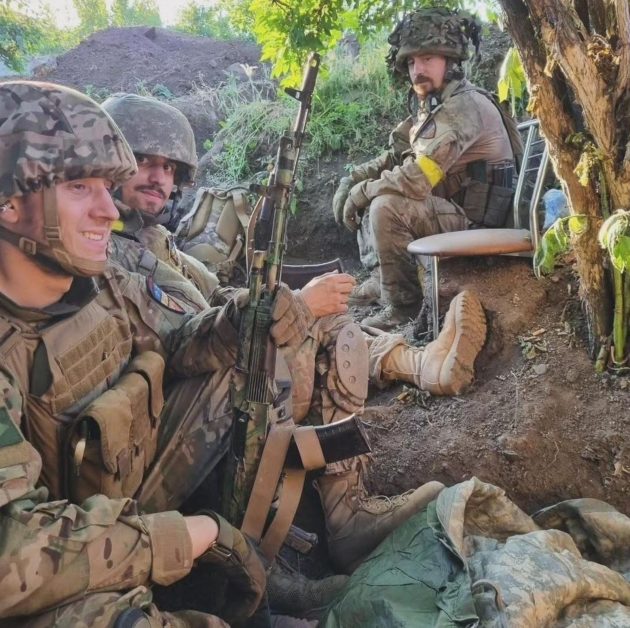
I fought in Ukraine. I lived among people who resisted invasion with a calm determination that still humbles me. I have seen towns destroyed, families scattered, and communities endure loss after loss with little more than faith in one another.
I understand Ukraine’s desire to restore every inch of its territory. Morally, it is unassailable. Strategically, it becomes more difficult each month as Western support ebbs and the front line ossifies.
I also understand Russia’s maximalist goals: to subordinate Ukraine, erase its national identity, and rewrite the post-Cold War order. These aims are incompatible with human dignity and international stability.
The task is not to accept either form of maximalism. The task is to prevent another round of mass killing while ensuring Ukraine remains a sovereign, democratic state capable of charting its future.
The 28-point plan does not accomplish that. It misreads the war, misjudges the stakes, and misrepresents the victim. A stable peace must begin with realism, not capitulation.
Ukraine deserves better. So does the world.








COMMENTS