

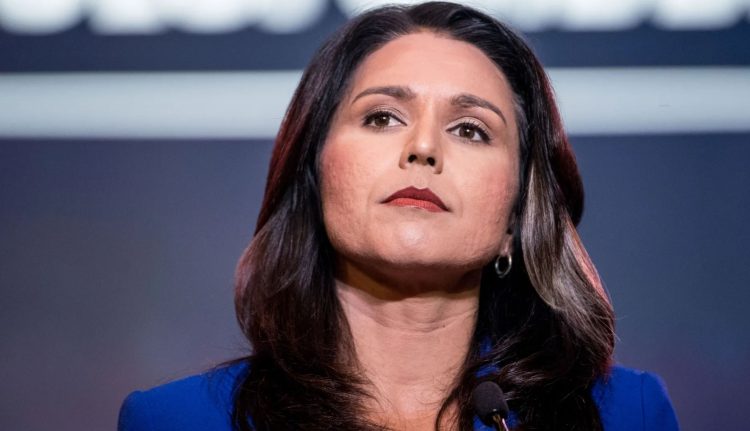
Shortly after, Russian state media outlets amplified her remarks. A panel on the Kremlin-backed program “60 Minutes” praised Gabbard and Tucker Carlson, calling them reliable voices. One panelist reportedly said, “They’re practically our co-hosts.” The clip circulated widely in Russian-language propaganda circles and was cited in Western press reports, including Newsweek and The Daily Beast.
Gabbard has also repeatedly framed NATO expansion as provocation and drawn attention to the presence of far-right Ukrainian military formations such as the Azov Battalion—echoing Kremlin narratives that seek to portray Ukraine as fascist-controlled, despite the group comprising a tiny fraction of the Ukrainian Armed Forces. Following widespread criticism and pressure from Western allies, the political character of the Azov Battalion has been significantly diluted since its early days. As part of broader Ukrainian army reforms post-2017, the unit was integrated into the National Guard of Ukraine, and its most overtly extremist elements were sidelined or purged. While Azov remains a propaganda focus for the Kremlin, its actual political influence within the Ukrainian military has diminished substantially.
More recently, Gabbard turned her fire inward. She accused Barack Obama of orchestrating a conspiracy to target Donald Trump using the national security establishment. This rhetoric isn’t just reckless. It’s disqualifying for someone now entrusted with national security oversight.
The problem isn’t just that these narratives echo the Kremlin. It’s that they do so at a time when trust in American institutions is already frayed. When politicians and influencers repeat disinformation—intentionally or not—it normalizes it. Gabbard’s status as a former member of Congress and military officer gives these talking points an air of legitimacy they would not otherwise possess. That is what makes her role particularly dangerous.
The erosion of trust has real-world consequences. It doesn’t just impact how people think—it affects how institutions function. Hybrid warfare thrives in these gray zones, where disinformation doesn’t have to convince everyone, only enough to disrupt cohesion and paralyze response. Public figures in the U.S. who echo adversarial narratives don’t need direct coordination with foreign actors. Their value lies in amplification, not allegiance.
And Gabbard has been useful. Useful to Russian propagandists who want to show division in the West. Useful to far-right influencers who want to delegitimize the U.S. intelligence community. Useful to autocrats who want to frame American democracy as hypocritical and unstable. Now she’s been handed a platform from which she can shape policy, debrief officials, and influence strategic priorities.
She doesn’t need to fabricate anything to be dangerous in that role. All she has to do is sow enough suspicion to paralyze decision-making. If the people tasked with countering foreign influence campaigns stop trusting their own institutions, those campaigns succeed by default.
Some might argue that Gabbard is simply voicing legitimate skepticism. But skepticism becomes dangerous when it aligns—knowingly or not—with the foreign adversaries it claims to oppose. Her accusations about a “coup” by Barack Obama and the intelligence community don’t emerge in a vacuum. They reinforce a broader narrative aimed at hollowing out public confidence in American institutions. These kinds of narratives don’t just cause friction in policy debates. They erode the very scaffolding of trust that national security relies on. Once that trust collapses, so does the ability to distinguish dissent from sabotage, and oversight from destabilization.
If America wants to maintain any credibility in confronting authoritarian threats, it cannot afford to elevate those who serve as vectors for their narratives. Gabbard doesn’t need to be a formal agent to be a liability. The Kremlin has already made clear that they consider her messaging valuable. That alone should tell us something.
We can still close that door. But we have to stop pretending that someone loudly echoing enemy propaganda is just playing contrarian. Sometimes the most effective disinformation asset is the one who thinks they’re just being honest.
Sometimes the most useful idiot is the one who doesn’t even know what team they’re on.








COMMENTS