Two U.S. Navy aircraft falling within minutes in the South China Sea hands Beijing a propaganda gift and turns “routine” operations into a spark near the region’s powder magazine.
Read the full article for more on:
Important insights and detailed analysis
Expert commentary on current events
Breaking developments and updates
Updating summary...
Two US Navy Aircraft Crash in South China Sea Amid Regional Tensions
Galen Fries
Speed
1x
Listen
COMMENTS
Two U.S. Navy aircraft falling within minutes in the South China Sea hands Beijing a propaganda gift and turns “routine” operations into a spark near the region’s powder magazine.
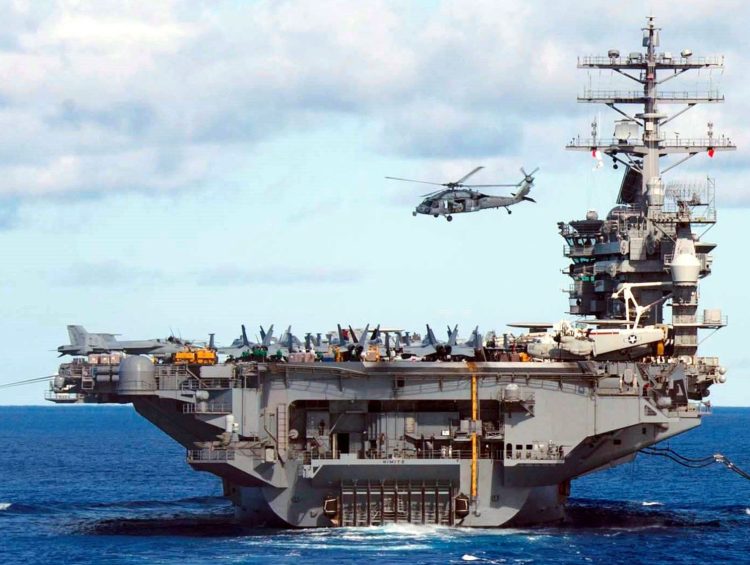
USS Nimitz steams through contested blue, its flight deck bristling with hardware as an MH-60R hovers overhead—a floating reminder that peacetime is relative in the South China Sea. Image Credit: DVIDs
Two U.S. Navy aircraft, an MH-60R Sea Hawk helicopter and an F/A-18F Super Hornet, went down in the South China Sea on Sunday within thirty minutes of each other. All five crew members were recovered unharmed, but the timing, location, and optics couldn’t be worse.
Advertisement
Beijing wasted no time accusing Washington of “stirring up instability.” The U.S., for its part, said the missions were routine, part of long-standing “freedom of navigation” operations in international waters. Both statements are technically true, but they tell very different stories.
The South China Sea isn’t just a shipping lane; it’s a geopolitical choke point that carries over a third of the world’s trade. China, the Philippines, Vietnam, Malaysia, and Brunei all claim overlapping slices of it. For years, Beijing has been turning reefs into fortified islands, building airstrips, radar stations, and missile sites where there used to be coral and sand. Its coast guard and “maritime militia” shadow anything that moves, projecting power far beyond its own shoreline.
One flashpoint stands out: Second Thomas Shoal. For more than two years, Chinese Coast Guard ships have repeatedly blasted Philippine resupply missions there with water cannons in August 2023, March 2024, and again just this month. Each time, Manila files a diplomatic protest. Each time, Beijing doubles down. It’s a pattern of maritime intimidation masquerading as law enforcement. The BRP Sierra Madre, a grounded WWII-era ship that serves as a Philippine outpost, remains the focal point of the standoff and a rusting symbol of resistance.
Advertisement
The timing of the latest flare-up is particularly unfortunate. President Trump is preparing for high-stakes meetings in Beijing, aimed at cooling tensions and testing whether any kind of U.S.-China “reset” is possible. Coming just as these meetings are about to take place, the back-to-back aircraft incidents inject a layer of unpredictability. Even if the crashes turn out to be mechanical, the optics are raw. Beijing can exploit the timing to frame the incidents as recklessness or weakness, while Washington must manage the fallout. In a region already thick with competing claims, overlapping patrols, and historical grudges, a single accident at the wrong moment can magnify tensions.
President Trump, for his part, has claimed that preliminary reports point to “possible bad fuel” as a factor in both crashes, a mechanical problem, not hostile action. If that turns out to be true, it would be a grim twist: two aircraft falling victim to contamination instead of confrontation, but still “fueling” the tension in one of the world’s most volatile regions.
Advertisement
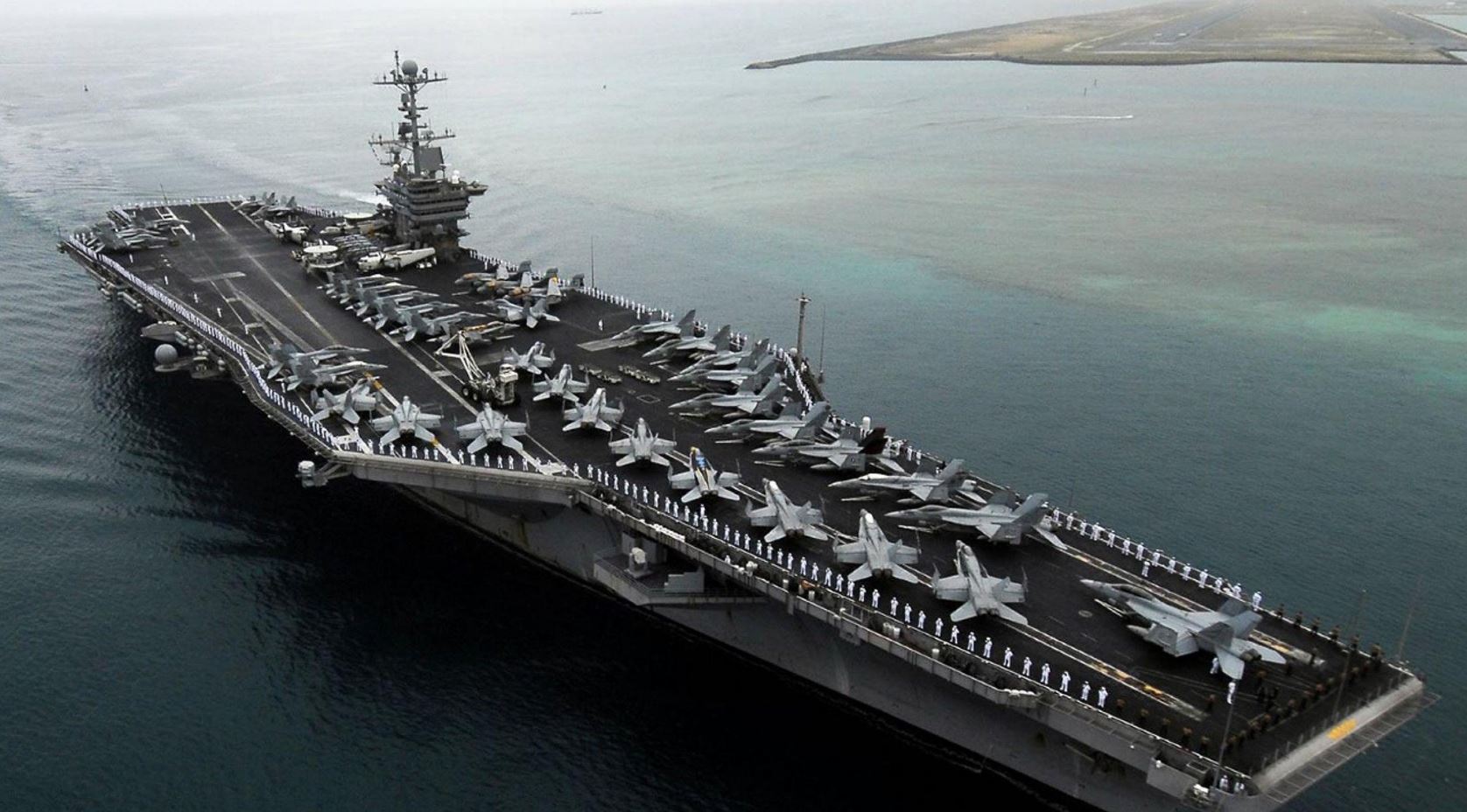
USS Nimitz (CVN 68)
Even if the cause was purely technical, losing two Navy aircraft in contested waters hands Beijing an easy propaganda win. Chinese state media will spin it as proof of “reckless” American operations, a convenient narrative to justify expanding “defensive” patrols and tightening its grip on disputed waters.
Behind the headlines, the real danger isn’t deliberate war, it’s an accident.
In a region crowded with ships and aircraft, it wouldn’t take much for a collision or a misread warning flare to spiral into something much bigger.
Advertisement
Bottom line: the South China Sea is a loaded gun with a hair trigger. Whether it’s bad fuel or bad timing, every move here risks ignition.










COMMENTS