

“They’ve come to the realization that they just can’t do that. And they gotta try to be more precise,” Gentile commented on Russia’s mass bombardment tactics.
The shift aims to enhance accuracy, reducing reliance on sheer firepower and emphasizing targeted strikes to thwart Ukrainian advances.
By utilizing surveillance drones, Russia gains real-time intelligence to complement these precision strikes, enabling a more informed and strategic approach to engaging Ukrainian forces.
This adaptation signifies a strategic evolution in Russia’s artillery tactics, adapting to the demands of modern warfare.
Electronic Warfare: Disrupting Battlefield Intelligence
Ukraine’s use of off-the-shelf drones for reconnaissance encounters resistance from Russia’s enhanced electronic warfare capabilities.
The Russian deployment of electronic warfare units strategically disrupts Ukraine’s real-time intelligence gathering by effectively jamming GPS signals guiding drones and high-value precision-guided missiles.
According to Gentile, Russia’s capacity to “take out drones” via electronic warfare has “significantly improved” as the conflict progressed.
This tactical interference creates a battlefield scenario where Ukrainian units encounter challenges in identifying targets, leading to limited visibility and reduced capacity to neutralize key Russian positions.
Hacking mobile phones – Tricks of #Russia's intelligence.
Video of a Russian crew of the electronic warfare complex launches the Orlan-10 UAV with scanning equipment. The drone acts as a cell phone station, intercepting calls and messages.
'Mobile phone data is transmitted to… pic.twitter.com/Ks5LXHzT4X
— 𝗡 𝗢 𝗜 𝗦 𝗘 ⚡ A L E R T S (@NoiseAlerts) November 21, 2023
The ensuing cat-and-mouse game exemplifies the critical role of electronic warfare in dictating the ebb and flow of battlefield advantage.
Ukrainian forces find themselves grappling with the challenge of circumventing Russia’s electronic interference while striving to gather actionable intelligence to maintain their strategic edge.
The electronic warfare standoff represents a complex interplay of technological prowess and strategic maneuvering, where each side seeks to outwit the other through sophisticated means.
Ka-52 Helicopter Gunships: A Tactical Advantage
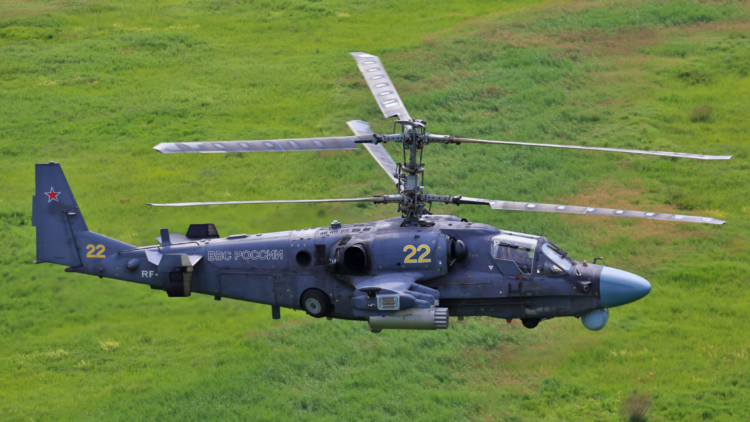
Russia’s utilization of the Ka-52 attack helicopters, termed “Putin’s vultures” by Ukraine’s military, presents a formidable challenge.
These helicopters, equipped with robust armor and tank-busting missiles, offer Russia a distinct battlefield edge.
More footage. The russian Ka-52 helicopter destroyed MT-LB of the russian armed forces. pic.twitter.com/iOrqZtEleI
— ✙ Albina Fella ✙ 🇺🇦🇬🇧🇫🇷🇩🇪🇵🇱🇺🇸🇨🇦🇦🇺 (@albafella1) November 21, 2023
The Light Multipurpose Guided Rockets (LMUR), capable of engaging targets from significant distances, enable the Ka-52 to attack Ukrainian armor while evading air defenses.
Their role in diminishing the threat posed by Ukraine’s tanks and armored vehicles underscores their strategic importance in creating multifaceted challenges for Ukrainian forces.
“The whole idea, especially in this kind of combat, is to create or present multiple dilemmas to your enemy,” Gentile explained, adding, “And having these attack helicopters is a pretty significant dilemma for the Ukrainians.”
Vulnerabilities and the Shifting Dynamics
Despite Russia’s adaptive measures enabling it to thwart Ukrainian advances, doubts linger regarding its ability to counter a decisive breakthrough.
The skepticism arises from concerns over Russia’s resource limitations and capacity for a significant counterattack in the face of a decisive Ukrainian advancement.
The evolving nature of the conflict hinges on the delicate balance between tactical adaptations and the capacity for sustained response amidst changing dynamics.
Ultimately, the conflict in Ukraine epitomizes the evolving nature of modern warfare, where the interplay between technological advancements and strategic maneuvering defines the trajectory of engagements.
As Ukraine’s breakthrough challenges Russia’s defenses, the utilization of precision weaponry, electronic warfare, and tactical aerial assets reflects the pivotal role of evolving weaponry in shaping the dynamics of contemporary conflicts.
~
In conclusion, the Ukrainian-Russian conflict, dragging into its 21-month, serves as a testament to the evolving nature of warfare and the pivotal role of weaponry in shaping its course.
While this development potentially alters the dynamics of the conflict, the outcome of the ongoing conflict remains uncertain.
As both sides navigate through tactical adaptations and strategic vulnerabilities, the conflict underscores the intricate balance between technological advancements and the fluidity of battlefield dynamics.
—
Check out:










COMMENTS