

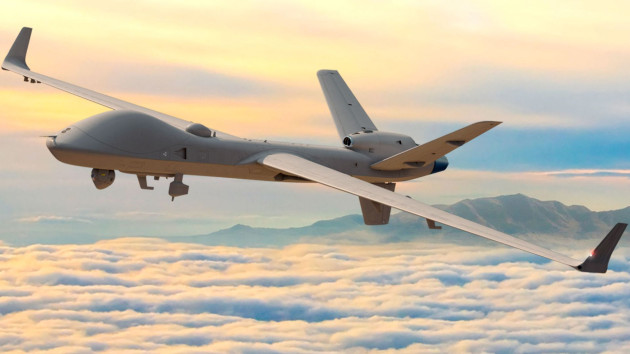
The MQ-9B: Endurance as Power
The MQ-9B SkyGuardian and its maritime counterpart, SeaGuardian, are built around one simple advantage: time. With endurance exceeding 30 hours, these aircraft provide persistent coverage that crewed platforms cannot match without enormous cost.
That endurance has driven global adoption. Nations including the United Kingdom, Japan, Canada, Poland, Germany, Denmark, Belgium, India, and most recently Qatar have selected the MQ-9B to fill critical intelligence and surveillance gaps. The appeal is not theoretical. It is operational.
During high-tempo crises, such as the 2024 Israel-Iran conflict, persistent ISR (intelligence, surveillance and reconnaissance) proved decisive. Knowing what is moving, where it is moving, and when it will arrive shapes every downstream decision. The MQ-9B delivers that knowledge across both land and maritime domains.
Its sensor suite reflects that mission. Maritime radar, Automatic Identification System tracking, and electro-optical and infrared cameras provide layered situational awareness. Nine external hardpoints and a 363-kilogram (800-pound) internal payload capacity allow operators to tailor the aircraft for specific missions, whether that means sensors, survivability systems, or kinetic effects.
SeaGuardian expands that reach over water. With a 360-degree maritime radar and sonobuoy dispensers, it supports anti-surface warfare and maritime domain awareness in regions where naval patrol aircraft are scarce or overstretched.
U.S. Navy Expands MQ-9B SeaGuardian Sonobuoy Payload to Enhance Unmanned Anti-Submarine Warfare pic.twitter.com/u8RbGf7dro
— Army Recognition (@ArmyRecognition) January 18, 2026
Just as important, the MQ-9B is certified to operate in national airspace without special accommodations. That matters for nations that need military capability without segregating it from civilian air traffic.
It is a practical detail with strategic consequences.
Seeing First: Airborne Early Warning Reimagined
One of the most consequential evolutions of the MQ-9B is its move into airborne early warning (AEW) and control.
The threat environment has changed faster than traditional AEW platforms can scale. Large, multi-engine AEW aircraft are effective but expensive, limited in number, and often held at distance in contested environments. Meanwhile, threats now arrive at all altitudes and from all directions.
General Atomics, working with Saab, is addressing that gap by integrating an AEW and control mission package onto the MQ-9B. Scheduled to debut in the summer of 2026, the system offers a persistent, cost-effective alternative to traditional AEW aircraft.
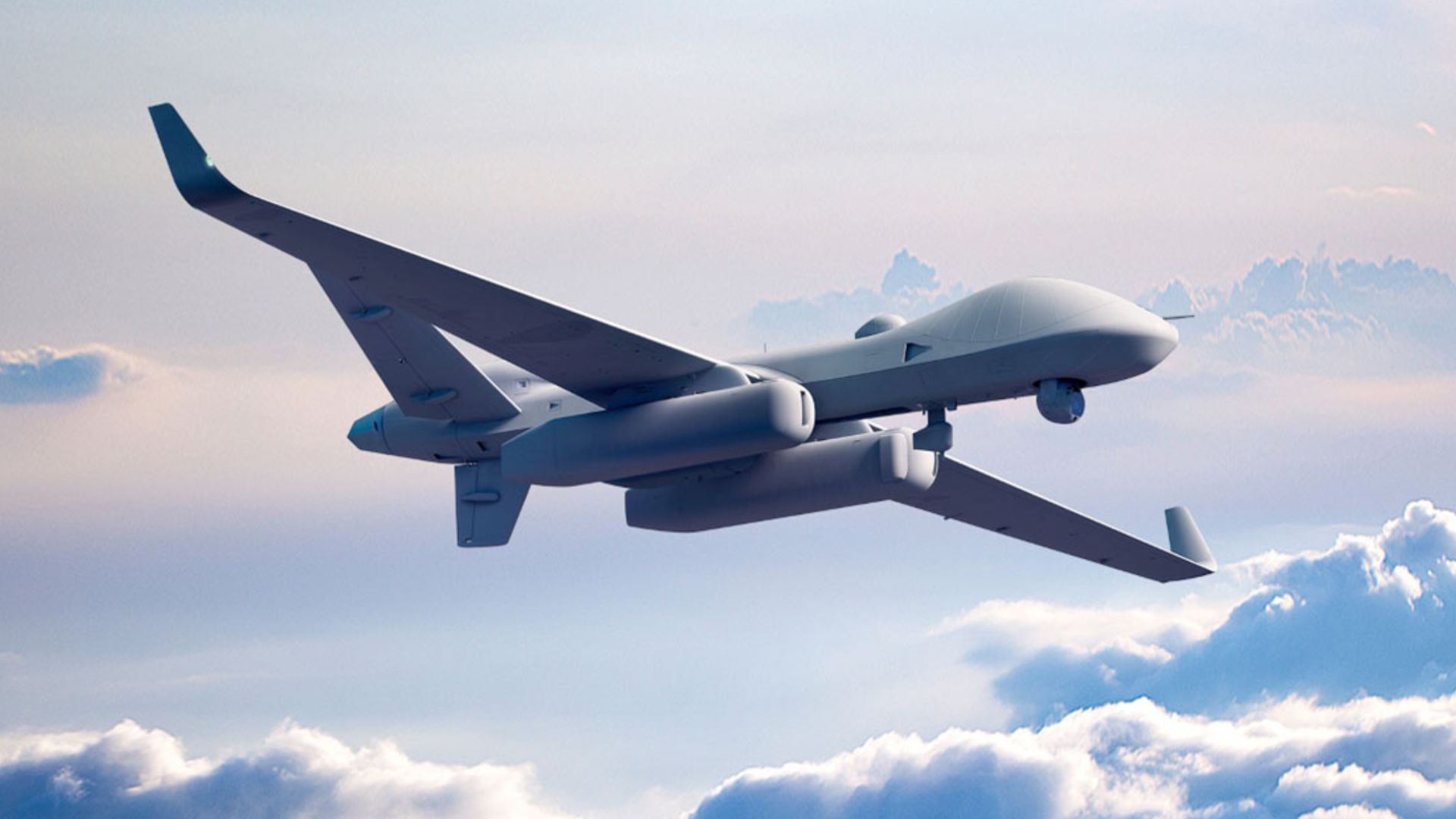
The advantage is not replacement but extension. MQ-9B AEW&C can operate closer to threat zones, fill coverage gaps, and push sensing forward without placing crews at risk. Fully interoperable with US and coalition systems, it strengthens regional defense networks while remaining accessible to nations with smaller defense budgets.
It is a quiet change, but a profound one. Airborne early warning is no longer the exclusive domain of a few air forces.
The Gambit Series: Autonomy Takes Shape
If the MQ-9B represents endurance and persistence, the Gambit Series represents intent.
Gambit is not a single aircraft. It is a family of autonomous systems designed to operate alongside human-crewed fighters such as the F-35 and future Next Generation Air Dominance (NGAD) platforms. These aircraft are not replacements for pilots. They are partners.
The series is built around modularity. Roughly 70 percent of key components are shared across variants, including landing gear, baseline avionics, and the core airframe structure. This commonality reduces cost, accelerates production, and allows rapid adaptation to changing mission needs.
Gambit 6 is the newest variant of GA-ASI’s Gambit Series of modular uncrewed aircraft. By combining cutting-edge autonomy & artificial intelligence with a proven track record of comprehensive weapon systems integration, Gambit 6 ushers in a new era of #airpower to secure the… pic.twitter.com/SjvjuN1jak
— General Atomics Aeronautical Systems, Inc (GA-ASI) (@GenAtomics_ASI) January 20, 2026
Each Gambit variant fills a specific role. Long-endurance ISR platforms. Air-to-air combat configurations. Adversary aircraft for training. Stealth reconnaissance designs for high-risk penetration. Carrier-capable variants for naval aviation. Dedicated air-to-ground platforms for electronic warfare, suppression of enemy air defenses, and deep strike missions.
This is autonomy applied with discipline. Each variant exists because the mission demands it, not because technology allows it.
Uncrewed and Crewed, Together
The true shift in airpower is not uncrewed aircraft alone. It is how they work with crewed systems.
MQ-9B platforms provide the persistent intelligence that shapes the battlespace. Gambit aircraft push into contested airspace, extend sensor coverage, and add weapons capacity without adding pilots to risk. Crewed fighters remain the decision-makers, orchestrating effects across a distributed force.
This approach increases survivability, expands magazine depth, and complicates adversary planning. It also scales. Nations can adopt these systems incrementally, aligning capability with budget and threat.
In regions like the Middle East, where maritime security, ISR, and rapid response dominate operational planning, this mix offers both immediate utility and long-term growth.
Experience matters. GA-ASI is the world leader in uncrewed combat jets and we’re delivering future #UCAV systems with the technical and manufacturing know-how to produce them without breaking the bank. https://t.co/pUZGeJDBNL#Airpower #UAS pic.twitter.com/jyTUBDBMwW
— General Atomics Aeronautical Systems, Inc (GA-ASI) (@GenAtomics_ASI) December 29, 2025
A New Definition of Airpower
General Atomics’ vision is not about removing humans from warfare. It is about using uncrewed systems where they make the most sense.
Persistent presence.
High-risk penetration.
Cost-efficient scaling.
The MQ-9B and Gambit Series do not promise spectacle. They promise reliability, adaptability, and time.
In modern conflict, those are decisive advantages.
Airpower is no longer defined solely by speed or altitude. It is defined by awareness, endurance, and collaboration. The quiet shift is already underway. The sky just looks different now.








COMMENTS