

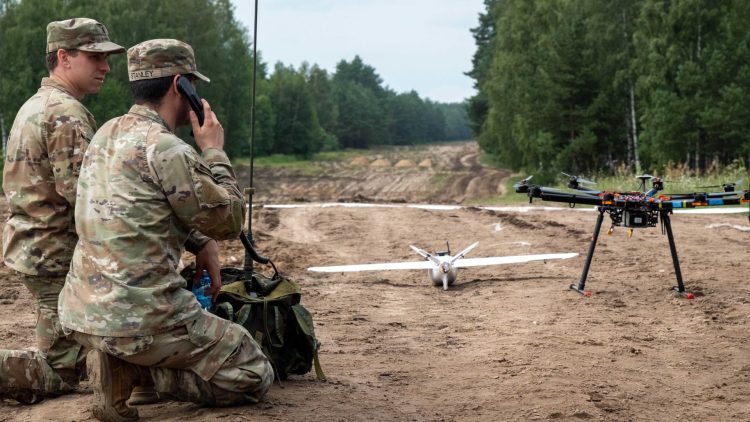
Project Flytrap puts cutting-edge tech to the test—working with NATO allies to boost combined lethality and defend against drone threats.
Watch and learn how we’re training to face Unmanned Aerial Surveillance (UAS) head on.
🎥 U.S. Army | Pfc. Brent Lee pic.twitter.com/W0sI4xnGAi
— U.S. Army (@USArmy) July 10, 2025
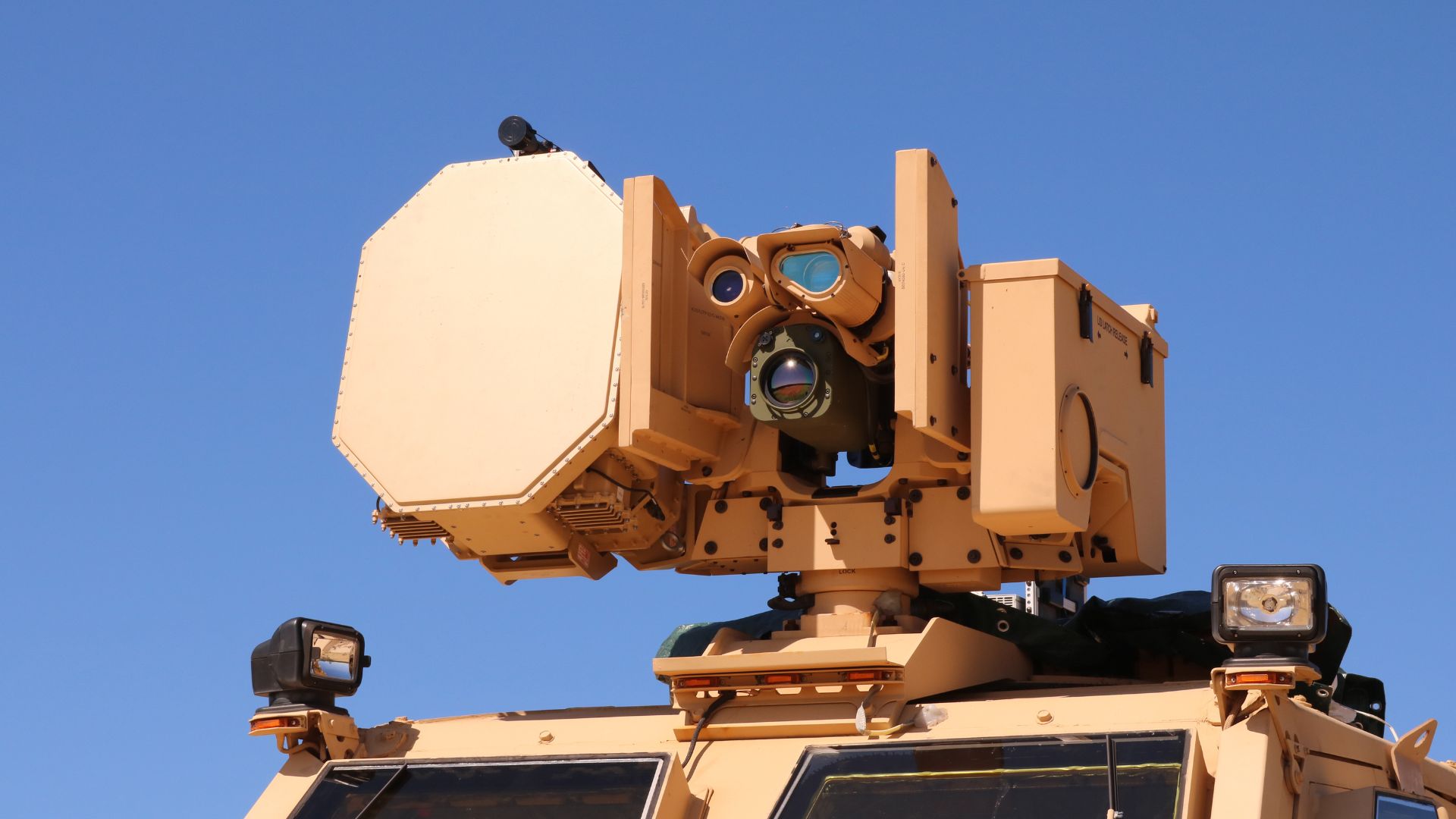
In addition to BLADE, soldiers tested the Collaborative Networked Autonomous Lethality Technology software, known as CNALT. This application, also developed by the Armaments Center, accelerates the kill chain—the process of identifying, prioritizing, and engaging targets.
CNALT processed data from BLADE’s radar, classified aerial tracks, and generated engagement recommendations for operators and commanders in real time.
Training required only about 15 minutes, showing its accessibility to soldiers already familiar with CROWS.
During scenarios, CNALT enabled operators to ingest real-time sensor data, quickly categorize drones, and feed the information directly to BLADE for targeting. The shortened decision cycle meant faster reactions against drones moving unpredictably across the battlespace.
Rapid Deployment and Soldier Feedback
One of the key takeaways from Project Flytrap 4.0 was the Army’s ability to field new systems quickly.
Within two weeks of request, Armaments Center engineers shipped BLADE components from New Jersey to Poland, installed the equipment on a Stryker vehicle, and had it ready for soldier training. This rapid deployment demonstrated the program’s ability to meet Defense Department demands for speed in adapting to evolving battlefield challenges.
Soldier feedback also provided valuable insights. Jonathan Gann, a mechanical engineering technician with the Armaments Center, helped oversee installation and later observed the system in action.
US Army Stryker M1127 Reconnaissance Vehicles, assigned to 2nd Cav Reg, are staged to demonstrate antiUAS capabilities during the static display portion of Project Flytrap 4.0.
The left one is equipped w/ the RD-SUADS.
📸 Sgt. Alejandro Carrasquel
1/ pic.twitter.com/Jhsp9rxLsM— 𝔗𝔥𝔢 𝕯𝔢𝔞𝔡 𝕯𝔦𝔰𝔱𝔯𝔦𝔠𝔱△ 🇬🇪🇺🇦🇺🇲🇬🇷 (@TheDeadDistrict) August 23, 2025
Soldiers shared tactics, techniques, and procedures for using BLADE in both stationary and mobile formations. Their comments highlighted areas for refinement, while also reinforcing the system’s potential to transform counter-drone operations in dynamic environments.
Maj. Jared Whitaker, deputy chief G31 from V Corps, noted the system’s intuitive design. Already proficient in CROWS, he adapted to the additional counter-drone steps within an hour of initial exposure.
Whitaker emphasized that radar training was necessary to achieve fluidity in engagements, but he also stressed that BLADE had shifted counter-drone operations from “impossible to possible.”
Building Toward a Multi-Tier Defense
Since achieving technology readiness level six in 2019, BLADE has taken part in multiple Army experiments and exercises, including Project Convergence, the Maneuver Fires Integrated Exercise, and Red Sands – Operation Hard Kill. Each event has provided data to refine tactics and technology.
Project Flytrap 4.0 added another layer of operational insight and confirmed BLADE’s ability to work under combined arms conditions with allied forces.
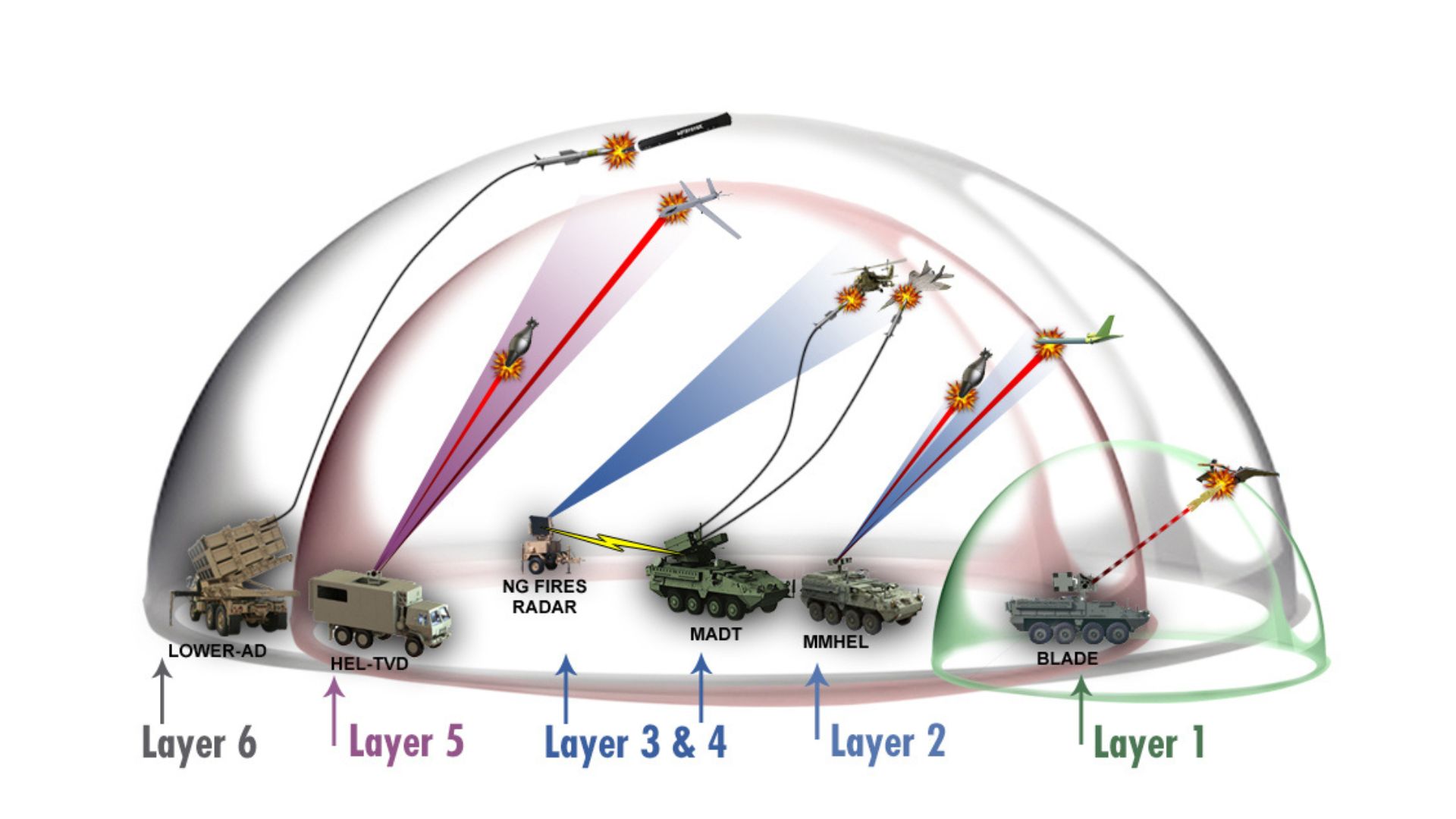
BLADE is intended as the first tier in a larger Army air and missile defense network. While higher-end systems such as Patriot batteries counter larger, high-altitude threats, BLADE addresses the small, low-flying drones that traditional defenses struggle to detect and engage. By combining kinetic fire with electronic warfare effects, the system fills a gap in layered defense and reduces vulnerabilities to cheap but disruptive aerial attacks.
Looking Ahead
The Pentagon views counter-drone systems as a priority, and BLADE shows how quickly new defenses can reach soldiers in the field.
Project Flytrap 4.0 proved its effectiveness in live scenarios and confirmed that troops can adapt it into regular training. By combining radar, fire control, kinetic firepower, and electronic warfare, BLADE gives ground forces a practical tool against the expanding drone threat and strengthens their survivability on future battlefields.








COMMENTS