

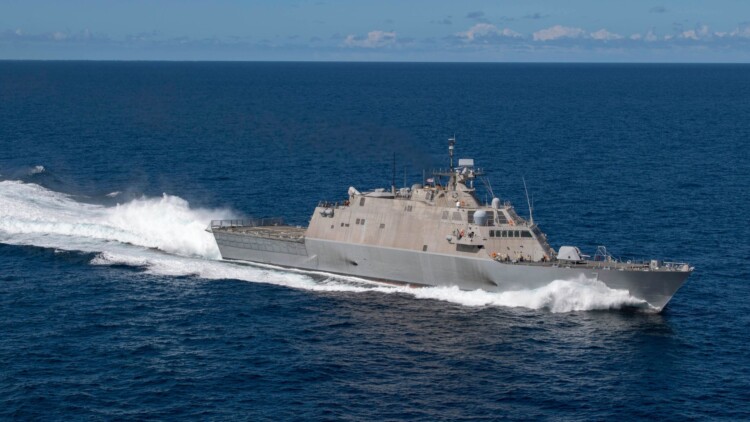
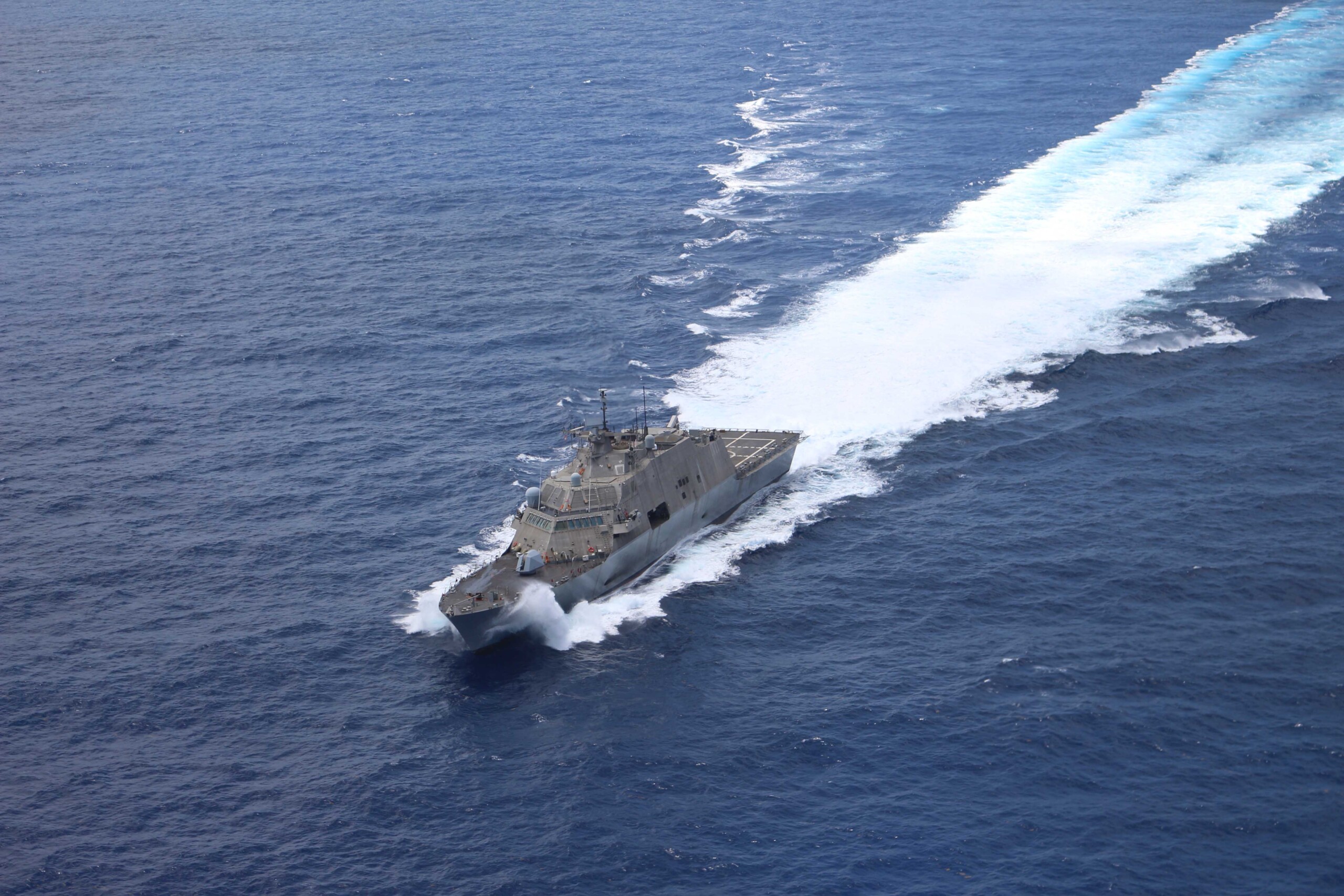
As these ships are decommissioned, their sailors will receive follow-on orders for new assignments, marking the end of an era for both the vessels and their dedicated crews.
The Flawed Freedom Class
Littoral Combat Ships (LCS) are known for their speed, agility, and mission-focused capabilities, making them ideally suited for nearshore operations and countering 21st-century coastal threats. They are versatile platforms capable of supporting a wide range of fleet missions while operating alongside regional navies and coastguards. These missions include supporting forward presence, maritime security, sea control, and deterrence efforts worldwide.
The Freedom-class LCS is a key component of the Navy’s modern fleet, designed for operations in nearshore environments. Its development history traces back to the early 2000s when the need for a versatile, adaptable vessel capable of countering emerging littoral threats became apparent. In 2004, the Navy awarded contracts to two separate teams, one led by Lockheed Martin and the other by General Dynamics, to develop competing LCS designs. The Freedom-class, produced by Lockheed Martin, features a distinctive trimaran hull design and is known for its speed and agility.
However, its development journey has not been without challenges. The class has faced issues such as propulsion system problems, hull corrosion, and delays in mission module development.
This decommissioning comes on the heels of the Navy’s decision to retire USS Milwaukee (LCS-5) in September after seven years of service and the USS Sioux City (LCS 11) in August after less than five years. It highlights the ongoing challenges faced by the LCS program and the Navy’s commitment to ensuring the readiness and effectiveness of its fleet.
A New Addition: USS Augusta (LCS-34)
Meanwhile, amidst the retirements, the US Navy celebrated the commissioning of a brand-new Independence-variant LCS in Eastport, Maine. The ceremony was led by Naval Inspector General Vice Adm John Fuller and marked the USS Augusta (LCS-34) entry into the Navy’s littoral defenses.
USS Augusta (LCS-34) is slated for operations in both nearshore and open ocean environments, bolstering the Navy’s capabilities in littoral regions. Vice Adm Fuller emphasized the ship’s integral role in supporting sea control and power projection, two key components of the Navy’s mission.
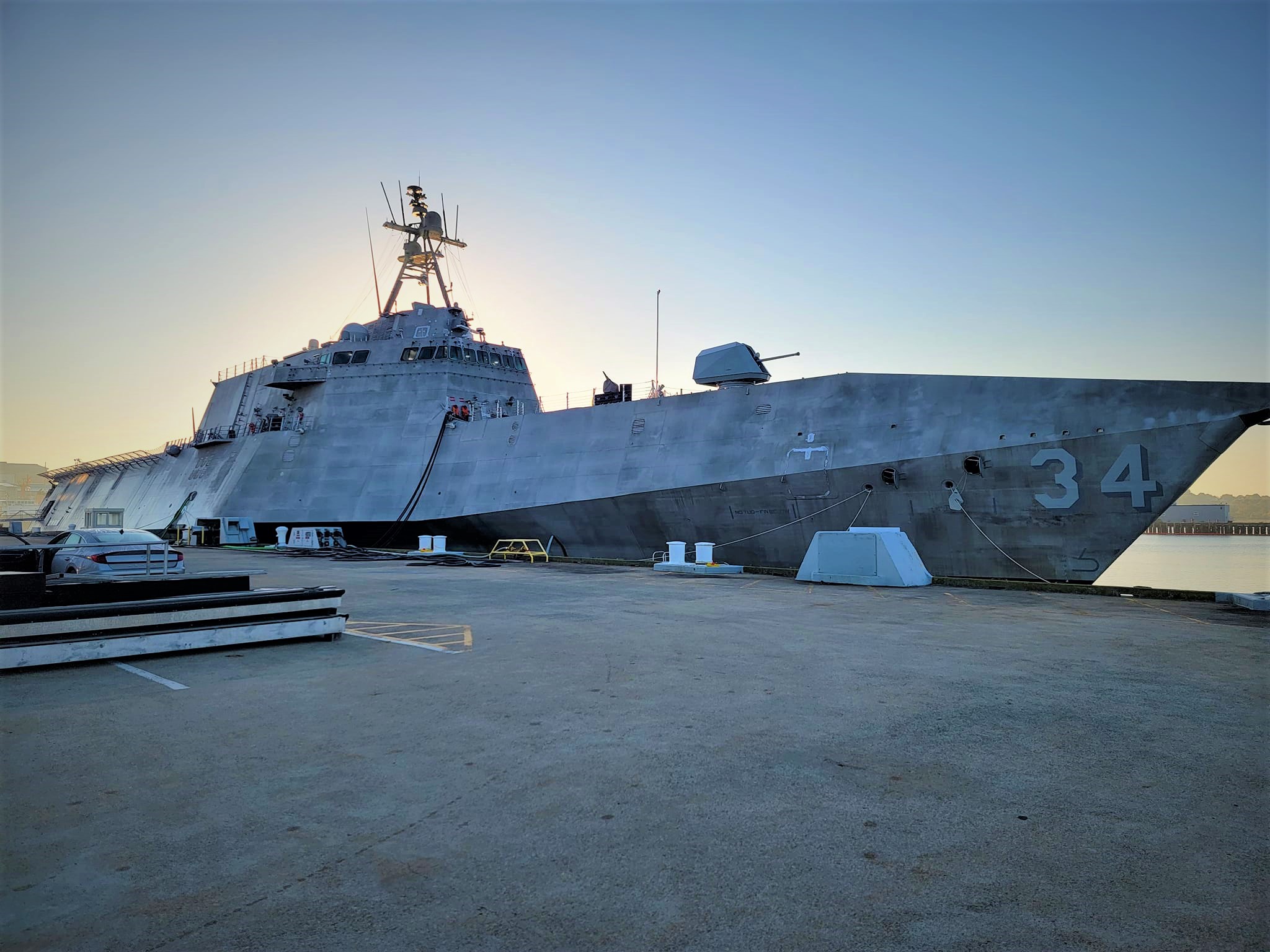
LCS-34 is the third Independence-variant vessel to be commissioned this year, following the USS Canberra (LCS-30) and USS Santa Barbara (LCS-32). These new additions to the fleet represent the Navy’s ongoing commitment to maintaining a modern and effective littoral combat force.
~
In conclusion, the decommissioning of USS Detroit (LCS-7) and USS Little Rock (LCS-9) reminds us of the challenges faced by the LCS program and the Navy’s commitment to maintaining a capable and reliable fleet. Despite these setbacks, the commissioning of USS Augusta (LCS-34) and other Independence-variant ships underscores the Navy’s determination to continue its mission of safeguarding the nation’s waters and projecting power in littoral regions.








COMMENTS