

While the IRGC has come under criticism for its actions, it is still a powerful organization with considerable influence over Iranian affairs and beyond. Its activities have caused international condemnation and military retaliation from some countries, as seen with the US airstrikes against facilities used by groups affiliated with the IRGC in response to their aggression.
“The airstrikes were conducted in response to today’s attack, as well as a series of recent attacks against Coalition forces in Syria by groups affiliated with the IRGC,” he added.
In the US, nearly 900 military personnel in eastern Syria helped Syrian Kurdish forces keep the Islamic State from returning.
In the past few months, drones have been aimed at some military bases without causing any casualties or damage. Instead, suspicions point to Iranian-supported organizations in Syria as the culprits behind the assaults.
“These precision strikes are intended to protect and defend US personnel. The United States took proportionate and deliberate action intended to limit the risk of escalation and minimize casualties,” the Pentagon statement read.
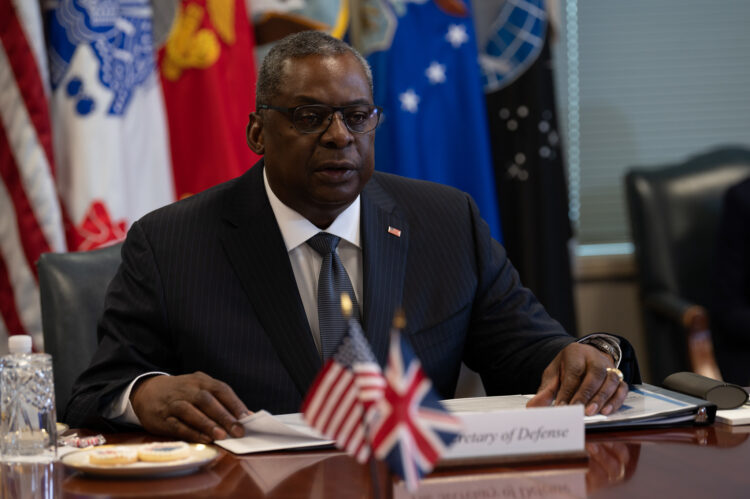
“As President Biden has made clear, we will take all necessary measures to defend our people and will always respond at a time and place of our choosing,” Austin said. “No group will strike our troops with impunity.”
“Our thoughts are with the family and colleagues of the contractor who was killed and with those who were wounded in the attack earlier today,” the defense secretary added.
Gen. Michael “Erik” Kurilla, the US Central Command head, said that the US would take any necessary steps to protect its citizens and retaliate at its discretion. He added that the nation is prepared for any potential Iranian aggression and can scale its responses.
According to him, the continued presence of our armed forces in Syria helps to ensure that ISIS is defeated in the long run, which is beneficial for the security and stability of Syria and the entire region.
In the past years, potential threats in the Middle East and Africa have continued to simmer. Recently, tensions between Turkey and Syria have increased as Turkey increases its involvement in Northern Syrian affairs. In 2021, tensions surged between Israel and Lebanon after Hezbollah fired rockets into Israel, prompting counter-strikes by Israeli forces. In Sudan, protests against authoritarianism have grown amid heightened tensions with neighboring Ethiopia concerning border disputes since 2019. And since 2021, the US Embassy in Yemen is still closed due to security concerns caused by continuous violence from Houthi rebels.
In addition to these conflicts, international relations in the region have become increasingly strained over recent developments, such as the US-China trade war, which has resulted in increased sanctions placed on Iran. This has further weakened the Iranian economy and stoked more significant tensions between Iran and its regional adversaries. Furthermore, Russia’s presence in Syria has also become a cause for concern as it continues to arm and support Assad’s regime. The presence of these powerful foreign nations threatens to push already-volatile regional conflicts toward heightened levels of violence with devastating consequences.
Additionally, Kurilla said that since the start of 2021, 78 different attacks have transpired in Syria. He added that there is a tendency towards regular intervals of increased activity.
“It is periodic. We see periods where they will do more,” he said.
“So what Iran does to hide its hand is they use Iranian proxies — that’s under UAVs or rockets — to be able to attack our forces in Iraq or Syria,” Kurilla added.
Overall, while there appears to be no imminent danger looming over the Middle East and Africa, deteriorating security conditions in the region could have detrimental effects on US interests if left unchecked. This is why diplomatic efforts must be made to resolve existing conflicts and forge new alliances within the region to maintain peace and stability in the long run.








COMMENTS