USTRANSCOM and the transportation troops behind it are the combat enablers who move SOF and conventional troops, plus their gear, fuel, ammo, and wounded across air, sea, and ground under real threat. Every infil, resupply, and exfil depends on them.
Read the full article for more on:
Important insights and detailed analysis
Expert commentary on current events
Breaking developments and updates
Updating summary...
US Transportation Command: The Four-Star Powerhouse That Gets SOF to the Fight
Galen Fries
Speed
1x
Listen
COMMENTS
USTRANSCOM and the transportation troops behind it are the combat enablers who move SOF and conventional troops, plus their gear, fuel, ammo, and wounded across air, sea, and ground under real threat. Every infil, resupply, and exfil depends on them.
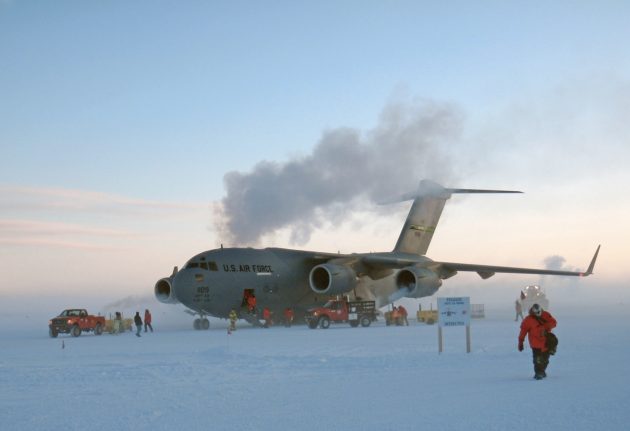
McDonnell Douglas/Boeing C-17 Globemaster III on the Ross Ice Shelf, Antarctica – the world’s largest body of floating ice. Image Credit: Alan Light
The United States Transportation Command (USTRANSCOM) is why SOF can show up anywhere on the planet with the right kit at the right time. It is a four-star combatant command at Scott Air Force Base that runs global air, sea, and surface movement for every other combatant command.
Advertisement
If you have ever stepped off a bird thinking, “well, that part worked,” you were riding TRANSCOM’s rails.
What USTRANSCOM Actually Does
USTRANSCOM’s job is to provide globally integrated mobility operations. In plain terms, it leads the Joint Deployment and Distribution Enterprise, moving people, equipment, fuel, ammo, and patients worldwide in peace and war. It does this through three service components:
• Air Mobility Command (AMC): airlift and air refueling.
Advertisement
• Military Sealift Command (MSC): strategic sealift and pre-positioning.
• Surface Deployment and Distribution Command (SDDC): ports and overland movement.
Advertisement
This single point of contact exists because Desert Shield and Desert Storm proved that you need one commander to synchronize jets, ships, and trucks. In that war alone, TRANSCOM moved over half a million passengers and millions of tons of cargo and fuel into CENTCOM’s AOR. Every modern campaign, from the Balkans to Iraq, Afghanistan, Syria, Ukraine support, and all the quiet SOF deployments that never make the news, has ridden on the same system. The mission changes. The need to move steel and meat does not.
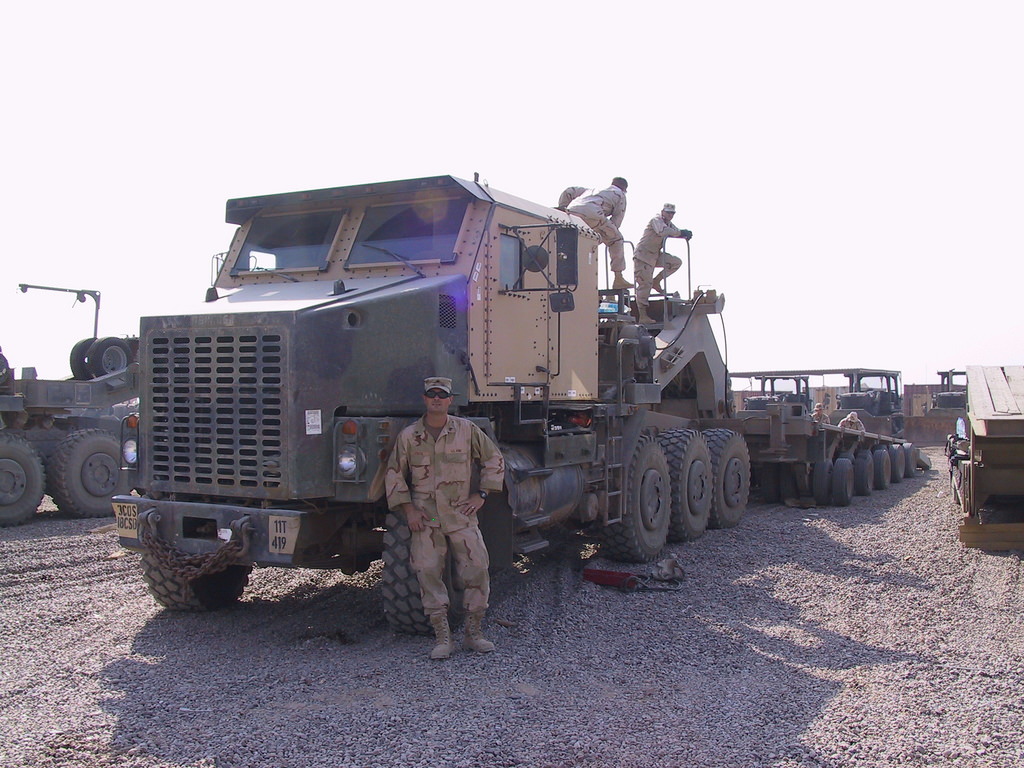
The author standing next to an Oshkosh Defense Heavy Equipment Transporter (HET) A1 at Camp Victory, Iraq. Image Credit: Galen Fries
The People Behind the Lift
Infantry and SOF folks may joke about transportation troops being “REMFs” or “POGs,” but they are the ones you call when it is time to go to work. On the ground, Army 88 Mike Motor Transport Operators plan and run convoys, load and secure cargo, execute route recon, and fight convoy defense with crew-served weapons mounted on HETs, tankers, and MRAPs. Their NCOs write OPORDs and overlays, run truck platoons, and recover busted vehicles under contact, not from the safety of an air-conditioned TOC. If it sounds like grunt work, that is because it is.
In the air, mobility crews and loadmasters under AMC move SOF teams, helos, ISR birds, and palletized munitions, often into short or contested strips where the runway looks like it was measured with a boot. On the maritime side, MSC civilian mariners and sailors ride slow, vulnerable hulls loaded with the vehicles and ammo SOF and conventional units burn through once the fight starts. None of these people get to call “time out” just because the route looks spicy.
Advertisement
Risk Is Not Just at the Front
The old adage that “mobility and logistics troops don’t take fire” died in Iraq and Afghanistan. Army analysis of those wars showed one US soldier or contract civilian was killed or wounded for roughly every few dozen 16-truck fuel convoys. Fuel and water runs were some of the most dangerous missions in theater. Marines saw similar casualty ratios on resupply convoys in Afghanistan during 2010. Those were “rear” missions on paper. In reality, they meant IED belts, complex ambushes, and long exposure times on predictable routes.
The costs have only gotten higher. Adversaries now treat logistics as a primary target set. Think long-range fires, drones, cyber hits against port systems, and attacks on commercial carriers that support TRANSCOM’s Civil Reserve Air Fleet and chartered sealift. The folks moving your gear are working in a world where “back in the rear” is a fantasy.
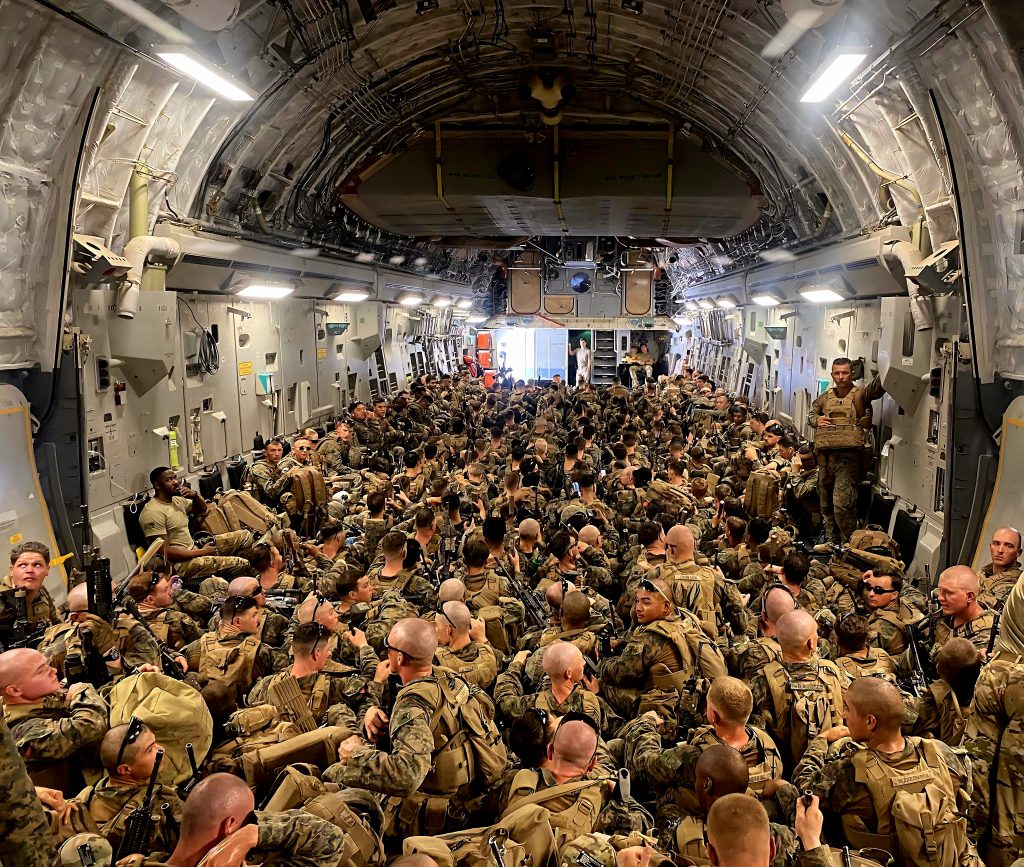
Packed in tight enough to make their buddy smile, these troops are heading to or coming back from somewhere that’s on the Do Not Travel list. Image Credit: Reddit
Why This Is Important to SOF
For special operations troops, USTRANSCOM and the transportation community are the enablers that make small units strategically relevant instead of just tactically sharp. When a team needs a last-second change of destination, a unique vehicle, an extra pallet of specialized munitions, or a rapid retrograde for a wounded operator, it is mobility planners, 88 Mikes, port workers, loadmasters, and MSC crews who turn that from a request into a runway, a berth, or a convoy manifest. They make the impossible look like a Tuesday.
Those derogatory labels, like “Rear Echelon MFers” and “People Other than Grunts,” ignore a simple truth. These units are doing their job under real risk so shooters can do theirs. They absorb predictable routes, long dwell on roads, and slow ships in contested seas so that SOF can stay unpredictable at the edge of the map. Respecting that reality does not mean losing the dark humor. It means aiming it at the right target.
Bottom line for a SOF audience, every infil, every resupply, every exfil is a USTRANSCOM story long before you’re putting effects on target. Treat the transportation community like the combat-enabling force it is, because when they stop moving, SOF stops operating. And if the trucks and ships do not show up, nobody cares how cool your beard is.
—
** Editor’s Note: Thinking about subscribing to SOFREP? You can support Veteran Journalism & do it now for only $1 for your first year. Pull the trigger on this amazing offer HERE. – GDM
Advertisement
What readers are saying
Generating a quick summary of the conversation...
This summary is AI-generated. AI can make mistakes and this summary is not a replacement for reading the comments.










COMMENTS