

Why proxy wars are taken on
Proxy wars became especially useful for the U.S. and other major powers after World War II, because the 1945 United Nations charter outlawed war except in cases of self-defense.
They also gained prominence because the U.S. and the Soviet Union each possessed nuclear weapons during the Cold War.
That meant any direct clash came with a very large risk of escalating from conventional fighting to a species-ending nuclear war.
Both the U.S. and Soviet Union sponsored proxy wars in places like Angola, where communism and oil were both factors, and El Salvador, where the rise of communism was also a concern for the U.S., during the 1970s and 1980s. This involvement was a way for each government to hurt the other’s interests without significantly risking further military escalation.
Proxy wars may also help establish a foreign government’s legitimacy. If the U.S. directly supports one side in a smaller country’s civil war, it may look like a bully. But if the U.S. defends its engagement by saying it is trying to oppose major foreign adversaries like the Soviet Union or China, then meddling in a third country’s affairs can look necessary and vital.
After his initial February 2022 assault of Ukraine faltered in March, Putin increased his attacks on Western countries, saying that economic sanctions Western countries approved shortly after the invasion were like a declaration of war.
Putin says that Russia is fighting the West and the U.S. – this could help justify Russia’s losses and maintain domestic support for the war.
Other kinds of proxy wars
There are two other main kinds of proxy wars, both intended to accomplish political goals without risking a country’s own people.
The first kind is government support of terrorist groups that attack other governments. Iran’s financial and political support of Hezbollah – a Muslim political party and militant group in Lebanon that seeks Israel’s destruction – is an example.
But while Iran’s use of Hezbollah to attack Israel is by proxy, this wouldn’t exactly count as proxy war. Although terrorism involves lethal armed violence, it doesn’t rise to the level of war, in terms of loss of life and control of territory, for example.
The second form involves supporting an internationally recognized government engaged an international war. This is a rare occurrence, mainly because wars between different countries are more rare than internal conflicts.
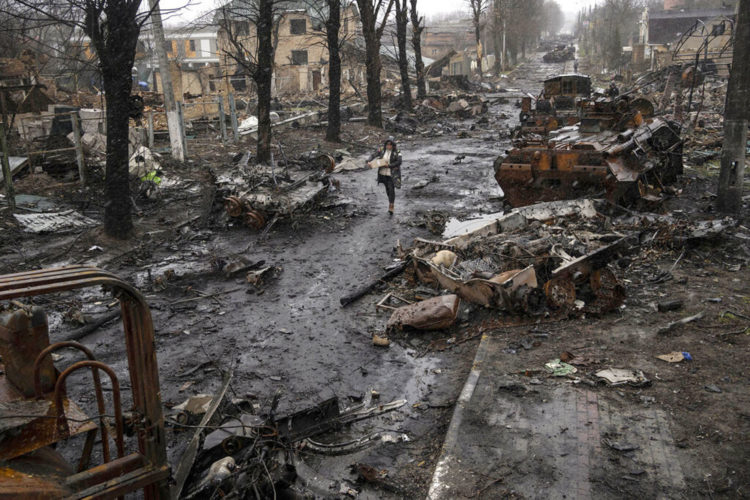
Russia’s assault on Ukraine in 2022 is an international war, but NATO cannot easily risk a direct attack on Russia, since Russia has nuclear weapons and is also a permanent member of the U.N. Security Council. Russia is also unlikely to withdraw from Ukraine short of defeat on the battlefield, making Ukraine an ideal proxy client – or, at least, ideal for NATO, but very costly in terms of human life for Ukraine and Russia.
If NATO succeeds in helping Ukraine defeat Russia, powerful governments are likely to see proxy wars as a useful tool. But if Russia escalates to attacking NATO countries directly, or uses nuclear weapons in Ukraine, proxy wars may be replaced by direct confrontation and, by extension, a third world war. Let’s hope that doesn’t happen.
This article has been updated to correct the conversion of euros to dollars.
***
This piece is written by Monica Duffy Toft, Professor of International Politics and Director of the Center for Strategic Studies at The Fletcher School of Law and Diplomacy from the Tufts University. Want to feature your story? Reach out to us at [email protected].
This article is republished from The Conversation under a Creative Commons license. Read the original article.









COMMENTS