Parked off Venezuela like a steel cathedral, the Ford isn’t here to chase panga boats — it’s a billion-dollar warning flare meant to make someone, somewhere, think very hard about what happens next.
Read the full article for more on:
Important insights and detailed analysis
Expert commentary on current events
Breaking developments and updates
Updating summary...
USS Gerald R. Ford Rolls Into SOUTHCOM — and Nobody’s Pretending This Is Just About Panga Boats
Guy D. McCardle
Speed
1x
Listen
COMMENTS
Parked off Venezuela like a steel cathedral, the Ford isn’t here to chase panga boats — it’s a billion-dollar warning flare meant to make someone, somewhere, think very hard about what happens next.
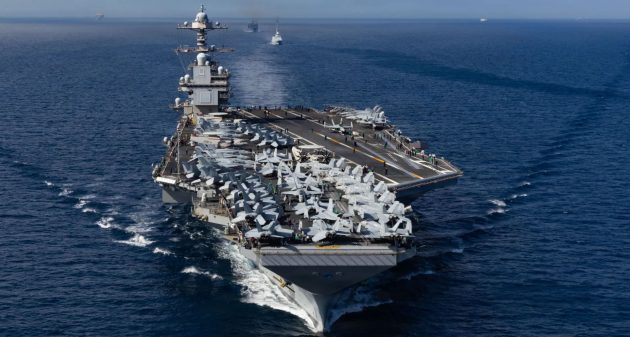
Cutting through the Caribbean blue, the USS Gerald R. Ford leads her strike group south—a floating fortress and unmistakable reminder of American power projection. Image Credit: United States Navy
On Nov. 11, 2025, the USS Gerald R. Ford (CVN-78) and its carrier strike group formally entered the U.S. Southern Command area of responsibility, sliding the newest and most expensive instrument of American sea power into the Caribbean and waters north of South America. The Navy’s public statement frames the deployment as part of enhanced detection, surveillance, and interdiction efforts against transnational criminal organizations and narcotics trafficking — but the optics and the assets on scene tell a far richer story.
Advertisement
What the Ford Strike Group Brings to the Water
The strike group is centered on the nuclear-powered carrier USS Gerald R. Fordwith its embarked Carrier Air Wing 8: multi-role fighters, electronic attack aircraft, and support squadrons capable of persistent airborne ISR and strike.The carrier operates with Destroyer Squadron elements and Arleigh Burke class guided-missile destroyers providing layered air defense, anti-submarine warfare, and surface-strike capability. Recent press and fleet trackers confirm the carrier transited into the Fourth Fleet / SOUTHCOM area after operations in the Atlantic and Mediterranean.
❗️🇺🇸⚔️🇻🇪 – On November 4, 2025, the nuclear-powered aircraft carrier USS Gerald R. Ford (CVN-78), flagship of the Gerald R. Ford Carrier Strike Group, transited the Strait of Gibraltar, exiting the Mediterranean Sea and entering the Atlantic Ocean. For operational security, it… pic.twitter.com/7WgBWkn5Zz
Venezuelan President Nicolás Maduro’s government has reacted with mobilization and rhetoric. State media and multiple outlets report large military exercises, militia call-ups and orders to disperse and prepare guerrilla or asymmetric responses in case of attacks. Venezuelan officials insist the U.S. presence is a provocation and deny allegations tying the regime to major drug flows; outside observers note the mobilization is intended as both internal deterrent and international signal.
Overkill for a Panga — So What Else?
A billion-dollar carrier, an air wing and Aegis escorts are more than what’s needed to stop small smuggling boats. It’s akin to taking out a pesky fly with a shotgun blast.
Advertisement
That mismatch is the point: these forces are designed to provide scalable options, not just interdiction. A carrier strike group brings persistent ISR, command-and-control, long-reach strike and the ability to surge force rapidly — useful not only against narco-pangas but also for deterrence, coercion, and rapid escalation if policymakers decide to broaden the campaign. Analysts have pointed out that the deployment functions as pressure on Maduro’s regime, a message to external backers, and insurance for allies in the region.
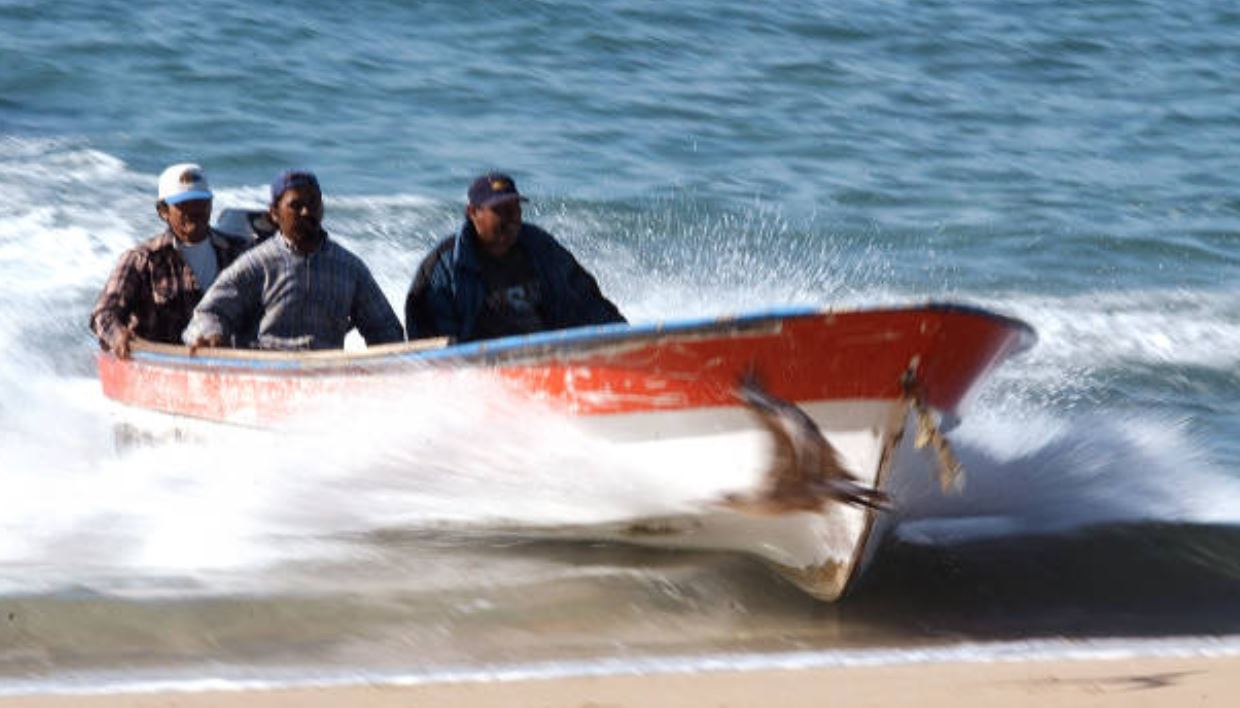
Presumably, non-drug-smuggling individuals on a Panga boat. Image Credit: Rob Riha via Getty Images
Operational and Strategic Impacts
Tactically, the Ford’s presence expands interdiction range and airborne surveillance, improving SOUTHCOM and partner agencies’ ability to find and intercept illicit maritime traffic. Strategically, it compresses decision time for Caracas and its patrons; it signals to militaries and political elites in Venezuela that U.S. options are not constrained to coast guards and interdiction — they can scale to full naval-aviation power. Diplomatically, the move risks hardening Venezuela’s alignment with outside patrons and invites rebukes from states like Russia, which have already protested U.S. force posture in the region. Finally, any kinetic incident near a carrier can escalate quickly; the presence itself raises both the deterrent value and the risk of accidental escalation.
The Official Line
Pentagon and SOUTHCOM spokesmen have repeatedly emphasized counternarcotics and transnational criminal disruption as the official rationale for the deployment, noting the strike group will support detection, surveillance, and interdiction across the Caribbean. Defense officials from the department refused to give firm timelines or detailed rules of engagement when asked by reporters, consistent with a posture that preserves operational ambiguity.
Quick common sense outline — why Washington might be moving a carrier into the Caribbean
Counternarcotics: Expand ISR and interdiction reach to disrupt trafficking networks.
Coercion / Deterrence: Signal to Maduro, his military, and outside patrons that escalation is costly.
Pressure on Revenue Streams: Target logistical and maritime routes that fund regime actors.
Operational Flexibility: Forward-deploy strike, logistics, and C2 without permanent bases.
Alliance Signaling: Reassure regional partners and domestic constituencies of U.S. resolve.
Whether hunting narco-pangas or sending a warning to Caracas and its patrons, the Ford’s arrival turns the Caribbean into a high-stakes chessboard where every move risks lighting the very fire it’s meant to deter.
Advertisement
What readers are saying
Generating a quick summary of the conversation...
This summary is AI-generated. AI can make mistakes and this summary is not a replacement for reading the comments.










COMMENTS