

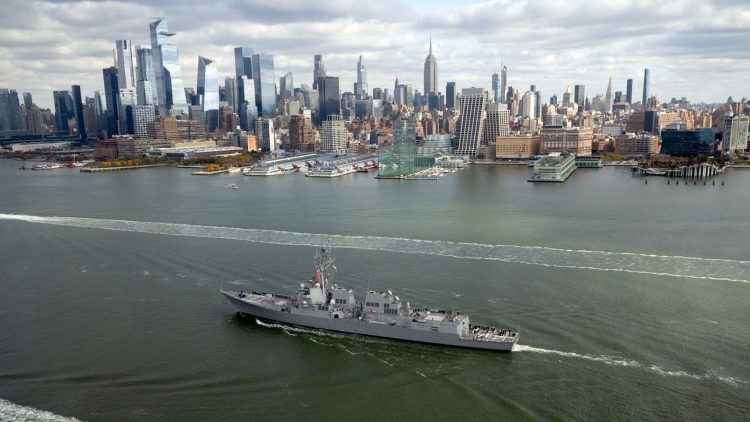
Thank you to our dedicated shipbuilders who all played a pivotal part in making this milestone and… pic.twitter.com/KWsayrcT3s
— General Dynamics Bath Iron Works (@GDBIW) November 1, 2024
The USS John Basilone is actually the second ship named after this heroic Marine; the first was a Gearing-class destroyer decommissioned in 1977.
Now, this new destroyer is ready to honor his legacy with its own form of service and protection.
What Makes the USS John Basilone Stand Out?
The USS John Basilone is part of the Navy’s Arleigh Burke-class destroyers, a class known for versatility and advanced technology.
These ships are fitted with the Aegis Combat System, a sophisticated defense platform capable of tracking and neutralizing enemy aircraft, ships, and missiles.
The USS John Basilone also has advanced SPY-1D radar and can launch Tomahawk missiles, SM-2 missiles, and Evolved Sea Sparrow Missiles, making it a powerful and adaptable warship for both offensive and defensive operations.
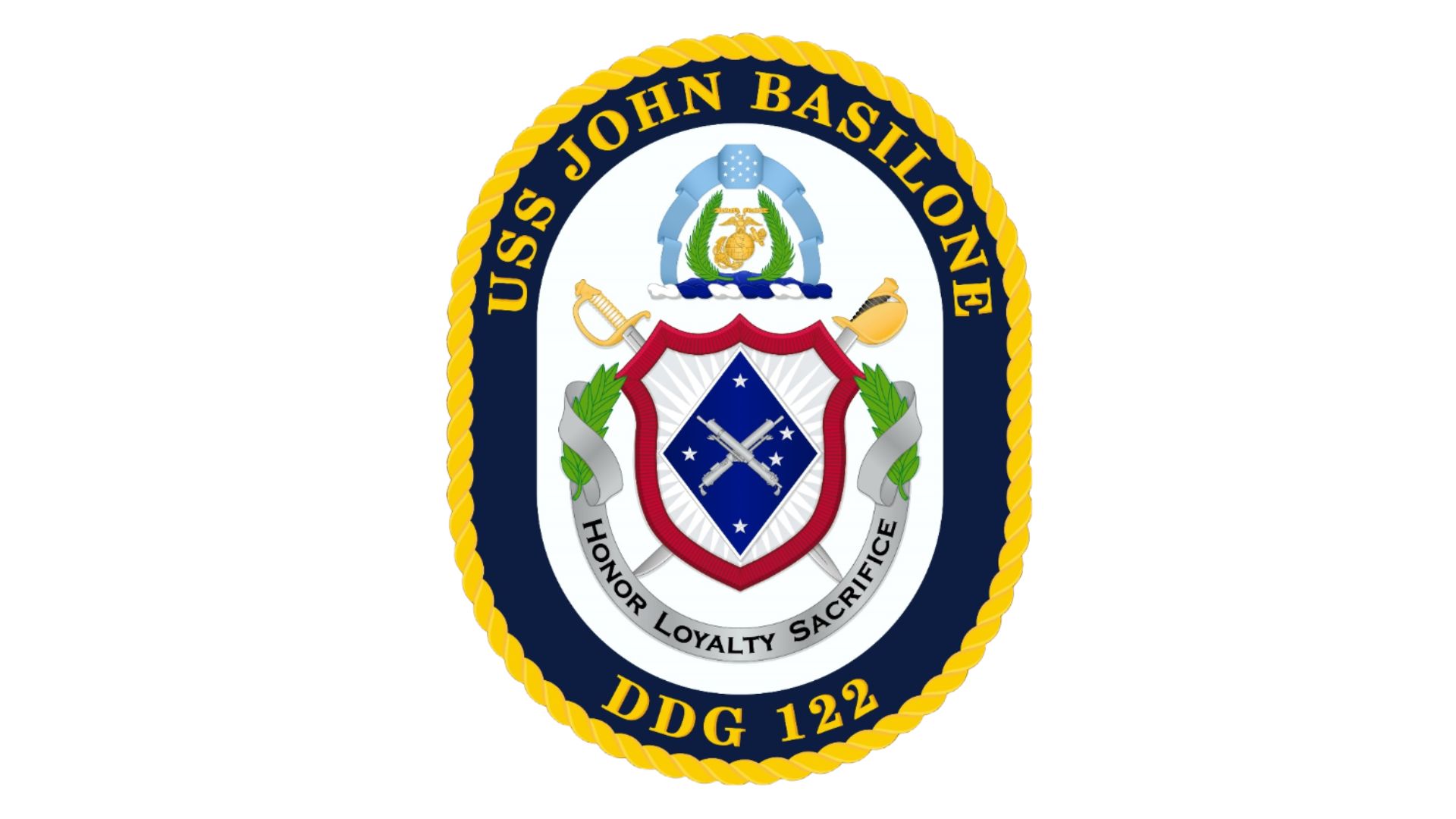
A unique feature of the USS John Basilone is its battle flag, which carries symbols directly connected to Basilone’s life and service.
The flag includes a pair of crossed Browning M1917 machine guns—paying homage to his role as a machine gunner at Guadalcanal—along with a blue diamond and stars in the shape of the Southern Cross.
The design incorporates golden palm branches, a nod to the Guadalcanal terrain where he made his stand, and the mottoes “Take a Stand” and “Move Forward,” which capture the indomitable spirit Basilone exemplified throughout his life.
Once commissioned, the ship will head to its homeport at Naval Station Mayport, Florida, where it will continue the tradition of service its namesake so heroically embodied.
Extending the Service Lives of the Ticonderoga-Class Cruisers
In a related move to keep the Navy’s capabilities sharp, the service announced Monday it would extend the lives of three Ticonderoga-class guided-missile cruisers: the USS Cape St. George (CG-71), USS Gettysburg (CG-64), and USS Chosin (CG-65).
This announcement comes less than a week after a similar decision to extend the service of 12 Arleigh Burke-class destroyers between 2028 to 2035.
Originally set for retirement, the Ticonderoga-class cruisers will now stay in the fleet until 2029. This decision adds a total of 10 years to their combined service lives, ensuring these valuable assets remain operational as newer ships enter the fleet.
The Ticonderoga-class cruisers are known for their formidable firepower and versatility. Equipped with the Aegis Combat System, they excel in anti-air, anti-surface, and anti-submarine warfare, making them a central force in any carrier strike group.
These cruisers were part of a modernization program that upgraded their hulls, mechanical systems, and engineering equipment to extend their service life, giving them a fresh capability boost.
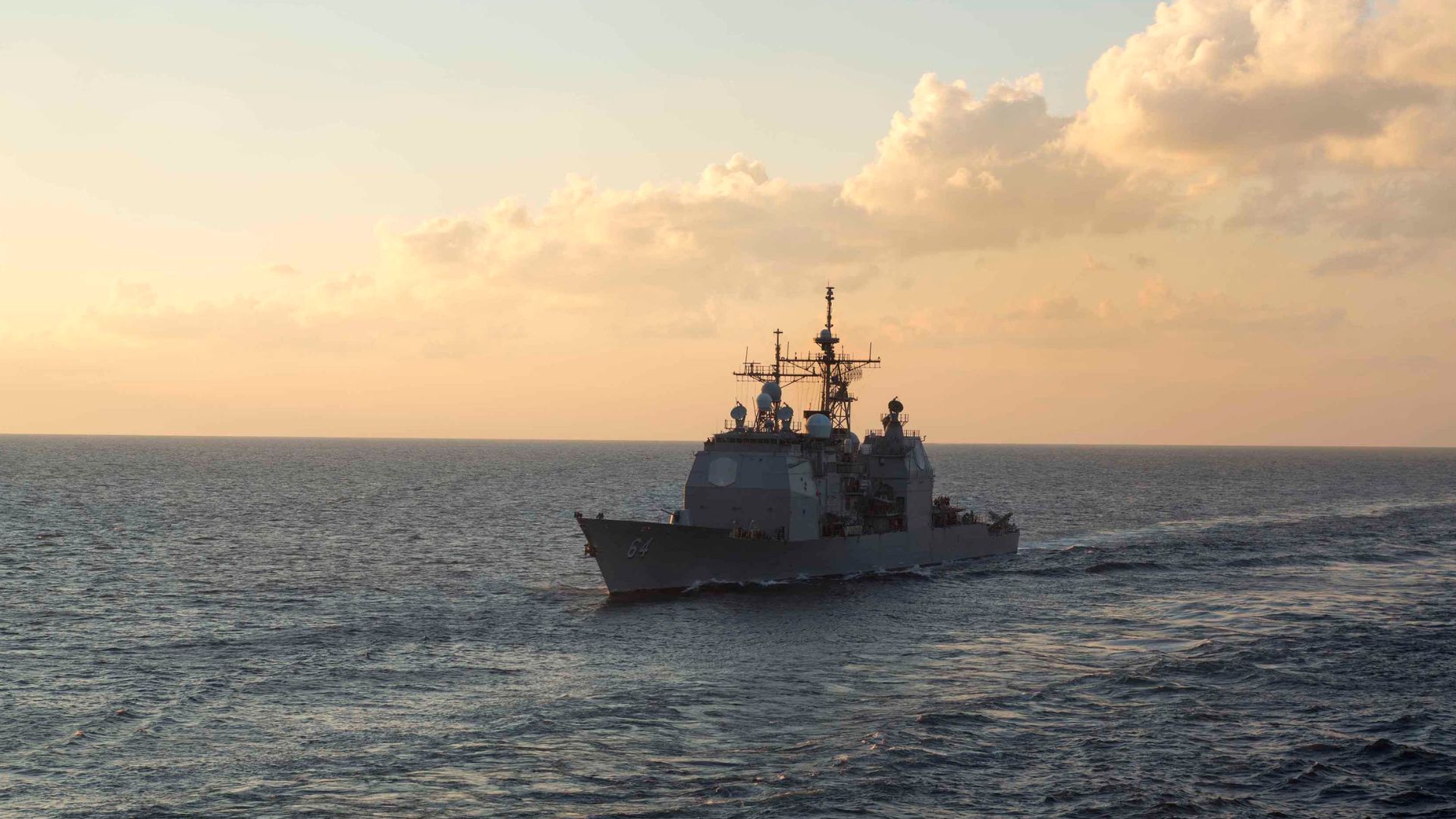
The Gettysburg and Chosin have already completed these upgrades, with the Cape St. George scheduled to finish by the end of this year.
Currently, Gettysburg is deployed with the Harry S. Truman Carrier Strike Group, while Chosin is preparing for future deployment.
Extending the service lives of these three cruisers makes strategic sense. The Navy initially aimed to keep 11 of its 22 Ticonderoga-class cruisers active into the 2030s. However, setbacks in the modernization program led to budget constraints and delays, forcing the Navy to retire most of the class.
With the recent decommissioning of the USS Vicksburg and USS Cowpens, these three cruisers are now among the last of their class.
Why These Moves Matter
The commissioning of the USS John Basilone and the extension of the Ticonderoga-class cruisers’ service lives highlight the Navy’s effort to maintain a powerful and versatile fleet. With global tensions high, having these capable ships ready for deployment is crucial.
The Navy’s decision to keep these cruisers operational aligns with its commitment to advancing US maritime strength while newer ships and classes continue to roll out.








COMMENTS