If the fall of Maduro means one less outpost for Moscow in our hemisphere, I will not pretend to be conflicted about it, because I have seen what his patrons do to men whose only crime was fighting back.
Read the full article for more on:
Important insights and detailed analysis
Expert commentary on current events
Breaking developments and updates
Updating summary...
Venezuela’s Crisis Is Not a Moral Puzzle
Benjamin Reed
Speed
1x
Listen
COMMENTS
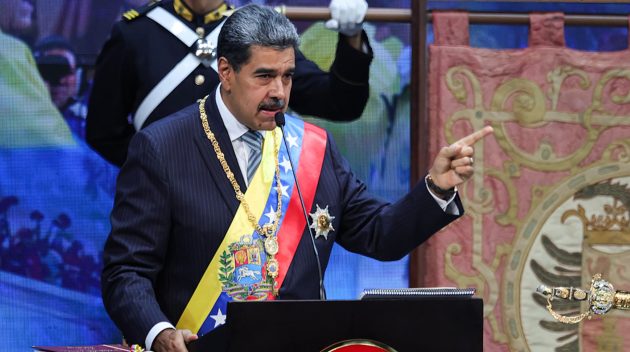
If the fall of Maduro means one less outpost for Moscow in our hemisphere, I will not pretend to be conflicted about it, because I have seen what his patrons do to men whose only crime was fighting back.
Image Credit: AOL.com
Let me be clear. I am not a MAGA partisan. I have been consistently critical of Donald Trump’s handling of foreign and domestic policy. But if the current crisis in Venezuela breaks in a way that strengthens the United States, we should not pretend to be shy about our role. Washington has shaped political reality in the Western Hemisphere for generations. Capability becomes prerogative. Power justifies itself.
Advertisement
The hopeful scenario is simple. Pressure on the Chavista regime forces Nicolás Maduro into exile in Russia, and a peaceful transition begins. Yet hope is often a luxury. If it fails, force may decide the matter. Good riddance to a leader who never earned legitimate authority in the first place.
Venezuela is not a misunderstood experiment in alternative governance. It is a predatory state hiding behind the language of populism. At least Hugo Chávez, for all of his failures and excesses, believed in something. His project was built on a warped but sincere idea of national uplift. It was misguided, often destructive, and ultimately unsustainable, but it had an ideological bone structure. Maduro inherited that system and stripped out everything except the machinery of control. He is not a revolutionary. He is a custodian of decay.
Under Maduro, billions meant for infrastructure evaporated through patronage networks. Electrical grids collapsed. Hospitals ran out of basic supplies. Public assets were plundered. The economy fused with narcotrafficking through the Cartel de los Soles, a consortium of security officers implicated in cocaine shipments bound for the United States. Torture sites operated with impunity. Political prisoners faced beatings, electrocution, and medical neglect. The regime presented itself as a republic while governing like a racket.
Advertisement
Maduro also embedded Venezuela deeply within the Russia-China-Iran axis. Russian advisors helped reorganize intelligence services. Chinese loans secured access to natural resources while trapping the country in unmanageable debt. Iran used Venezuela as a platform to evade sanctions and expand its reach in the Western Hemisphere.
He went further. Venezuela has become an operating ground for Russian private military contractors, including elements once tied to the Wagner Group. Their footprint is not large, but it is strategic. They provide security consulting, intelligence support, and protection for Russian and Venezuelan interests. Their presence signals that Caracas is comfortable hosting paramilitary specialists whose business model is built on repression and resource extraction.
Advertisement
The regime’s destabilizing reach does not stop there. Dissident factions of the FARC have long used Venezuelan territory as a sanctuary for training, recruitment, and drug smuggling. Colombian officials have documented camps on Venezuelan soil and interactions between FARC commanders and Venezuelan military officers. The relationship is transactional. The dissidents generate revenue and armed leverage. The regime provides them safe haven. The result is a toxic equilibrium. Venezuela gains irregular forces it can tolerate or manipulate. The dissidents rebuild their networks. Colombia inherits the instability.
These are not the actions of a sovereign state defending its people. They are the behaviors of a regime clinging to power by any means and exporting chaos to survive.
The United States has its own history of strategic misjudgment. The lead-up to the Iraq War was defined by flawed intelligence and bureaucratic hubris. That experience should encourage restraint. It is one reason I do not support an invasion of Venezuela, and I do not believe Donald Trump has the political capital or strategic discipline to manage one. I am not interested in expanding the drug war either. But certain facts do not change. Maduro’s regime is a logical strategic target. A stable, pro-American Venezuela would shift regional politics and deprive Moscow and Beijing of a foothold they have exploited for years.
Advertisement
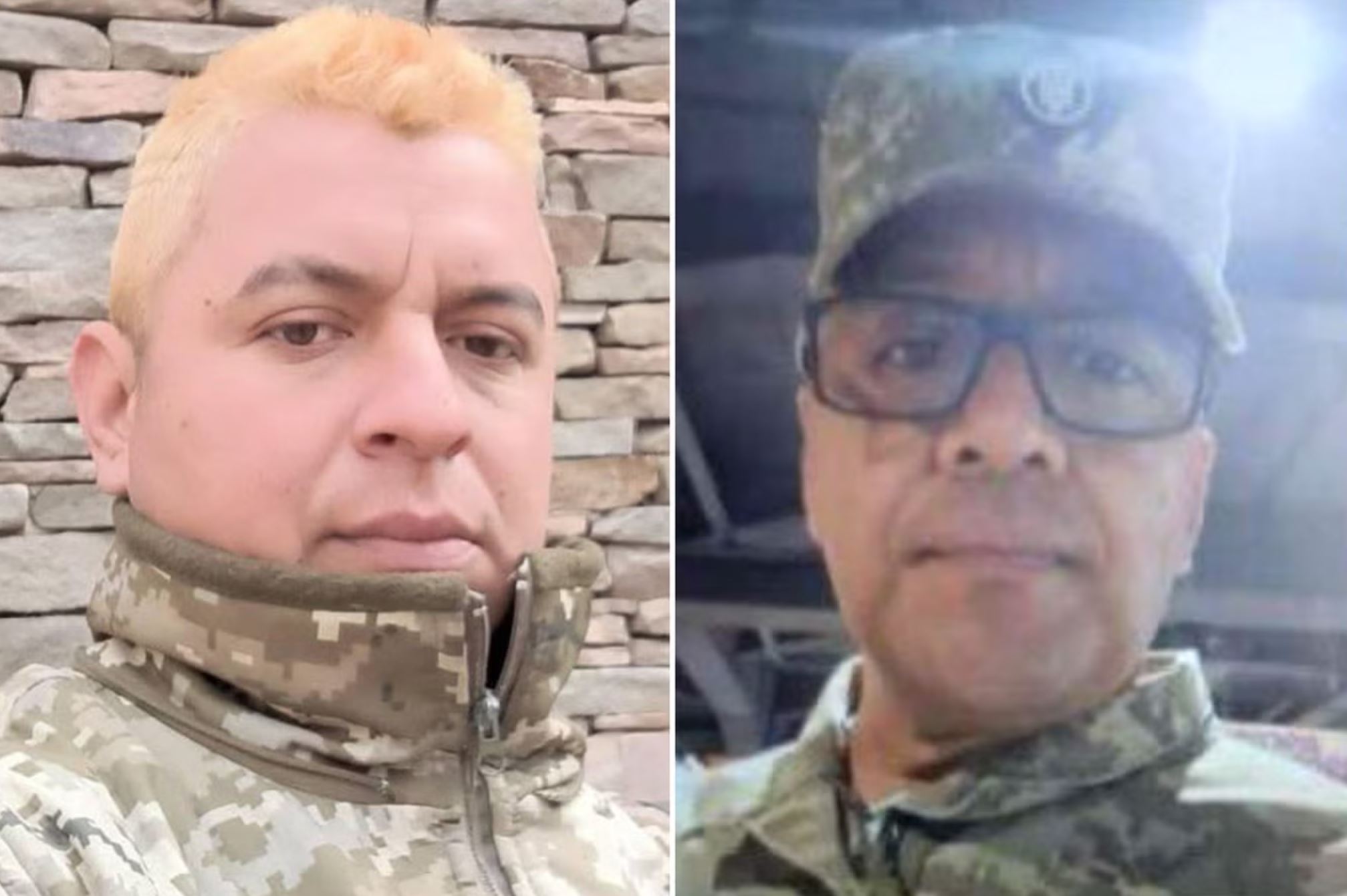
My view is not theoretical. Two of my colleagues from the Ukrainian Foreign Legion, legal soldiers of the Armed Forces of Ukraine, were detained during a routine layover in Caracas and extradited to Russia. These were men from poor families. They had no ransom value. There were no secret negotiations and no profit motive. They were handed to Moscow purely to punish them for fighting against Russia. Today, they sit in a penal colony.
Alexander Ante (right), 46 and Jose Aranda (left), 37, were snatched as they passed through Venezuela’s capital Caracas (Attorney General’s Office)
Their case fits a wider pattern. In early November, a Moscow-backed court sentenced two Colombian veterans who fought for Ukraine, Jesús Alberto Gutiérrez and Andrés Felipe Ramírez, to long prison terms. According to Al Jazeera’s November 7, 2025 reporting, the two men were extradited from Venezuela to Russia, accused under fabricated “mercenary” and “terrorism” charges, and pushed through a judicial ritual designed to serve propaganda rather than justice. Their guilt was political. Their nationality made them useful symbols.
This is not coincidence. It is a strategy meant to terrify foreign volunteers and reward any state willing to assist Russia’s war effort. The fate of the Colombians mirrors the fate of my own colleagues. They were not imprisoned for anything they did in combat. They were imprisoned for opposing the wrong government.
Their situation is almost identical to mine. I have already been tried and sentenced in absentia. I am a wanted war criminal in the eyes of the Russian Federation. Any government seeking favor with Moscow could decide tomorrow to extradite me as easily as Venezuela did with them. My colleagues were not given due process. They were delivered because cruelty was the point.
That episode still bothers me more than many things I saw in uniform. It revealed a truth about Maduro’s Venezuela. The regime does not simply exploit to survive. It harms because malice has become a governing principle. It inflicts pain as a political reflex.
So if this government falls, and if that collapse advances American interests, then good. The end of a corrupt dictatorship is not a moral dilemma. It is a correction that should have come years ago. The region will be safer for it. The Venezuelan people will be safer for it. And perhaps one day, the men who were extradited to Russia for resisting tyranny will come home.
—
** Editor’s Note: Thinking about subscribing to SOFREP? You can support Veteran Journalism & do it now for only $1 for your first year. Pull the trigger on this amazing offer HERE. – GDM
Advertisement
What readers are saying
Generating a quick summary of the conversation...
This summary is AI-generated. AI can make mistakes and this summary is not a replacement for reading the comments.










COMMENTS