

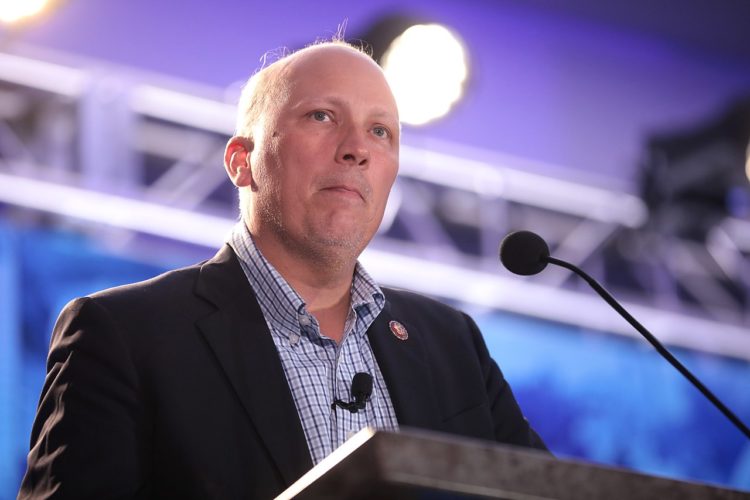
“This is a little like saying, I’m going to go on a diet but I’m not going to cut out cheesecake, cookies and all sorts of sweets,” he added.
Doing so would help ensure that resources are used optimally and efficiently while avoiding a “politics vs. militarism” false dichotomy often arising when discussing defense budget reform within Congress.
A Healthy Budget Makes for a Strong Military
To keep America safe and prosperous in the face of conflict with China, Congress must work together across party lines to reduce federal discretionary spending back down to pre-pandemic levels while examining every government program they fund thoroughly and prioritizing resources appropriately.
This includes eliminating excessive economic waste, such as foreign aid packages or funding for initiatives that have already been proven obsolete in today’s digital battlefields. By doing so, Congress will be able to send a clear message to Beijing that America remains united behind its armed forces while also freeing up funds needed for investments into more effective combat technologies such as cyber warfare tools or satellite reconnaissance networks.
To confront the growing threat from China, Congress must work together to reduce federal discretionary spending back to pre-pandemic levels while carefully examining every program they fund and prioritizing resources accordingly. This requires cutting wasteful spendings such as foreign aid packages or outdated initiatives and investing in more effective technologies to better equip US forces for combat.
“The false choice posed by Democrats—that any cuts to their cherished bureaucracies and domestic programs must be matched with cuts in defense—should be rejected. The goal must be to fund defense appropriately and pare bloated federal bureaucracies,” Roy wrote.
“But it is equally false to say there is nothing to cut at the Pentagon, which must get back into the military business and abandon the woke indoctrination and climate fetishism on which it spends wastefully. Savings from scrapping those initiatives would help restore morale, thereby increasing the lethality of U.S. forces and reassuring Americans who worry about the politicization of the military.”
The US military budget is an exceptionally complex issue due to the sheer amount of funding it receives relative to other government programs. According to the Congressional Research Service, the Department of Defense (DoD) received $731 billion in discretionary funding for the fiscal year 2020 alone, making up well over half of all discretionary spending across the federal government. Furthermore, studies conducted by Harvard University suggest that nearly a quarter of DoD funds are allocated toward ill-defined ‘overhead’ expenses rather than directly used on training and equipment.

To ensure that US taxpayers’ hard-earned money is being spent appropriately, Congress must take steps toward creating a healthier budget for US military operations. This includes instituting a system of cost-benefit analysis which would evaluate potential military programs based on their strategic value compared with their financial costs; streamlining bureaucratic processes by transitioning from paper-based auditing procedures towards digitization; and implementing a cause & effect tracking system which would quantify the impact of DoD initiatives on national security objectives. Additionally, increased oversight from top generals could help develop more realistic defense strategies rather than relying on costly but unproductive deployments like those seen in Afghanistan or Iraq during the 2000s.
Beyond reallocating funds within existing budgets, Congress can also pursue alternative sources of revenue for US military operations, such as public-private partnerships or sales taxes specifically allocated towards national defense efforts. Furthermore, allocating more resources towards nonlethal technologies such as cyber warfare tools or satellite reconnaissance networks could help prevent unnecessary casualties while achieving strategic goals – something which has been advocated by leading military figures such as General James Mattis since his retirement in 2013.
Ultimately, maintaining a healthy budget for US military operations requires cooperation between Congress members across party lines to ensure fiscally responsible allocations and sufficient resources for American forces abroad. By building upon existing models such as cost-benefit analysis and introducing new strategies, including public-private partnerships or sales taxes geared towards defense initiatives, Congress can create an equilibrium between wisely managing taxpayer dollars and optimizing US military capabilities domestically and abroad.
Key Takeaways:
Fiscal discipline is essential if we maintain military strength in 2023 despite increasing pressures from China. Cutting wasteful spending at the Pentagon is one way to ensure America remains safe and prosperous by optimizing our resources towards preparing for future conflicts with Beijing without sacrificing our current standards of living.
Moreover, by reducing federal discretionary spending back down to pre-pandemic levels, examining government programs thoroughly, and investing appropriately in more effective combat technologies, Congress will be able to send a clear message to Beijing that America remains united behind its armed forces now more than ever before.
“I don’t think the president will escape having to deal with negotiating some fiscal reforms in the most responsible way so that we can bend that debt curve, so that we can get on a sustainable path, stave off a debt crisis and act like adults,” Reps. Jodey Arrington, House Budget Committee chair said in an interview with Fox News.








COMMENTS