The Chief of Naval Operations Adm. John Richardson, is speaking out on the Navy’s problems with breathing systems in the F-18 and T-45 trainer. From an April 24, 2017 Navy Statement: On April 21, Vice Chief of Naval Operations Adm. Bill Moran directed Commander, U.S. Pacific Fleet Adm. Scott Swift t
Read the full article for more on:
Important insights and detailed analysis
Expert commentary on current events
Breaking developments and updates
Updating summary...
Watch: Chief of Naval Operations Adm. John Richardson addresses the recent issue with aircraft breathing systems
SOFREP News Team
Speed
1x
Listen
COMMENTS
The Chief of Naval Operations Adm. John Richardson, is speaking out on the Navy’s problems with breathing systems in the F-18 and T-45 trainer. From an April 24, 2017 Navy Statement: On April 21, Vice Chief of Naval Operations Adm. Bill Moran directed Commander, U.S. Pacific Fleet Adm. Scott Swift to lead the review and determine […]
On April 21, Vice Chief of Naval Operations Adm. Bill Moran directed Commander, U.S. Pacific Fleet Adm. Scott Swift to lead the review and determine the composition of the review team. It is expected that at the completion of the review, Swift will be able to validate current actions and recommend additional actions, if any, that need to be taken.
In the tasking memo Moran wrote, “The seriousness in which I view these incidents is reflected in the seniority of those leading this review. They will provide a full and open accounting to our aviation community, their families and the public.”
Physiological episodes occur when aircrew experience a decrease in performance due to the cabin pressure fluctuations, contamination of breathing air, or other factors in the flight environment. The Naval Aviation Enterprise and Navy leadership view PEs as the number one aviation safety priority and are taking an “unconstrained resource” approach to finding solutions.”
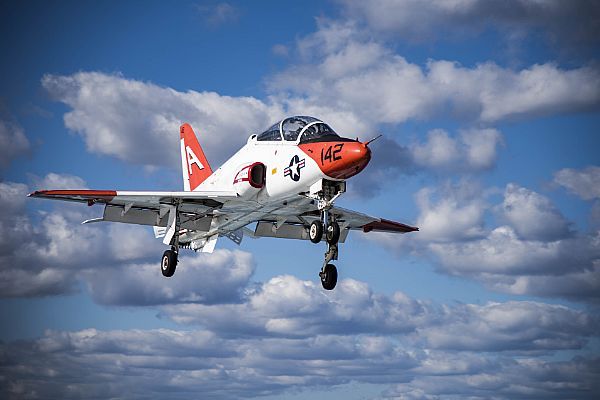
Featured image of a T-45C Goshawk training aircraft assigned to Carrier Training Wing (CTW) 1 approaching the aircraft carrier USS Dwight D. Eisenhower (CVN 69) by Mass Communication Specialist 3rd Class Nathan T. Beard, US Navy
On April 21, Vice Chief of Naval Operations Adm. Bill Moran directed Commander, U.S. Pacific Fleet Adm. Scott Swift to lead the review and determine the composition of the review team. It is expected that at the completion of the review, Swift will be able to validate current actions and recommend additional actions, if any, that need to be taken.
In the tasking memo Moran wrote, “The seriousness in which I view these incidents is reflected in the seniority of those leading this review. They will provide a full and open accounting to our aviation community, their families and the public.”
Physiological episodes occur when aircrew experience a decrease in performance due to the cabin pressure fluctuations, contamination of breathing air, or other factors in the flight environment. The Naval Aviation Enterprise and Navy leadership view PEs as the number one aviation safety priority and are taking an “unconstrained resource” approach to finding solutions.”
Featured image of a T-45C Goshawk training aircraft assigned to Carrier Training Wing (CTW) 1 approaching the aircraft carrier USS Dwight D. Eisenhower (CVN 69) by Mass Communication Specialist 3rd Class Nathan T. Beard, US Navy









COMMENTS