

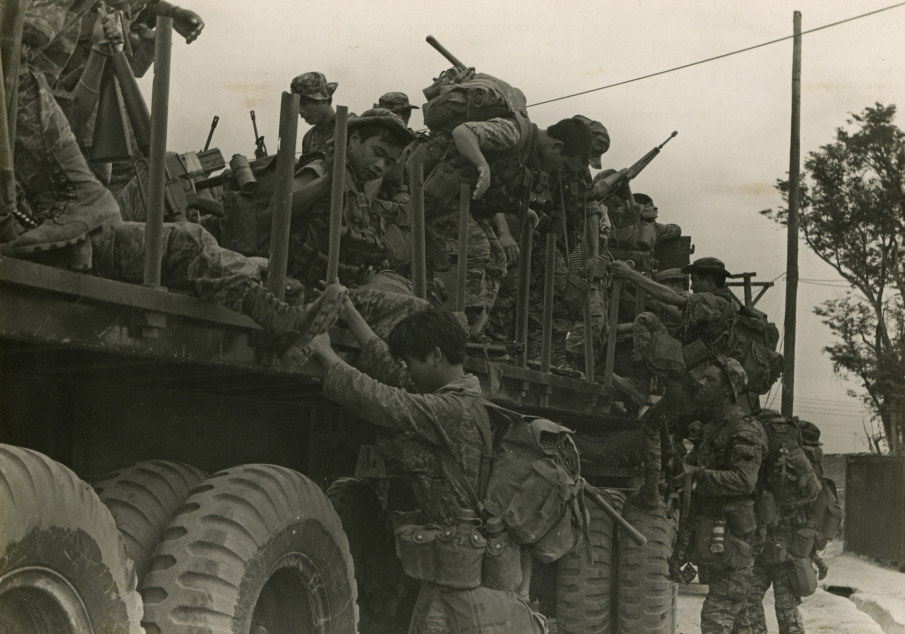
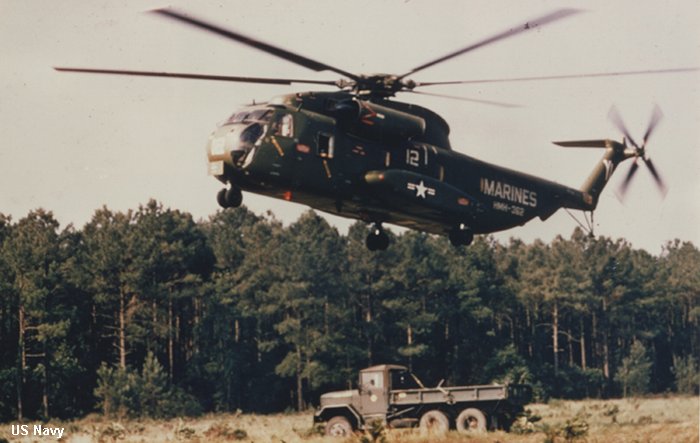
McCarley wasted no time; the company moved out in a northwest direction. And then the men of B Company had another surprise: After moving less than 400 meters from the LZ, the point element of the company reported seeing huts. First Platoon deployed two squads to search the area. They found an enemy ammo dump, 20 bunkers spread out over 500 meters, hidden under the jungle canopy with vegetation and dark covers.
After setting up perimeter security, the B Company troops pulled together a quick inventory of what they found, picked up samples while demolitions experts SFC Bernard Bright and SP5 Craig Schmidt photographed, identified the weapons and ammo, and began setting up explosive charges with 13.5-minute delay fuses in the two larger structures, with white phosphorus grenades attached to each charge to better mark the exact location for Covey, who would then direct airstrikes on that position.
The NVA phone rings
While the B Company team worked on this cache, McCarley had one of the most unique moments in his 28 years of military service. As he and a few SF soldiers were looking at a map, a telephone rang. “I couldn’t believe it. A phone rang in the middle of Laos,” McCarley said. “So, being SF, one of our guys picked up the phone and answered it: ‘Hello. Fifth Special Forces Group, may we help you?’ or something to that effect. Can you imagine the reaction of the communist on the other end of that phone?! To this day, just thinking about that makes me laugh.”
As the SF men chuckled at the phone call, others were compiling an impressive list of enemy weapons contained in the bunkers: 500 140mm rockets; 300 B-40 rockets; 300 82mm rounds; 2000 23mm anti-aircraft shells; 12,000 rounds of small-arms ammo, and 40 bicycles.
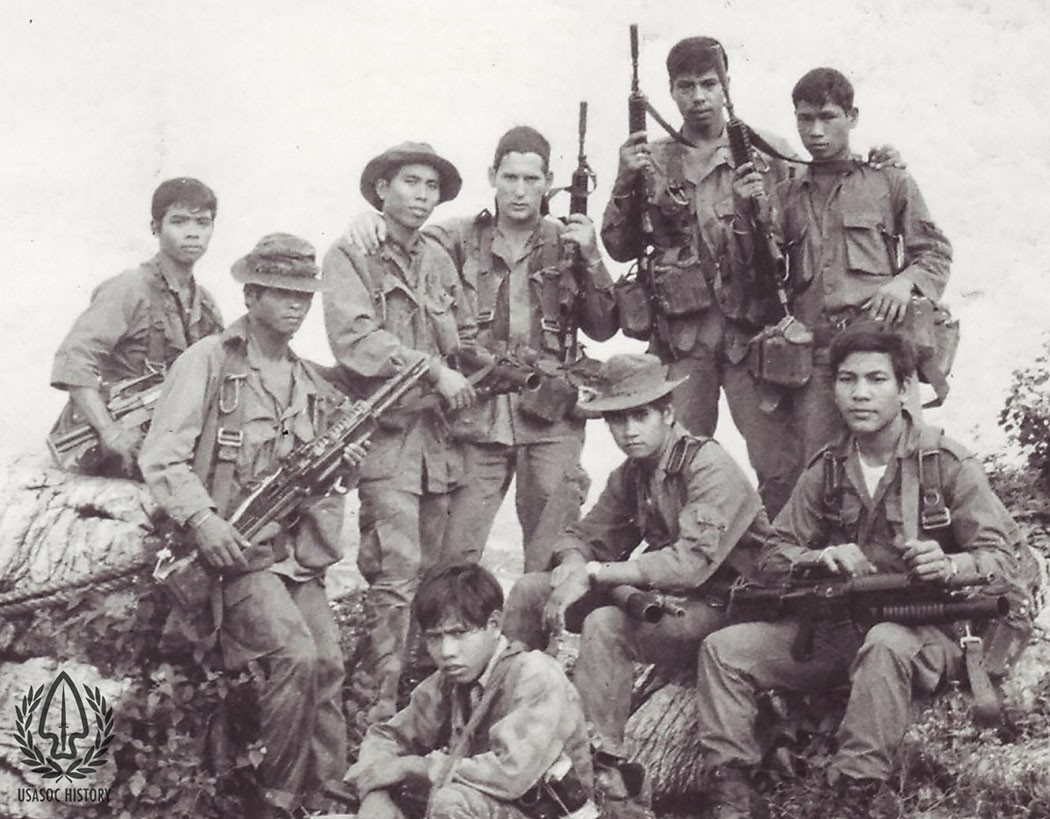
Not resting on its laurels, B Company moved north, with the First Platoon breaking point. In a short distance, First Platoon found a trail, crossed it, and were proceeding north when Adair and 2nd Platoon Squad Leader Mike Hagen observed several NVA soldiers on the trail and opened fire on them. An NVA 7.62mm round went through Hagen’s gas mask and slammed into his leg. Bernie Bright was slightly wounded: “The round actually parted his hair,” said McCarley. “You can’t get much closer than that.” The NVA fled the area and B Company continued to head north.
As they marched, they heard two large explosions back at the NVA bunkers. The white phosphorus grenades that Bright and Schmidt attached to the demo charges emitted large plumes of white smoke, smoke that Covey readily picked up and used to direct follow-up air strikes. Secondary explosions would continue for more than five hours, McCarley said.
B Company then made contact with a NVA company, which lasted for close to an hour. The hatchet force men used close air strikes from Scarface Cobras and A1 SPADs and skillful squad tactics against the surprised NVA to drive them off.
As darkness approached, McCarley and the point element began looking for a location to set up a RON (remain over night) for part of the night. “We had stopped for a commo check when they fired one B-40 rocket into our command post,” McCarley said. Rose added, “We were fortunate in one small way: The rocket flew past all of us before striking a bamboo thicket. Thus, when the shrapnel exploded, those of us injured by it didn’t get the full, head-on blunt force of metal shards, as the forward momentum of the rocket exploded into the bamboo.”
Forty-five years after that rocket explosion, Rose had one lasting mental image from it: “It’s funny, I can’t remember much about it except that all of a sudden I was flying through the air. At some point, while airborne, I looked up and saw blue sky. It was beautiful…and then I landed.”
“Rose showed us what he was made of that day,” McCarley said. “He immediately started to go to work on the wounded, because everyone in the CP at that time had varying degrees of injuries. In fact, Rose had a serious foot injury. Somehow, the shrapnel had sliced open his jungle boot and cut into his foot. What did he do? He pulled out an Ace bandage, wrapped it around his foot, used his CAR-15 as a crutch, and began treating our wounded.”
The most seriously wounded was a South Vietnamese lieutenant. Shrapnel sliced into his right thigh, to the bone, in addition to other shrapnel wounds. “We stopped and licked our wounds as Rose patched up our people,” McCarley said. As Rose worked on the wounded, McCarley established radio contact with one of the two airborne command and control centers’ EC-130 aircraft that flew during Operation Tailwind, and regularly provided communication links between SOG teams or hatchet forces on the ground with Covey and tactical air assets. The day code name for the command center was Hillsborough, while the night EC-130 was Moonbeam.
McCarley’s plan was to continue to move at night, and if B Company made contact with the enemy, the Special Forces men would determine whether to attack them, maneuver around them, or simply pull back and call in fixed-wing gunships, which could bring deadly fire from the sky upon enemy troops on the ground. By 1970, the original gunships, C-47s called “Puff The Magic Dragon” or “Spooky,” had been replaced by three different gunships, all of which had more weapons, sensors, a forward-looking infrared system, and additional weight capacity for more ammo and night flares: the AC-119G, the old two-engine “Flying Boxcar,” code-named “Shadow”; an AC-119K, which had two J-58 jet engines added for increased speed and lift capacity, code-named “Stinger;” and the four-engine, jet-assisted AC-130. They carried four miniguns, two 20mm multi-barrel Gatling cannons, and flares. McCarley, Adair, and a few other B Company SF men carried small transistor radio-sized transponders which emitted an electronic signal that the gunship could lock in on and use as a point of reference when directing gunfire onto enemy positions.
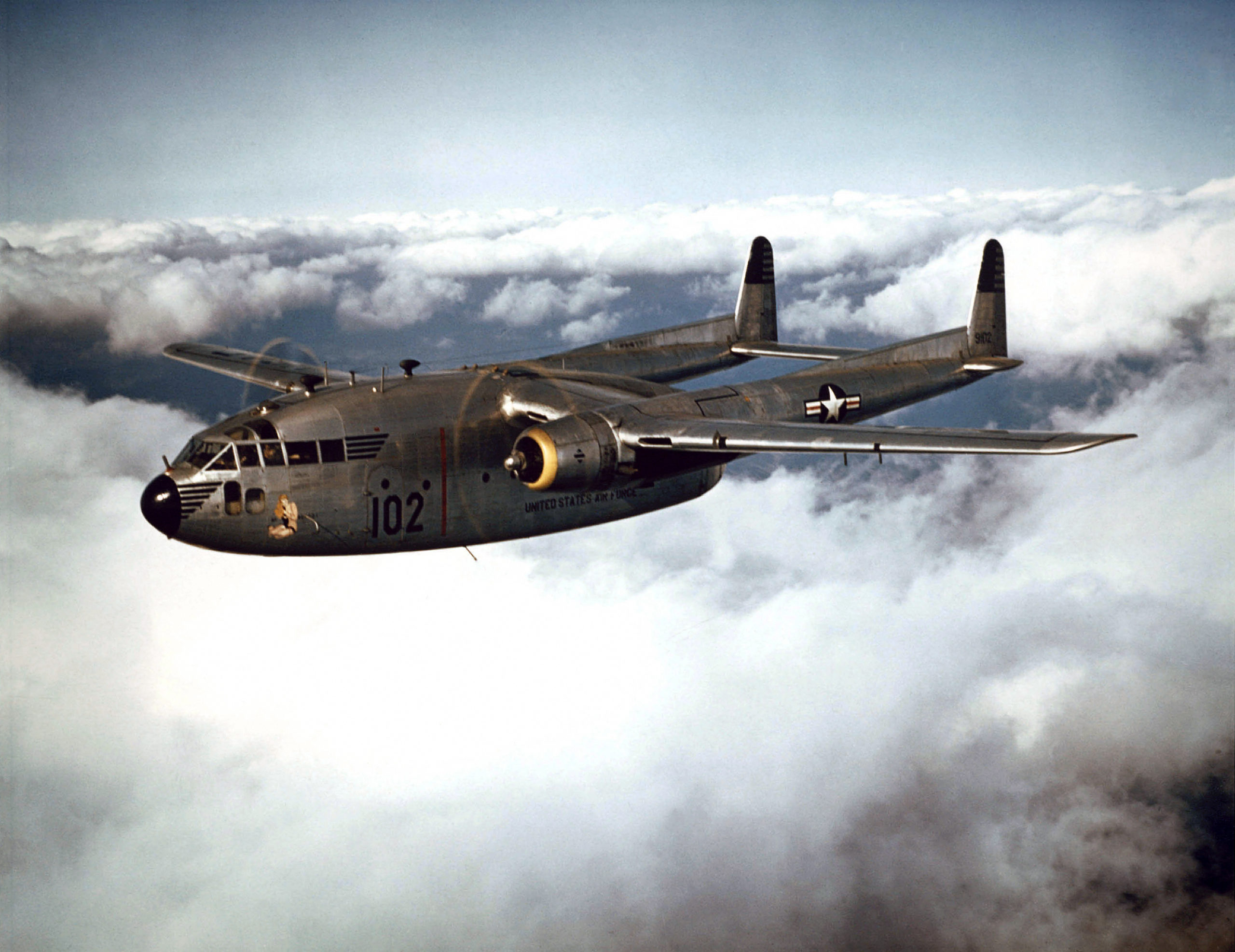
An Air Force Fairchild AC-119G Flying Boxcar (Wikimedia).
Finally, Rose rigged two stretchers from rubber ponchos, supported by thick bamboo poles, and tied them down with six-foot sections of rope used for Swiss seats in rope extractions from LZs too small for helicopters to land. They would now be able to carry the most seriously wounded indigenous troops. When Rose gave McCarley the okay, B Company took the bold step of moving out at night. “I wasn’t going to let them tie us down in one position and then hammer us. By moving, they didn’t know exactly where we were. There were skirmishes. A few times we ran into a few NVA; after contact, we’d move on. If there was a larger element, we could pull back and call in a gunship strike. We had flare ships over us every night.”
B Company continued to march west, deeper into Laos. The deeper B Company Green Berets and their Montagnards headed west, the more they enhanced their primary goal of being a diversion to the NVA forces attacking the CIA’s Operation Catapult.
The going wasn’t easy: by dawn, nine of the 16 Americans had been wounded. Rose and his indigenous medic counterpart, Koch, worked tirelessly on the wounded all night, even as they moved through the dark jungle.
Stay tuned for part 3.








COMMENTS