
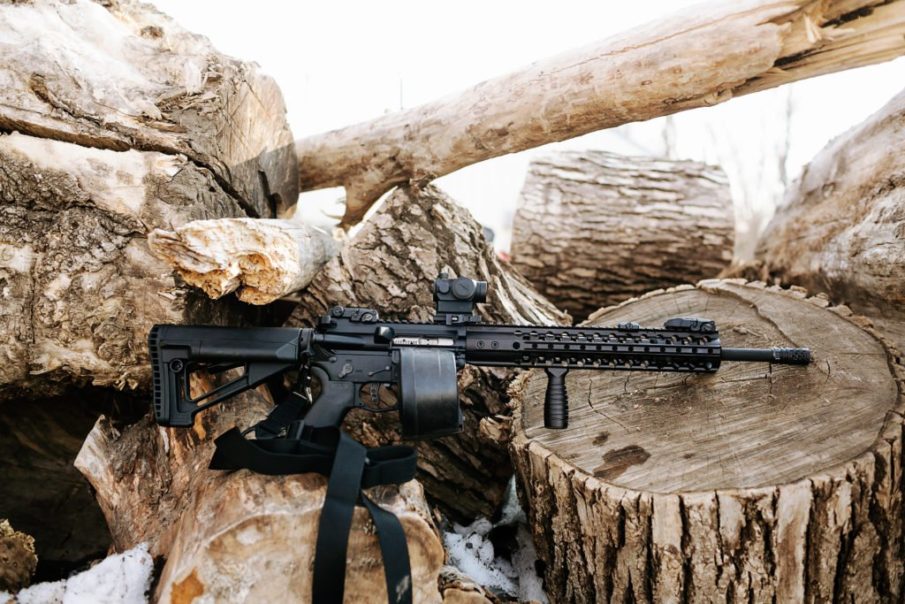

If I decide not to order online, and I know of a gun shop that stocks lower receivers nearby, I can just go purchase it directly from that store, and then fill out the necessary ATF form, just as I would for purchasing any other kind of firearm.
Q: What parts make up an AR-15 that I would have to purchase to build one?
A: There are a variety of different types of AR-15 builds, so this list will not work for all builds. However, I put together a list of components for building a typical M-4 style AR-15 with a stripped lower receiver, and stripped upper receiver:
- AR-15 lower receiver.
- AR-15 upper receiver.
- Lower receiver parts kit.
- Upper receiver parts kit.
- Lower receiver extension (aka: the buffer tube).
- Buffer.
- Buffer spring.
- Barrel & gas block/gas system (a carbine length gas system would be typical for this build).
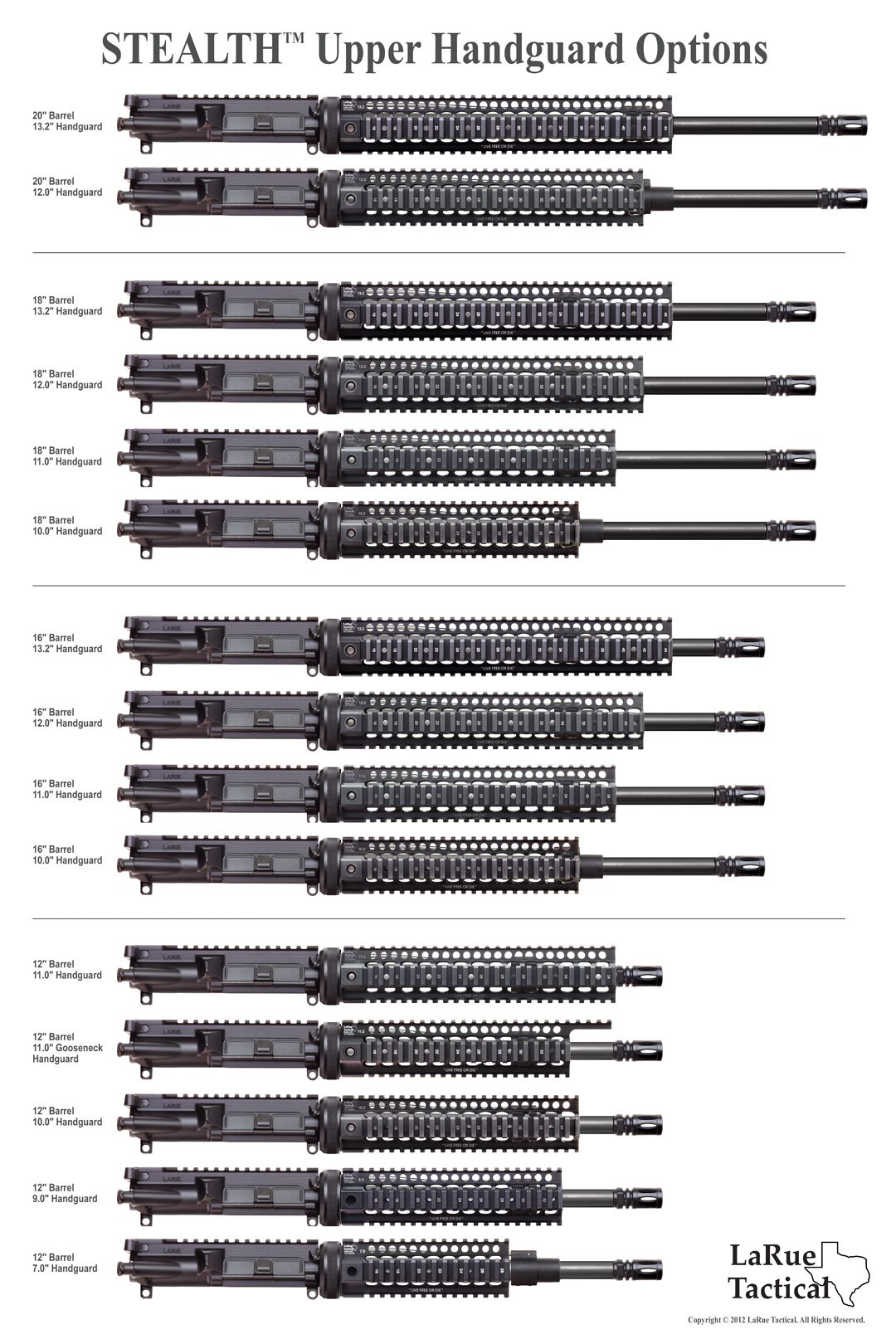
- Handguards (length will depend on what length gas system you chose on your barrel: carbine, mid-length, or rifle).
- Bolt carrier group (carrier, bolt, firing pin, cam, extractor, ejector and spring).
- Collapsible (or fixed, if you prefer) buttstock.
- At least one magazine (be sure to check your state laws for magazine capacity limits).
Q: What is the difference between a forged lower receiver and a billet lower receiver?
A: With a forged lower receiver, the metal is “smashed” into the desired form while it is red hot. This compresses the metal and makes it very strong.
Billet lower receivers are machined from a single block of metal and tend to have a more custom, aesthetically pleasing appearance to some. It also tends to have the trigger guard built in, meaning it is not removable. They also tend to cost considerably more than a forged lower. Billet lowers may not have quite the tolerance that forged lowers, but by no means are they to be considered “weak.”
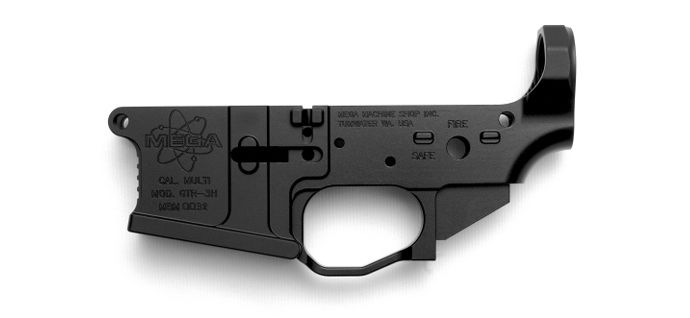
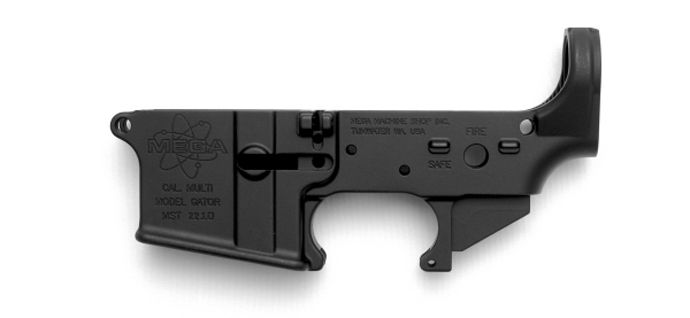
Q:How do I know which lower receiver to purchase? What “brands” are good?
A: There are a tremendous amount of different lowers out on the market, but not every lower is made by the company that has its name on the side. You would be surprised at how many lowers from different companies actually come from probably less than a dozen machine shops.
At present, this is the list of which manufacturers produce lowers for which companies:
Lewis Machine & Tool
- LMT
- Lauer
- DS Arms
- PWA
- Eagle
- Armalite
- Knights Armament
- Barrett
Continental Machine Tool
- Stag
- Rock River Arms
- High Standard
- Noveske
- Century (New)
- Global Tactical
- CLE
- S&W
- MGI
- Wilson Tactical
- Grenadier Precision
- Colt
LAR Manufacturing
- LAR
- Bushmaster
- Ameetec
- DPMS
- CMMG
- Double Star
- Fulton Armory
- Spike’s Tactical
JVP
- Double Star
- LRB
- Charles Daly
Mega Machine Shop
- Mega
- GSE
- Dalphon
- POF
- Alexander Arms
Olympic
- Olympic
- SGW
- Tromix
- Palmetto
- Dalphon
- Frankford
- Century (Old)
Sun Devil
- Sun Devil forged billet receivers
Superior
- Superior Arms
- Lauer (New)
Aero Precision
- Aero Precision
Considering that almost all AR-15 lower receivers are made to a very specific tolerance, based on military specifications (mil-spec), my advice is to choose whichever AR-15 lower receiver that has a roll-mark (or logo) that you think is “coolest” or is most appealing to you personally.
Q: Some barrels say they are chambered in 5.56 and some say they are chambered in .223. What is the difference?
A: Basically, the rule of thumb is this: a rifle chambered for 5.56 can shoot both 5.56 and .223 ammunition. A rifle chambered for .223 can only shoot .223 and not 5.56. For the full story on 5.56 vs. .223, check out this article by Destinee.
Q: What does barrel twist mean? 1:7 and 1:9? Ratio? What?
A: Confused? Yeah, this one is kind of technical but I will keep it simple. When choosing a barrel twist ratio, you will want to choose one that best matches the type of ammo you would normally be shooting. What the ratio means, such as 1:7 for example, is that when the bullet travels down the barrel, it will make one complete spin (via the rifling) every seven inches.
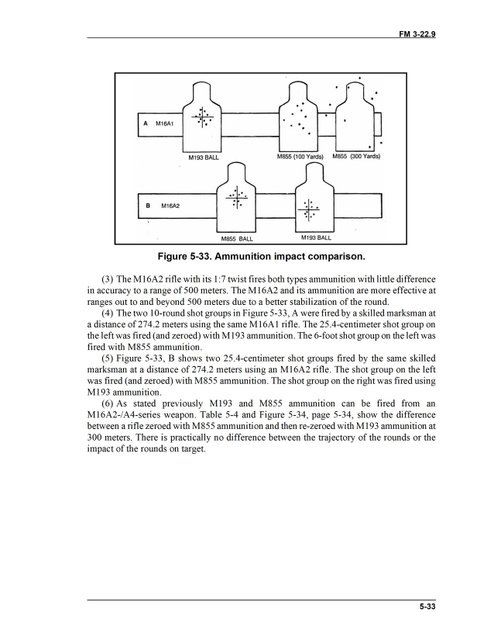
This is one of the most hotly debated topics about AR-15 rifles. Personally, I chose to go with 1:7 because it gives me the option of shooting the heavier rounds. Because 55gr .223/5.56 is the most common bullet weight available (that’s the weight used in XM193 military ball 5.56×45 ammo), and the most frequently fired, you would be fine with either 1:7 or 1:9. I have also been told by reputable sources in law enforcement that 1:9 is recommended for plinking, and 1:7 for hunting and home defense.
To break it down, 1:7 will do just fine with shooting lighter and heavier rounds. 1:9, on the other hand, will handle lighter rounds better, and will not do so well with anything heavy at long distances. (Fig. 1a)
Q: What does carbine, mid-length and rifle length mean when choosing a barrel?
A: It simply means where the gas port in the barrel is placed. It is also sometimes referred to as the “gas-system”. Carbine and mid-length gas systems tend to be on barrels of 16-18 inches and shorter, while barrels with a length of 20 inches and longer will have a rifle length gas system.
It is important to know what length gas system your barrel has because the gas tube you purchase will need to be the right length in order to fit properly. For example, you cannot fit a carbine length gas tube onto a barrel with a rifle length gas system. The gas tube will be too short.
Q: I am ready to build my AR-15 lower receiver but I do not know the steps. How do I do it?
A: Great question. In the following posts in this “How to Build an AR-15” series, I will go over how to build your AR-15 (starting with building your lower receiver, and moving from there to the AR-15 upper), what tools you will need, and I’ll offer some helpful tips along the way. Stay tuned.
This article courtesy of Nate Schultz from The Arms Guide.








COMMENTS