

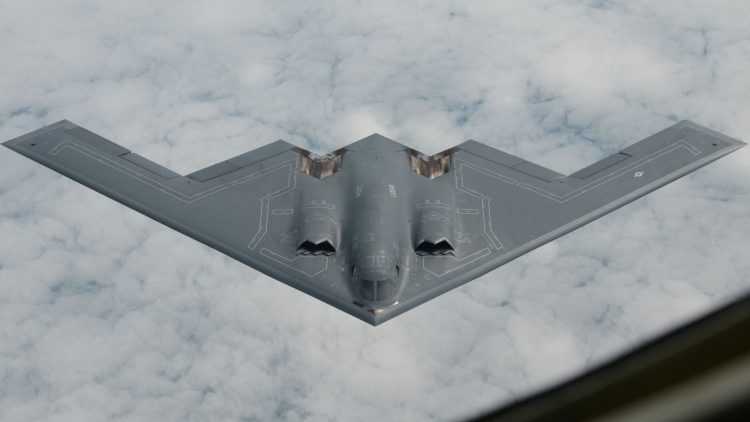
No other aircraft in the US arsenal can match the B-2’s effectiveness in scenarios where surprise and precision are crucial.
In fact, today, the B-2 bomber is the only one that has been deployed and operates as a stealth bomber.
Strategic Reach and Nuclear Deterrence
One of the B-2’s most significant contributions to national security is its role in the US nuclear triad.
The bomber’s ability to carry nuclear weapons and deliver them with precision across vast distances makes it a key component of America’s deterrence strategy.
In an era where the threat of nuclear conflict, while diminished, is not entirely erased, the B-2 ensures that the United States can respond decisively to any nuclear aggression.
Beyond its nuclear role, the B-2’s global reach is a critical asset in conventional warfare as well. Its ability to strike targets anywhere in the world from bases in the United States, without the need for forward deployment, provides the US military with unparalleled flexibility.
This global strike capability ensures that potential adversaries know there is no safe haven, which serves as a powerful deterrent in itself.
B-2 Bomber: Adapting to Modern Threats
As with any military technology, the B-2 is not without its challenges. And father time is clearly coming for the B-2 stealth bomber.
Adversaries continuously develop new methods to counter stealth technology, and the cost of maintaining and upgrading the B-2 fleet is substantial. However, the US Air Force has proactively ensured the B-2 remains relevant in the face of evolving threats.
Recent upgrades to the B-2 include enhancements to its stealth features, avionics, and communications systems. These improvements ensure that the B-2 can continue to operate in increasingly contested environments, where advanced air defense systems and electronic warfare capabilities pose a growing threat.
Moreover, the development of the B-21 Raider, the B-2’s eventual successor, is designed to complement the existing fleet, ensuring a seamless transition in the US Air Force’s strategic capabilities.
Balancing Cost and Capability
Critics of the B-2 often point to its high cost as a reason to question its value. With a price tag of over $2 billion per aircraft in inflation-adjusted dollars, the B-2 is one of the most expensive military assets ever developed. Additionally, the maintenance costs associated with keeping the fleet operational are considerable. However, these costs must be weighed against the B-2’s strategic value.
The B-2’s ability to deliver decisive blows against high-value targets, often without additional support, reduces the need for larger, more complex operations that could put more lives and assets at risk.
Moreover, its role as a nuclear deterrent, a capability that cannot be easily quantified in terms of cost, is invaluable. In essence, the B-2 represents a cost-effective solution when viewed through its strategic importance and the potential consequences of its absence.
Conclusion: The B-2’s Enduring Legacy
As the US Air Force looks to the future, the B-2 Spirit remains a vital component of its strategic arsenal. Its unparalleled stealth, global reach, and role in nuclear deterrence ensure that it will continue to play a key role in defending the nation against emerging threats.
While challenges remain, particularly regarding cost and the development of counter-stealth technologies, the B-2’s continued relevance is a testament to its innovative design and unmatched capabilities.
In a world where the balance of power constantly shifts, the B-2 provides the United States with a reliable and flexible tool for maintaining strategic dominance.
As new technologies like the B-21 Raider emerge and the global security landscape evolves, the B-2 will remain a symbol of American military strength and a critical asset in safeguarding national security.








COMMENTS