

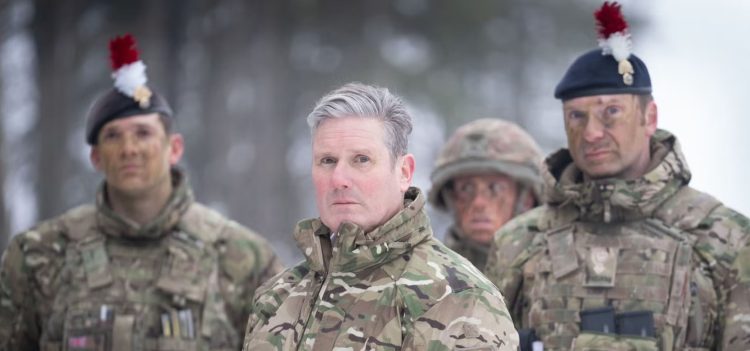
Britain has made it clear: it stands firmly with Ukraine. With billions in military aid, long-term security commitments, and crucial economic and humanitarian assistance, the UK is one of Ukraine’s strongest allies. As the war continues, Britain remains dedicated to helping Ukraine defend itself, recover from destruction, and secure a stable future.
Operation Interflex: Strengthening Ukrainian Defenses
Operation Interflex is a British-led multinational military training program designed to support and strengthen the Armed Forces of Ukraine. Launched in July 2022, it replaced Operation Orbital (2015-2022) and is set to continue until at least the end of 2025. This large-scale training initiative has played a critical role in preparing Ukrainian soldiers for combat against Russian forces.
Since its launch, over 51,000 Ukrainian recruits have undergone training through Operation Interflex, with an ambitious goal of training up to 10,000 troops every 120 days. Unlike its predecessor, which provided training inside Ukraine, Interflex takes place in the United Kingdom, ensuring a secure environment for intensive instruction.
This mission is more than a solo UK effort—it has the backing of multiple NATO allies and partner nations. Countries such as Canada, New Zealand, Norway, Denmark, Finland, Sweden, Lithuania, the Netherlands, Australia, and Romania have contributed instructors, making it a truly multinational initiative.
Comprehensive and Evolving Training Program
Operation Interflex provides a five-week intensive course covering essential combat skills needed for the battlefield. Ukrainian soldiers receive training in weapons handling, battlefield first aid, the Law of Armed Conflict, patrol tactics, trench warfare, urban combat, and fireteam maneuvers. To keep pace with the evolving war in Ukraine, the curriculum is regularly updated based on battlefield intelligence.
By November 2024, specialized training in detecting and disposing of explosive landmines was introduced, addressing a growing threat on the battlefield. Other specialized programs include Explosive Ordnance Disposal (EOD) training and military chaplain training, highlighting the mission’s adaptability to meet Ukraine’s evolving needs.
Beyond training, the UK ensures that Ukrainian soldiers are equipped with uniforms and gear used during training, which they take back to Ukraine for deployment. Operation Interflex has also expanded its scope to include marine infantry and fighter pilot training, further strengthening Ukraine’s military capabilities.
While Interflex is a significant strategic commitment, it has put a strain on the UK’s own military training capacity. The extensive use of British training facilities for Ukrainian soldiers has limited the UK Army’s ability to train its own forces at full scale. Despite this challenge, the mission remains a top priority, reflecting Britain’s dedication to helping Ukraine defend itself.
Balancing Commitments and Capabilities
Great Britain’s commitment to Ukraine—particularly through military aid and training programs like Operation Interflex—has created a delicate balancing act between helping an ally and maintaining its own military readiness. This challenge is evident in several key areas, including training capacity, equipment resources, and strategic planning.
One of the biggest challenges is that Operation Interflex has significantly impacted the British Army’s ability to train its own soldiers. The extensive use of UK military training sites for Ukrainian troops has led to British Army units struggling to secure their own training grounds. In 2023, the rejection rate for training site requests was eight times higher than in 2019, and Operation Interflex now occupies more than a quarter of the UK’s training estate. The Ministry of Defence has acknowledged that this directly limits the British Army’s ability to prepare its own troops for future missions.
Impact on Equipment and Resources
The UK’s support for Ukraine has also affected its own military stockpiles. Since the start of the war, Britain has donated £171.5 million worth of equipment from its own reserves. However, by mid-2023, these donations were scaled back due to growing concerns about the UK’s combat readiness. At the same time, Britain has pledged to provide £3 billion per year in military aid to Ukraine until at least 2030, making it critical to carefully manage resources without weakening domestic defense capabilities.
Strategic Challenges and Considerations
Balancing military aid to Ukraine while ensuring Britain’s own defense capabilities remain strong is a major strategic challenge. The National Audit Office has emphasized that the UK’s Ministry of Defence must carefully balance its long-term commitments with the need to sustain its own armed forces. Some military leaders have even expressed concerns that the British military is being stretched so thin that it might struggle to lead a future peacekeeping mission in Ukraine.
Solutions to Maintain Balance
To address these challenges, the UK is taking several steps to reduce the strain on its military while maintaining its commitment to Ukraine:
Collaborating with international partners to help with training efforts, including working with reservists and NATO allies.
Relocating some training programs—for example, Operation Interforge, which focuses on training Ukrainian marines, has been moved to the Netherlands to free up UK facilities.
Extending Operation Interflex until at least the end of 2025, ensuring a structured approach to training without overwhelming UK military resources.
Developing new funding strategies—through agreements like the UK-Ukraine Defence Industrial Support Treaty, Britain is expanding its military aid options using export finance-guaranteed loans rather than depleting its own stockpiles.
Wrapping Up
As diplomatic efforts continue, the British Army stands prepared to support Ukraine if they are called on to join the fight. While the commitment to European security is unwavering, careful consideration of resource allocation and strategic planning is essential to maintain the UK’s defense posture both at home and abroad.
The situation remains fluid, with military and political leaders closely monitoring developments to respond effectively to emerging threats.
—
**What do you think about the Brits wanting to get into the fight at this late stage of the game? Sound off in the comments.








COMMENTS