

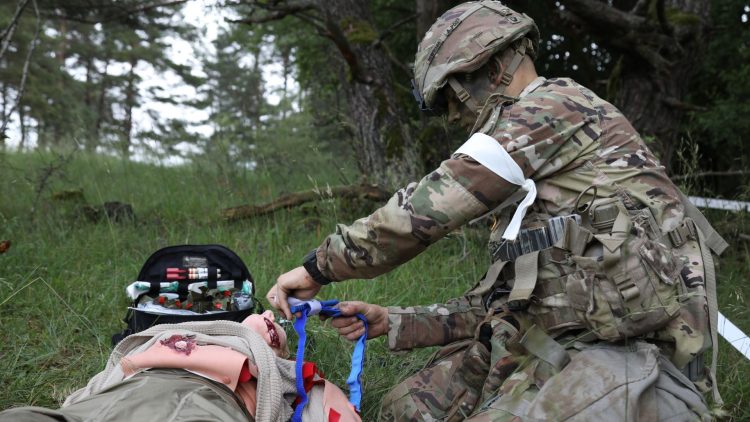
H.R. Montgomery: Overcoming the stigma that tourniquets are a last resort or going to make arms and legs fall off is something that many civilians will need to overcome. We had this problem with the military medical community in the early days of TCCC. That mindset is still out there. However, that is easy to overcome with simple facts and education. We have facts from hundreds of combat casualties with salvaged limbs that had tourniquets. However, they lived through the bleeding to have a limb that surgeons could save.
We also now have the means to educate and inform through everything from the Stop the Bleed program to the internet itself for ensuring the right information is available to the public. Another barrier for some is going to be blood exposure and threat of diseases like HIV. Again, this comes down to education and making people aware.
SOFREP: What advice would you give to local law enforcement and first responder agencies (EMS and Fire) on how to best prepare to handle these incidents from a trauma care perspective?
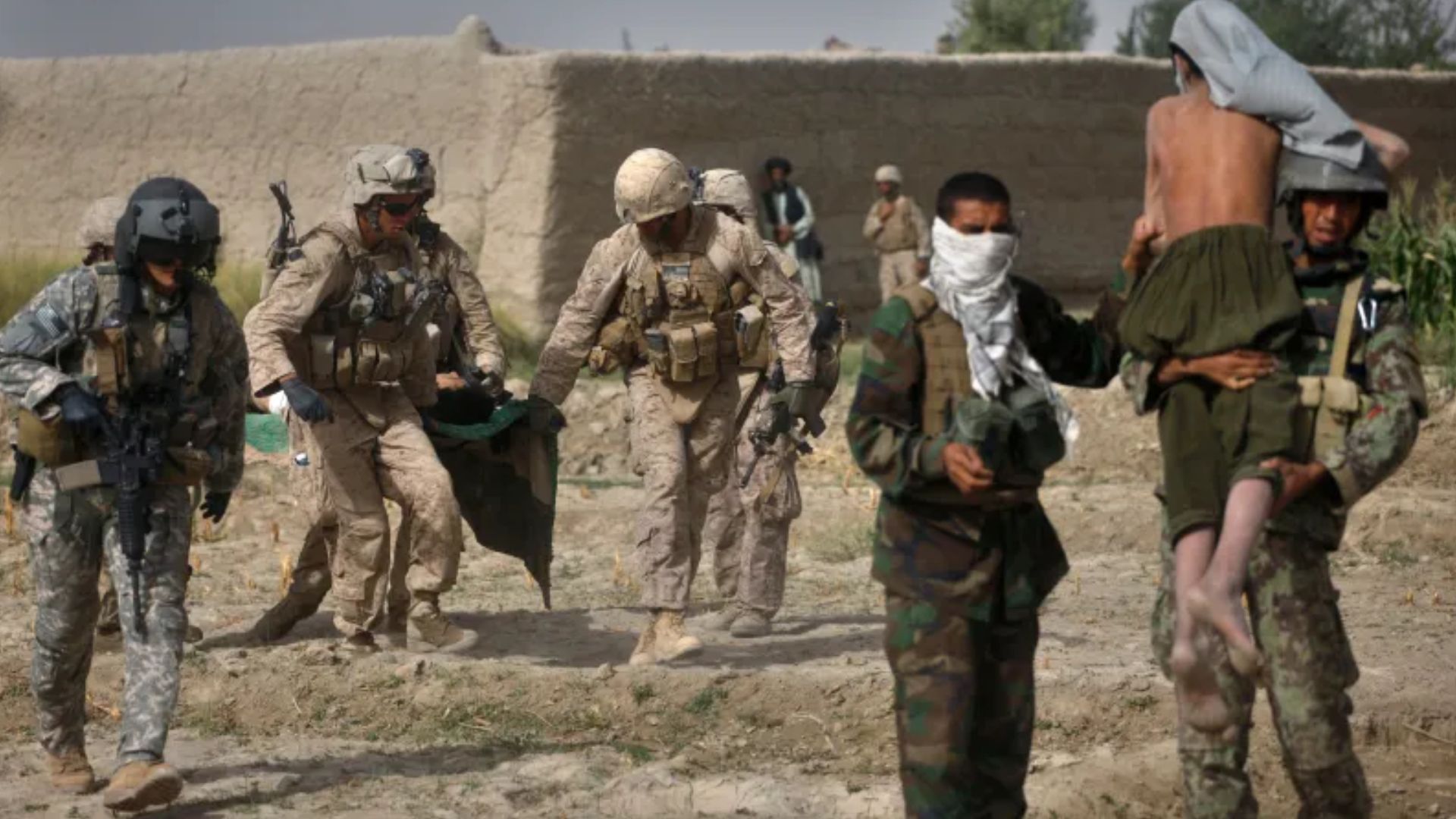
Dodge: My advice to public servants is to understand that they can’t do it all by themselves. We need people who aren’t going to collapse at the first sign of trouble and wait for the Fire Department, the ambulance, or the Police to show up. Reaching out to the community, building and maintaining that awareness and preparedness will pay back dividends when crisis strikes.
Thompson: The best way to prepare yourself in situations like that is to expose yourself to them. Now, I’m not talking about immersing yourself in a mass casualty incident with real patients at every opportunity. I’m talking about immersing yourself and your co-workers in the training environment and train with those stressors around you. This is what we do in the military. If you train in a stressful environment where you lose your fine motor skills because of stressors, your brain and motor functions will be able to function better when not exposed at all.
Soderlund: There are several sets of guidelines put out by the Committee for Tactical Emergency Casualty Care (C-TECC), including one specific to First Responders: “First Responders with a Duty to Act.” This set of guidelines is designed for police and non-medic fire fighters, and is an excellent resource. I would encourage all law enforcement offices, no matter what duty assignment they have, to become familiar with how to treat preventable injuries. There is really no reason every law enforcement agency could not repeat the success Andrew [Fisher] had with the Ranger Regiment. It just takes the buy-in from the Chiefs, Sheriffs, and the chain of command to make medical training for its officers a priority.
Colonel Nicholas Senn was quoted in 1897 to say: “The fate of the wounded rests in the hands of the ones who apply the first dressing.”
Unfortunately, the recent mass shooting in Las Vegas shows this quote is as true today as it was in 1897. The TECC Committee understands that police are often the first to apply that dressing, and thus it is the police officer and civilians on scene who can make the biggest difference. One need only look at this set of statistics (here) to see how law enforcement is using TECC concepts. It is data I have been compiling for several years, and shows how police are using TCCC and TECC to save lives.
Fisher: In the 75th Ranger Regiment, success was due to a command-directed Casualty Response System and a mastery of the basics through rehearsals, repetition, and conditioning. This was completed first through training all Rangers and Docs in TCCC – initial and refresher training; next, casualty scenarios integrated into small unit tactics, battle drills, exercises; and finally, a unit registry used for performance improvement and directed procurement.
I would encourage all EMS, Fire, and Police Departments to incorporate these concepts, as well as the approach outlined in “Leadership and a casualty response system for eliminating preventable death,” by Kotwal, Montgomery, et al.
Montgomery: Everything you learned or did in the past is good history and resumé material. However, you are only as successful as what you are prepared to do today. Never stop learning, and never think that you are prepared for every contingency. Nobody should be above being graded on a skill they have passed previously. Just because an EMT or law enforcement officer (LEO) passed a skill in a class 3 years ago does not mean they will react and do it right today.
Everyone needs refresher training and to be expected to demonstrate the skills again and again. This was one of our successes in the Ranger Regiment — everybody had to prove themselves again and again and again.
—
This concludes our three-part interview series, highlighting the importance of civilian training in life-saving techniques, particularly in mass casualty situations, and emphasizing the efforts to enhance trauma care readiness among civilians, veterans, and first responders.








COMMENTS