In a significant milestone for modern warfare, the US Marine Corps has successfully conducted its first live employment test of a new Long Range Precision Fire (LRPF) capability at Yuma Proving Grounds (YPG), Arizona.
The test, which took place in November 2023, was publicly announced last Thursday, February 13, highlighting the Marine Corps’ advancement in integrating cutting-edge technology into its combat arsenal. This marks a pivotal moment in the Corps’ efforts to enhance long-range strike capabilities and adapt to the evolving landscape of modern warfare.
A Historic First: Tablet-Controlled Weapon System
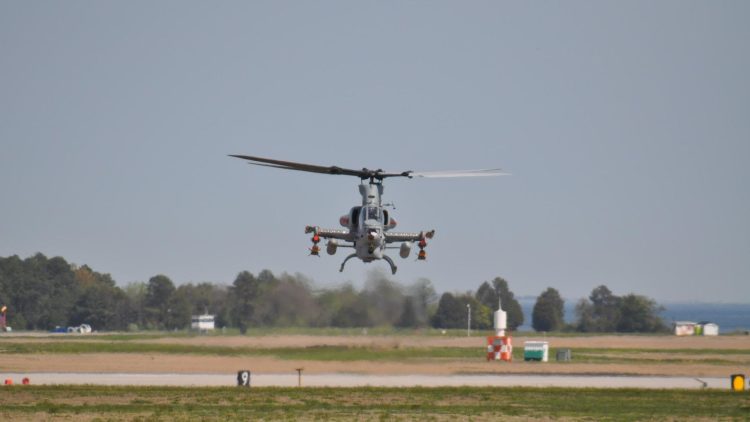
For the first time in Marine Corps history, a rotary-wing platform—specifically the AH-1Z Viper helicopter—launched a munition using a tablet-controlled device known as the Marine Air-Ground Tablet (MAGTAB). This wireless application provides enhanced battlefield situational awareness, allowing for real-time navigation and data exchange, making the execution of precision strikes more efficient and adaptable to dynamic combat scenarios.
According to the Marine Corps’ statement, the November test at YPG exceeded expectations regarding positioning, navigation, and timing requirements, reinforcing the effectiveness of this innovative targeting system.
The Development of the LRPF Initiative
The LRPF capability is part of a Defense Innovation Acceleration (DIA) project, sponsored by the Office of the Under Secretary of Defense for Research and Engineering (OUSD R&E) and led by the Expeditionary Maritime Aviation – Advanced Development Team (XMA-ADT).
This initiative was launched to address capability gaps identified in the Marine Corps’ current and future fleet operations. As noted by Col Scott Shadforth, Director of XMA-ADT, the LRPF is designed to be a cost-effective, long-range precision weapon for engaging both maritime and land-based targets.
While details on the munition’s specifications and development timeline remain classified, this secrecy underscores the strategic importance of the project.
The delayed public announcement of the test further suggests that the system is still undergoing refinement and classified evaluations before full deployment.
Technical Specifications & Capabilities
Although the exact specifications of the LRPF munition remain undisclosed, the Marine Corps has been actively integrating long-range attack munitions into its rotary-wing platforms.
Current helicopter-launched weapons include:
- AGM-179 Joint Air-to-Ground Missile (JAGM): With a range of 8-16 kilometers (5-10 miles), this missile was first declared operational in 2022 and has demonstrated its effectiveness in maritime strike operations.
- Hellfire Missile: A staple in rotary-wing combat, the Hellfire has a range of 11 kilometers (7 miles) and has been used extensively in modern warfare.
- Long-Range Loitering Munition (LRAM) Project: As part of the Marine Corps’ Indo-Pacific strategy, plans were disclosed in 2022 to replace the Hellfire missile with a loitering munition capable of hundreds of kilometers of range, providing extended reach and persistent strike capability.
The LRPF initiative aligns with these ongoing developments, suggesting a move toward longer-range precision strike capabilities for expeditionary warfare.
Already have an account? Sign In
Two ways to continue to read this article.
Subscribe
$1.99
every 4 weeks
- Unlimited access to all articles
- Support independent journalism
- Ad-free reading experience
Subscribe Now
Recurring Monthly. Cancel Anytime.
What This Successful Test Means for the Future
The successful employment of tablet-controlled munition deployment is a game-changer for the Marine Corps. This breakthrough not only enhances precision targeting and flexibility but also signifies a major shift toward digital warfare integration.
Implications for the Marine Corps:
- Increased Strike Range: The LRPF will enable Marine Corps aviation units to engage targets at extended distances, reducing the risk to pilots and aircraft.
- Enhanced Maritime Operations: Given the Indo-Pacific strategic focus, the LRPF will be instrumental in countering naval threats, reinforcing the Corps’ role in littoral and expeditionary warfare.
- Seamless Integration with Future Technologies: The use of a tablet-controlled system sets the stage for further automation and AI-assisted targeting, improving reaction times and operational efficiency.
Next Steps & Deployment Prospects
While no official deployment timeline has been provided, the Marine Corps is expected to continue testing and refining the LRPF system.
With classified details and an emphasis on secrecy, this weapon is poised to play a crucial role in future combat operations, particularly in deterring potential adversaries in the Pacific and other contested regions.
As the Marine Corps continues to modernize its capabilities, the LRPF initiative serves as a testament to the service’s commitment to innovation and its ability to adapt to the evolving battlefield.
The success of this test signals a new era of precision strike warfare, where enhanced connectivity, real-time targeting, and extended-range lethality redefine the Corps’ operational effectiveness.










COMMENTS