

Moreover, the rifle is gas-operated, featuring a rotating bolt mechanism similar to the AK-47’s, and it can be fired in both semi-automatic and fully automatic modes.
The Tabuk has a fixed wooden stock and is typically equipped with a 30-round magazine, though variations exist with larger drum magazines.
In terms of weight, the Tabuk is slightly lighter than the original AK-47, with a total length of 88 cm and a barrel length of 45 cm, providing an overall balance between portability and accuracy.
The rifle has an effective range of approximately 300 meters to 600 meters, which is suitable for close-quarters combat and guerrilla warfare—key tactical considerations for the Iraqi military and paramilitary forces that deployed the weapon.
Role and Usage in Iraq
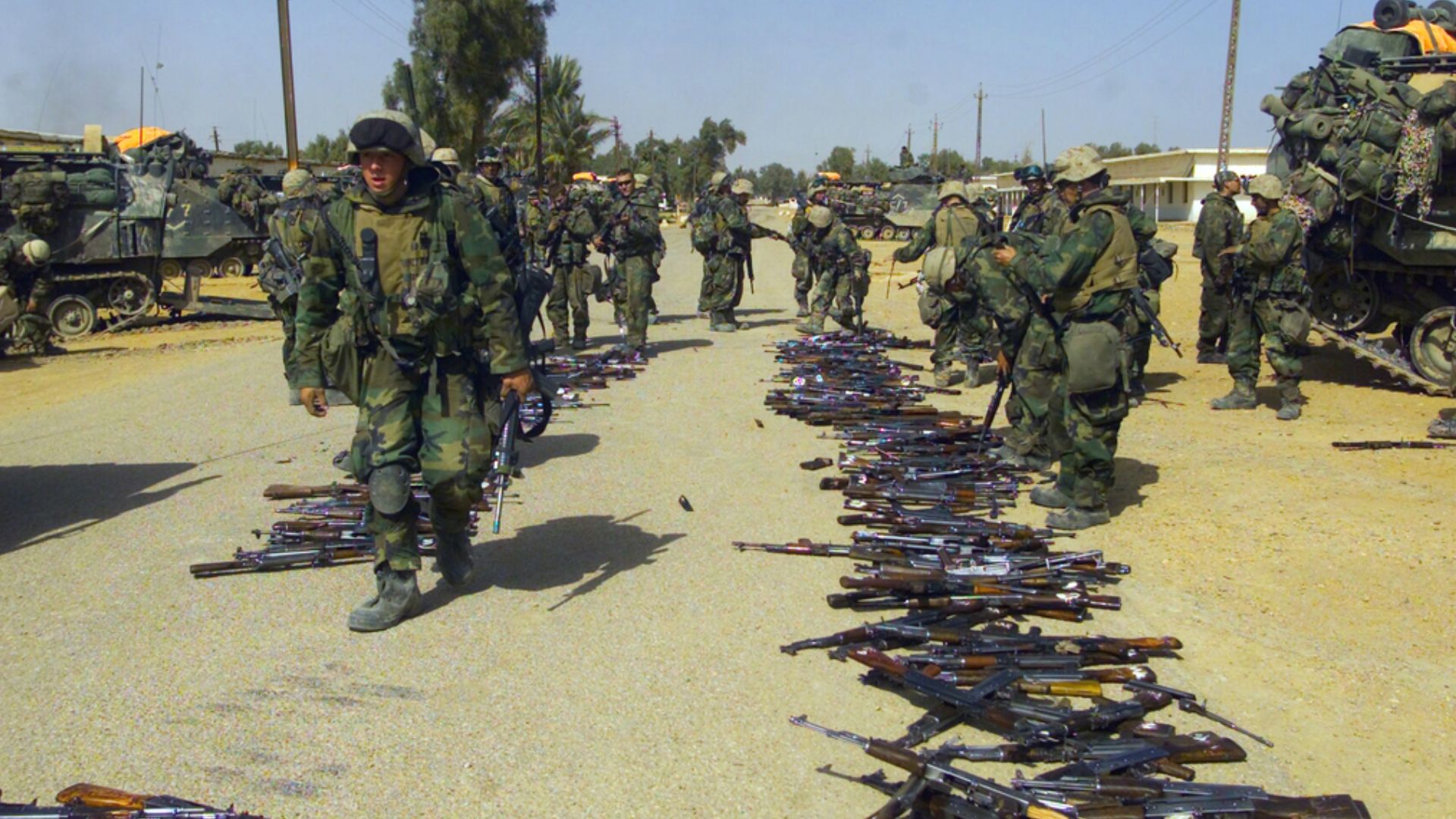
The Tabuk became one of the standard service rifles for the Iraqi military and Republican Guard during the Iran-Iraq War (1980-1988), the Gulf War, and eventually during the Iraq War in 2003.
Its rugged design, ease of use, and low production costs made it ideal for both formal military forces and irregular combat units, including militias and insurgents.
Iraqi forces prized the Tabuk for its durability in the region’s extreme climates, where sand and heat would often cause malfunctions in more sensitive firearms.
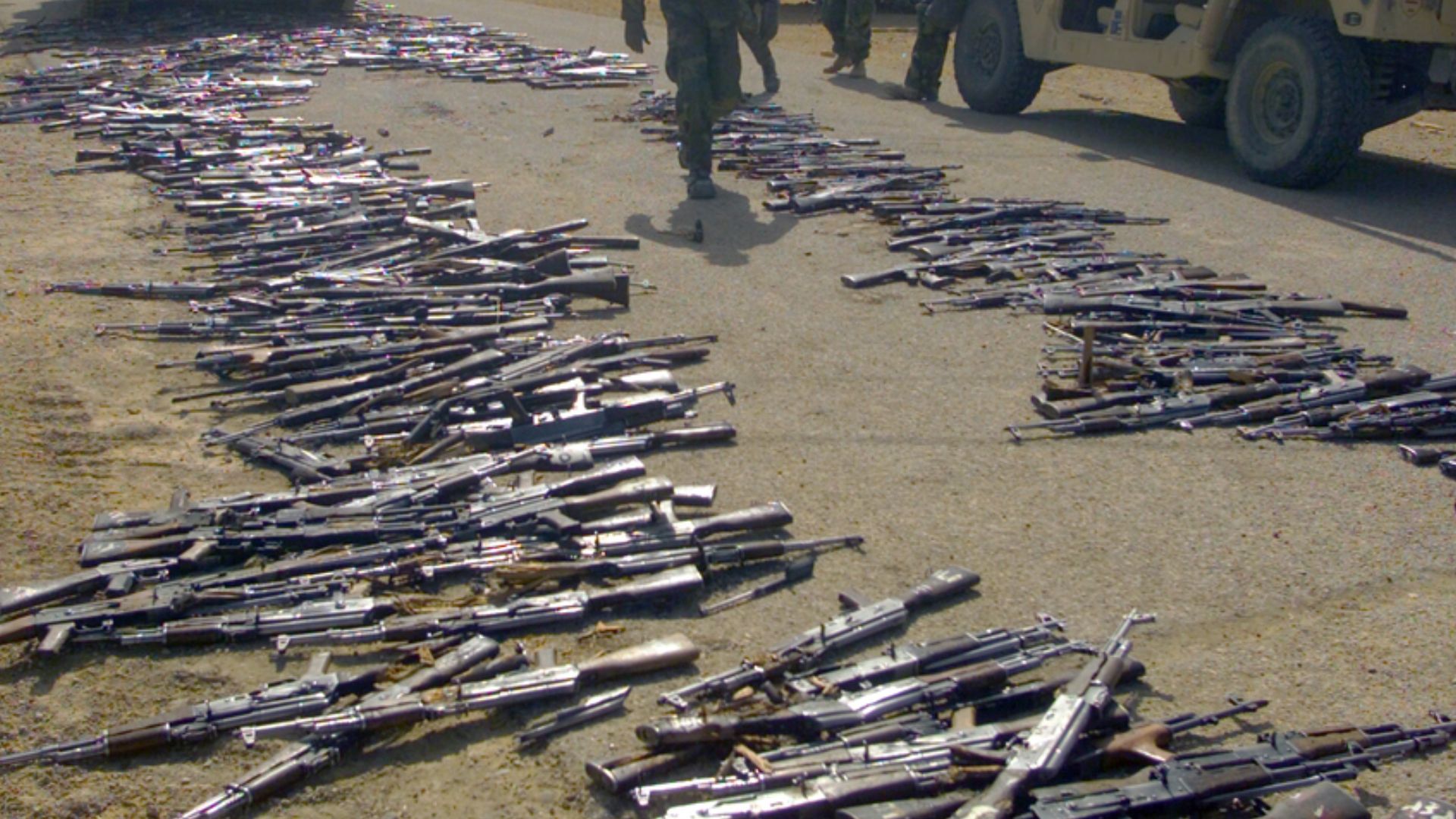
The rifle also saw wide usage by Iranian forces during the Iran-Iraq War, as captured stockpiles from the battlefield made their way into Iranian hands.
Additionally, the weapon was distributed among Iraqi paramilitary groups and irregular forces, further cementing its presence in the region.
Legacy Today
Today, the Tabuk remains a symbolic relic of Iraq’s military history. While modern firearms have largely replaced the Tabuk in the Iraqi armed forces, the rifle continues to circulate in conflict zones across the Middle East.
It can be found in the hands of militias, insurgent groups, and criminal organizations, a testament to its long-lasting impact and the enduring legacy of the Kalashnikov design.
The Tabuk’s role in wars and uprisings throughout Iraq has left an indelible mark, representing both the ingenuity and the destructive power that shaped Iraq’s modern conflicts.
Though it is no longer produced, the Tabuk remains a reminder of Iraq’s attempt to assert its independence in the arms industry while heavily relying on the battle-tested design of the AK-47.
Its presence in conflicts, even decades after its production ceased, demonstrates the enduring nature of simple, reliable weaponry in global warfare.
Final Thoughts: The End of an Era, The Lasting Legacy
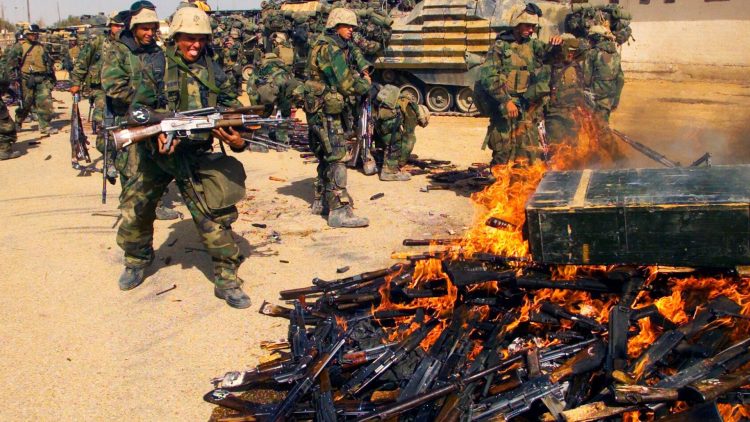
The destruction of Tabuk rifles during Operation Iraqi Freedom was a symbolic and tactical move. In burning these weapons, the US military took away a significant tool of war from a regime that relied on its simplicity and effectiveness. The fire that warped and ruined the metal didn’t just neutralize a weapon—it marked the end of a chapter in Iraq’s military history.
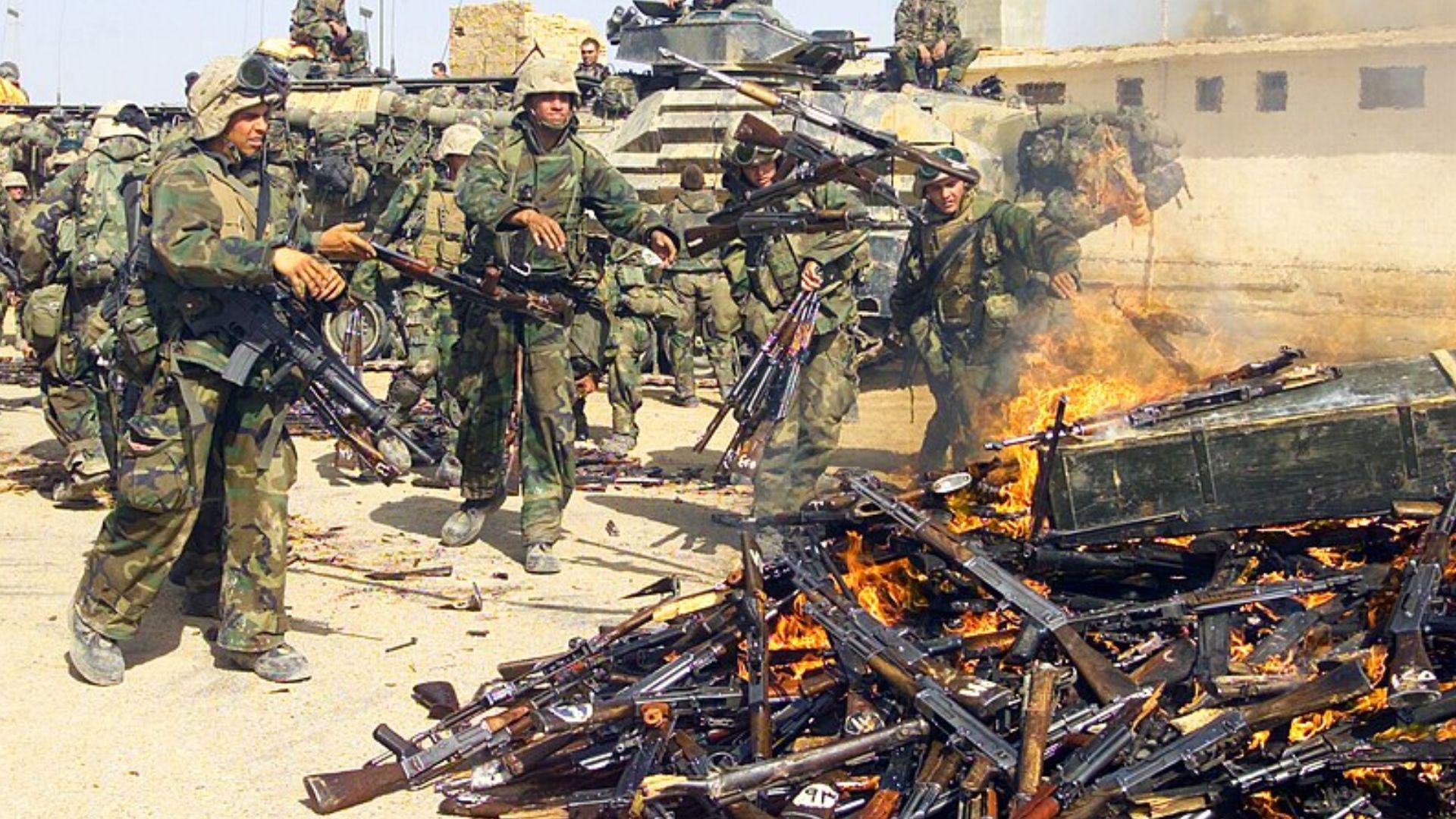
But while the Tabuk may no longer serve Iraq’s armed forces, its legacy lives on. Built as a rugged copy of the AK-47, the Tabuk continues to appear in conflicts across the Middle East. Its design, born out of necessity and wartime ingenuity, remains a testament to how a simple weapon can leave a lasting impact on global warfare. Even as new weapons emerge, the Tabuk’s story is far from over, serving as a reminder of the enduring nature of reliable, easy-to-produce arms in times of conflict.
As these rifles turned to ashes in Al Kut, they left behind a legacy that continues to smolder across the region.
—
Disclaimer: SOFREP utilizes AI for image generation and article research. Occasionally, it’s like handing a chimpanzee the keys to your liquor cabinet. It’s not always perfect and if a mistake is made, we own up to it full stop. In a world where information comes at us in tidal waves, it is an important tool that helps us sift through the brass for live rounds.








COMMENTS