
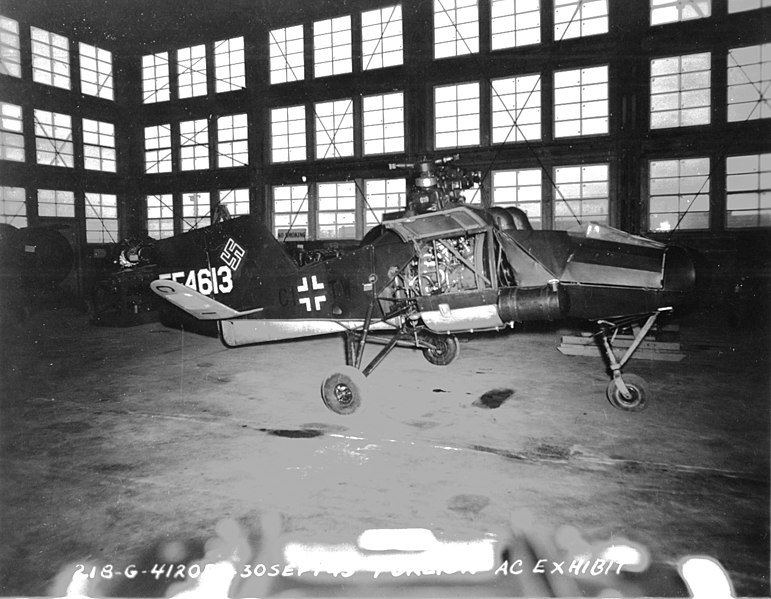
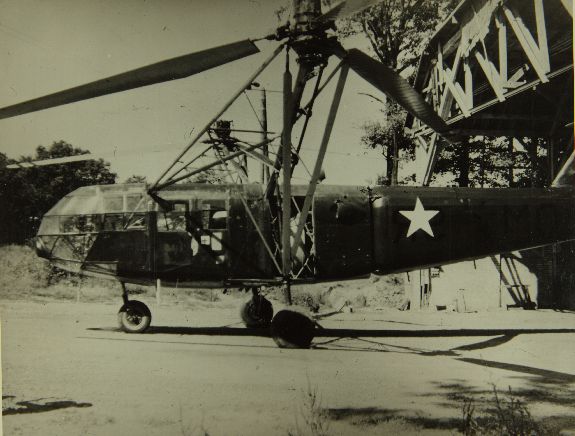
- Troop Transport: With an observer’s seat and the potential for an extended fuselage (an unrealized concept), the Drache hinted at the future of helicopter troop deployment.
- Rescue: Equipped with a rescue cradle, winch, and medical supplies, the Drache served critical roles in casualty evacuation.
- Reconnaissance: A mounted camera and extended-range fuel tank made the Drache ideal for scouting missions.
- Anti-Submarine Warfare: Though not its primary function, the Drache could be outfitted for this purpose.
- Cargo Transport: With a hefty lifting capacity of nearly 2,830 pounds (1284 kilograms), the Drache could haul supplies using a load-carrying beam.
Despite limited production numbers, the Drache’s capabilities foreshadowed the diverse roles helicopters would play in future warfare. Its potential for troop transport, a concept not fully realized during WWII, is particularly noteworthy.
The Humble Beginnings of a Helicopter Legacy: The Piasecki PV-2
The Piasecki PV-2 wasn’t a warbird, but a trailblazer. This single-engine helicopter, powered by a modest 90-horsepower Franklin engine, wasn’t built for combat, but for proving a concept.
Frank Piasecki, with only 14 hours of fixed-wing experience, even taught himself to fly the PV-2, demonstrating its remarkable controllability during a 1943 showcase for military and commercial audiences.
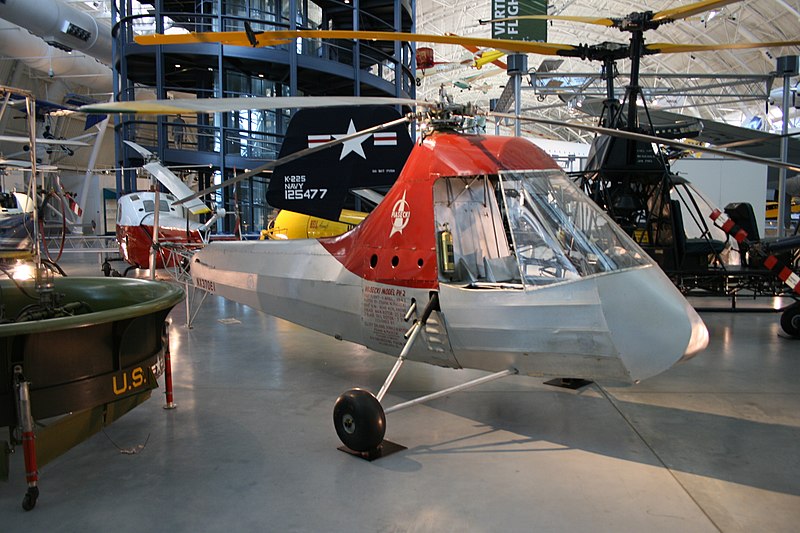
The PV-2’s true significance lies in what it inspired. This prototype served as a stepping stone for Piasecki’s pioneering tandem rotor design, which placed rotors at both the front and rear of the fuselage. By 1952, this innovation led to the mass production of the H-21 Shawnee, a versatile cargo helicopter nicknamed the “Flying Banana” for its unique shape. Deployed to Vietnam in 1961, the H-21 became a workhorse for troop and cargo transport.
The influence of the PV-2 extended even further, as Boeing’s iconic CH-47 Chinook helicopter owes its design lineage to Piasecki’s tandem-rotor concept.
The Piasecki legacy continues today. The company that began with the unassuming PV-2 is still in operation, producing helicopters and drones for both military and civilian applications. The PV-2, though not a wartime hero itself, stands as a testament to the ingenuity and perseverance that continue to propel advancements in rotary-wing aviation.
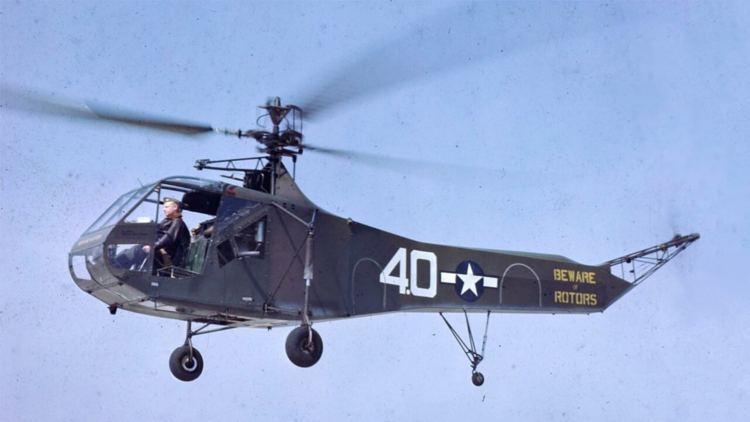
The GI’s Lifeline: Sikorsky R-4
The Sikorsky R-4 wasn’t just another helicopter; it was a pioneer. This two-seat design, featuring a single three-bladed main rotor, arrived at a crucial moment during World War II.
While not a combat aircraft itself, the R-4 became an indispensable workhorse for the US Army Air Force and Coast Guard, and the British Royal Air Force.
Its agility and maneuverability proved invaluable in search and rescue missions, particularly in the treacherous terrain of the Burma campaign. Where traditional aircraft struggled, the R-4 could reach stranded personnel, making it a true lifesaver.
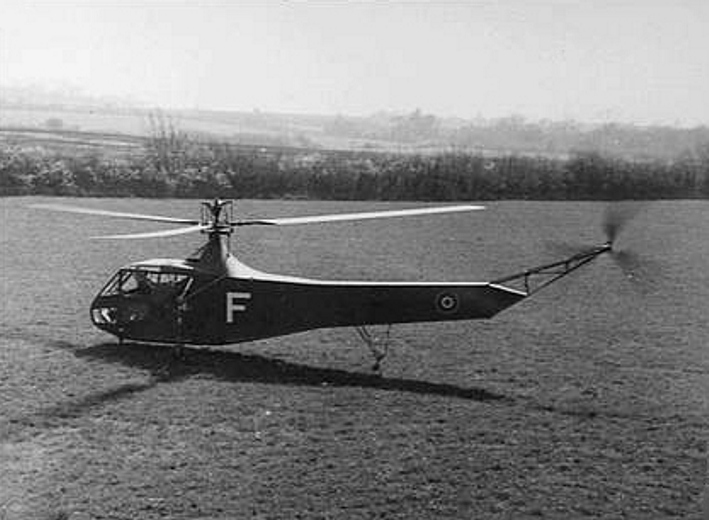
The R-4 holds two significant distinctions. It was the only Allied helicopter to see active service during the war, and it achieved the remarkable feat of becoming the world’s first mass-produced helicopter. With a total of 131 units built, the R-4 paved the way for future helicopter development.
The Sikorsky name is synonymous with helicopters today, and the R-4 played a pivotal role in establishing that legacy. Founded by Russian immigrant Igor Sikorsky (predecessor Frank Piasecki was indeed Polish), the company’s innovative spirit, evident in the early R-4 design, continues to shape the world of rotary-wing aviation.
The Soaring Future of Rotary-Wing Aviation
From humble beginnings during World War II, helicopters have evolved into versatile and vital machines. While the early models lacked power and range, they laid the groundwork for the critical roles helicopters play today in military operations, search and rescue, transportation, and countless other applications.
The ingenuity showcased in these pioneering designs continues to propel advancements in rotary-wing aviation, ensuring a bright future for this remarkable technology.
–
Disclaimer: SOFREP utilizes AI for image generation and article research. Occasionally, it’s like handing a chimpanzee the keys to your liquor cabinet. It’s not always perfect and if a mistake is made, we own up to it full stop. In a world where information comes at us in tidal waves, it is an important tool that helps us sift through the brass for live rounds.
This article has been reviewed and updated by the SOFREP News Team.








COMMENTS