What’s happening
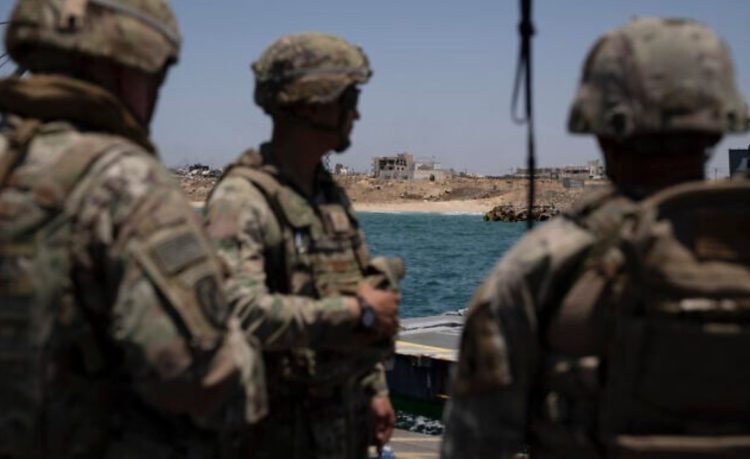
The United States will be using 200 American troops already stationed at CENTCOM to support and monitor the implementation of a Gaza ceasefire deal. Officials say the detachment will come from U.S. Central Command and form the core of a civil-military coordination center tasked with aid facilitation, logistics, security assistance, and real-time monitoring of how the deal is carried out. They will not enter Gaza.
Mission details
The troops will build and run a joint control and coordination center that fuses inputs from Israeli authorities, international partners, and humanitarian actors. The center’s job is to keep relief convoys moving, troubleshoot access problems at crossings, share deconfliction information, and keep a running picture of ceasefire compliance. Officials have also signaled that U.S. assets may provide aerial situational awareness to help spot threats to aid routes and reduce miscalculation, again without placing American personnel on the ground in Gaza.
Expect a staff mix heavy on logisticians, engineers, communications specialists, and force protection. The early focus is practical: stand up the center, verify that daily aid targets are met, and confirm that armed units on all sides follow the timeline embedded in the truce. The aim is to give civilians predictable windows for relief while creating enough stability for political tracks to move.
Where they will be
Pentagon and administration officials say the troops will be based in Israel, supporting the Gaza mission from Israeli territory. The exact site has not been announced. Reporting indicates the decision is still being finalized, with the guiding requirements being proximity to southern logistics nodes, secure co-location with Israeli counterparts, and quick access to air corridors for surveillance and medevac if needed.
What is settled is the red line: no American boots in Gaza.
How long might they stay?
Ceasefire implementation is structured in phases. Public outlines describe three phases of roughly six weeks each, beginning with an initial pause, hostage-prisoner exchanges, and staged Israeli withdrawals tied to verified calm and humanitarian benchmarks. U.S. troop presence tracks to those benchmarks. The initial deployment covers phase one, with options to extend if the parties move into later phases or if conditions require continued verification and aid coordination.
The role inside a larger international effort
Washington is not acting alone. The coordination center is designed to plug into a broader multinational architecture that includes Egypt, Qatar, Turkey, and likely the United Arab Emirates. These partners bring political leverage with the parties, regional logistics, and liaison channels that help solve cross-border problems faster than any single actor could manage. The U.S. contingent provides the backbone: planning discipline, communications architecture, and the ability to scale airlift or ISR, while keeping American troops outside Gaza.
Already have an account? Sign In
Two ways to continue to read this article.
Subscribe
$1.99
every 4 weeks
- Unlimited access to all articles
- Support independent journalism
- Ad-free reading experience
Subscribe Now
Recurring Monthly. Cancel Anytime.
Humanitarian agencies and nongovernmental organizations are expected to work alongside this mechanism to move large aid volumes once access is unlocked and security guarantees are honored. Earlier ceasefire windows showed that when security conditions improved, UN-managed aid mechanisms worked as intended. The intent now is to make that predictable, not episodic.
Why this matters for the ceasefire
Ceasefires fail when no one can verify what happens between the lines. The U.S. team gives the truce a referee with radios, checklists, and a direct line to decision-makers. That reduces the space for rumor and retaliation. It also helps separate humanitarian traffic from military movement, which lowers the risk of an aid convoy getting caught in a crossfire or halted by bureaucratic friction. If the phases hold, the center’s work could help shift the conflict from daily fires to managed steps that allow civilians to breathe and negotiators to tackle governance questions.
Bottom line
Two hundred American troops will anchor a coordination hub in Israel that supports the Gaza ceasefire without entering the Strip. Their success will be measured in tonnage of aid delivered on schedule, crossings that stay open, and daily compliance that keeps the phases moving. The mission has a clear lane, defined limits, and partners who can make or break the plan. If the timelines slip, the mandate may extend. If the phases hold, the team can scale down as local and regional actors take the wheel. At least that’s the plan. Keep checking back with SOFREP from time to time to see if the mission is on track.










COMMENTS