


So it’s time for a Third Offset Strategy. As it has been in the past, technological and operational innovation will be the key to it. Maintaining – and in select areas, extending – our competitive, technological and operational advantages is not a purely quantitative contest vis-à-vis these nations. Rather, the U.S. must seek asymmetric advantages that capitalize on its strengths and exploit adversary weaknesses.
The Third Offset Strategy harnesses our intellectual activity in a way that transcends any particular technological trend. But research points us in the direction of five common technological-operational components:
Deep-Learning Systems
These machines would be used for indications and warnings in cyber defense, electronic warfare attacks and large-density missile raids when human reactions just aren’t fast enough. They would also be used for big-data analytics; for example, a deep-learning system might be able to analyze 90,000 Facebook post made by Daesh (ISIS) in one day, crunch that data and find patterns from it, pulling out what might be of use.

Human-Machine Collaboration
This teams up human insight with the tactical acuity of computers by allowing machines to help humans make better, faster decisions. Pairing the two will combine the ability of humans to think on the fly with the quick problem-solving methods of artificial intelligence.
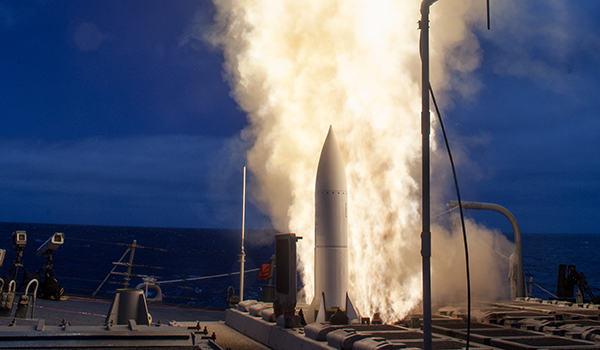
Current examples of this are unmanned underwater vehicle systems and the Aegis weapon system – a naval system that uses computers and radar to track and guide weapons to destroy enemy targets.
There’s also the F-35 which, when fully developed, will be a flying sensor that can take in a huge amount of data, analyze it and then display it on the pilot’s helmet, allowing him to make better decisions.
“Our envisionment of our battle network is where the human will always be the one who makes the final decision on lethal action, with the possible exception of some defensive capabilities,” Work said.
Human-Machine Combat Teaming
While the above collaboration helps humans make better decisions, human-machine combat teaming actually works with the unmanned systems to perform operations.
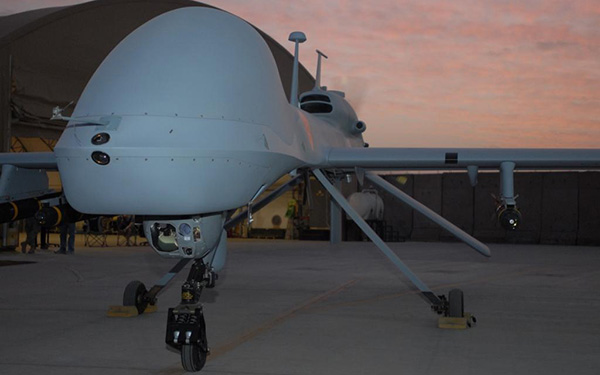
Two current examples of this are the Army’s Apache helicopter and Gray Eagle Unmanned Aerial Vehicle, and the Navy’s P-8 aircraft and Triton UAV. Both are designed to operate together.
There are also swarming UAV’s like the Perdix mini-drone, which has a 3D-printed airframe and electronics made from cellphones. Only about a foot long, the Perdix can be launched from an unmanned aircraft and fly in close proximity to several identical drones, communicating with them to complete a mission.
Assisted Human Operations
These are pretty easy to understand: They’re wearable electronics, combat apps, heads-up displays and even exoskeletons that can help warfighters in all possible contingencies.
At the Air Force Research Lab, they’re perfecting skin biosensors that look and feel like a Bandaid, except they’re equipped to read all sorts of data, like your heart rate, hydration and other vital signs.
Basically, assisted human operational components will be like that back-up sensor in your car that beeps when you’re getting close to hitting something — it’s assisting you in driving the car.
Network-Enabled, Cyber-Hardened Weapons
This component is also pretty simple – it’s the prioritization of cyber-security.
Everything’s online today – we all know that – which means every weapon and system will have to be prepared for cyber-attacks. For example, the DoD is modifying existing systems, like the small-diameter bomb, to operate completely without GPS if an enemy is somehow able to deny it service.
While the Second Offset Strategy had only one opponent – the Soviets – the Third Offset Strategy will focus on the advanced capabilities that multiple opponents might eventually bear in a high-end conflict. If we stay ahead of them in that game, it can give us an edge across all military operations.
There’s a lot more to the Third Offset Strategy, of course, that will be discussed as we figure out how to use the above systems and operate them together. But for now, just know that the integration of human thinking and artificial intelligence is going to be the key to the Force of the Future!
Featured Content and Media – DoD
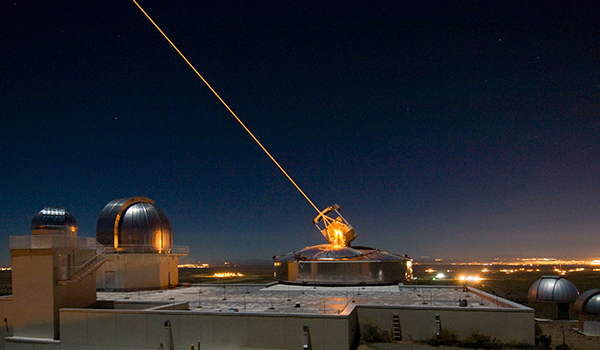
Featured Image – The Sodium Guidestar at the Air Force Research Laboratory’s Starfire Optical Range resides on a 6,240 foot hilltop at Kirtland Air Force Base, New Mexico. The Army and Navy are developing their own laser weapons systems, Air Force photo.








COMMENTS