

Who Buys From Beijing, And Why?
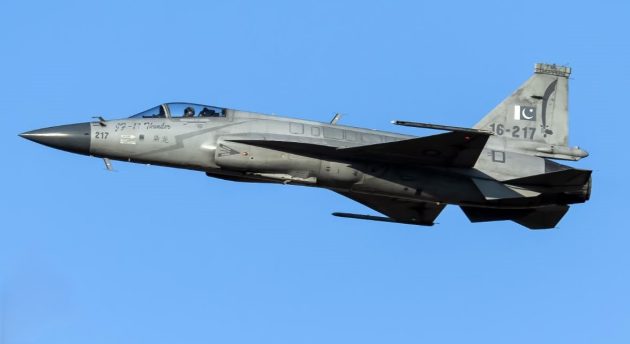
Look closely at the map of JF-17 customers and suitors, and a pattern appears. Myanmar’s junta, Nigeria’s counterinsurgency-focused air force, Iraq trying to rebuild from decades of war, Azerbaijan pivoting away from Russian hardware after the Ukraine invasion, and potential buyers like Bangladesh and Uzbekistan. These are states that either cannot afford Western hardware, are politically toxic in Western capitals, or no longer trust Russian industry after sanctions, slow deliveries, and combat losses.
China has built an entire business model around that gap. Academic work on Chinese arms sales shows that Beijing aims its exports at non-OECD states, many along Belt and Road corridors, and that recipients tend to move closer to China’s voting positions at the United Nations over time.
For Beijing, every JF-17, J-10CE, or L-15 that lands in a foreign hangar is not only revenue. It is influence, access, and a customer locked into Chinese supply chains for decades.
Contracts, Credit, And The Package Deal
This is where the JF-17 story stops being about a single airframe and starts looking like statecraft. When Azerbaijan signed for 40 JF-17s, the $ 4.6 billion fighter contract sat alongside a $2 billion “investment package,” tying the purchase into broader economic cooperation. Earlier, Zambia’s buy of Chinese L-15 trainers came with what local officers described as a sweetened financial arrangement that helped a cash-strapped government afford a modern jet.
China’s export houses push complete ecosystems. Analysts describe packages that bundle fighters, munitions, simulators, maintenance training, and even command and control systems into a single integrated offer. Loans from Chinese policy banks or deferred payment terms then anchor the deal to Belt and Road port projects, power plants, or data infrastructure. Arms and asphalt travel together.
For a buyer who feels burned by end-use monitoring or human-rights conditionality from Western suppliers, that can be tempting. You do not only get fighters. You get a patron.
Airshows, Narrative Warfare, And The JF-17’s Spotlight
China and Pakistan sell this jet with smoke trails, not spreadsheets. Zhuhai, Dubai, Langkawi, and other shows have become flying catalogs for Chinese jets, from the J-10CE and L-15 to heavy lifters like the Y-20.
The JF-17 Block III sat at the center of Pakistan’s presence at Dubai this year, even as the Tejas crash across the field cast a pall over India’s competing light fighter program and undercut New Delhi’s export pitch. Parallel reporting out of Washington now details a Chinese information campaign aimed at discrediting France’s Rafale on social media after a recent India–Pakistan clash, where Pakistan claims Chinese-supplied J-10C fighters shot down at least one Rafale.
Put simply, Beijing is not content to roll jets onto the ramp and hope buyers notice. It is working the informational battlespace too, pushing a storyline that Chinese fighters kill Western jets in real combat and that platforms like JF-17 and J-10CE are the future for countries outside the NATO club.
What This Means For The West
If you sit in a U.S. or NATO planning shop, the JF-17 can look like a low-end sideshow, but then again, they’re not marketing it to you.
Truth be told, it is slower than an F-16, carries less, and rides on an engine lineage with mixed reliability reviews. Myanmar grounded its entire fleet over engine and maintenance problems, which is the kind of thing pilots remember.
But that is the wrong way to read this. The real impact is cumulative. Each JF-17 sale binds another air force into Chinese training pipelines, doctrine exchanges, maintenance contracts, software updates, and weapons stocks. Each deal gives Beijing leverage when it cares about port access, votes in international fora, or quiet diplomatic backing for its positions on Taiwan, the South China Sea, or sanctions.
The jet itself is the sharp end of a larger spear. The more JF-17s you see on foreign flight lines, the more you are looking at a world where the United States and its allies have to work harder to keep partners inside their orbit, because Beijing is handing them modern airpower on credit.
That is the key takeaway. The Thunder is not about matching Western fifth-generation fighters one for one. It is about giving China and Pakistan an affordable way to seed Chinese technology, logistics, and politics across the map, one cash-strapped squadron at a time.








COMMENTS