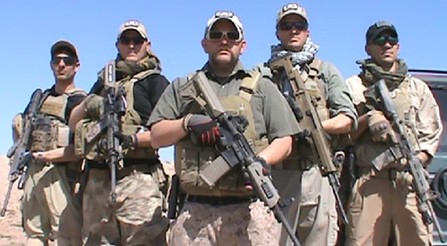
In recent years, private military companies (PMCs), especially those from the United States, have increasingly reentered the African security scene. Driven by fragile states, renewed conflicts, resource wealth, and gaps in security capacity, this resurgence is being shaped by deals, public statements, and high-profile projects. With major figures like Erik Prince and firms with U.S. origins stepping forward again, the near future looks set for a new wave of American PMC involvement in Africa.
Driving Demand
Currently, there are more than thirty-five non-international armed conflicts burning quietly or violently at once across the African continent. From the brutal insurgency in Mozambique’s Cabo Delgado to the uneasy rebellions in Mali, Sudan, and the Central African Republic, many national forces are simply exhausted. They fight on too many fronts with too few resources. In that vacuum, private military companies (PMCs) step in where governments can’t move fast enough or provide appropriate resources to their own military. They bring what’s often missing: mobility, training, air power, intelligence support, and the ability to deploy within days instead of months. In fragile states, time isn’t just a factor but the main difference between holding a city or losing a province. PMCs offer a bridge between instability and survival, though not without controversy.
Governments desperate to protect their economic lifelines are increasingly turning to PMCs or specialized security advisors to help secure mine sites, protect supply chains, and, in some cases, restore investor confidence. Behind every contract lies the hope that controlling the flow of resources might finally mean controlling the flow of prosperity. Africa’s wealth – mineral deposits, oil, natural gas, and endless veins of rare earth material – is both its blessing and its curse. The same copper, cobalt, and crude that should fund schools and hospitals often bleed away through corruption, smuggling, or sabotage. In the Democratic Republic of Congo’s Katanga region, for instance, valuable minerals and ore vanish every month into the black market or profits lining pockets of elites. Pipelines are tampered with, convoys hijacked, and border officials paid to look the other way.
Africa has become a crowded chessboard of PMCs vying for political and/or military influence. Russia’s Wagner Group is already embedded from Libya to the Sahel. Turkey is building influence through defense deals and security assistance. For some African leaders, these partnerships are both opportunity and risk – an uneasy mix of leverage and dependency. Some governments, wary of opaque terms or political baggage, are now looking toward U.S. private military firms as a counterweight. American PMCs bring not just capability but a perception, whether earned or not, of stronger legal frameworks, accountability, and technical sophistication. In a continent where alliances shift quickly and trust is fragile, that combination holds real appeal.
Why American PMCs Are Set to Proliferate in Africa
When governments can’t protect the resources that keep their economies alive, private military companies are quick to move in. Across Africa, vast reserves of oil, minerals, and energy infrastructure have become prime targets for insurgents and criminal networks, leaving nations both economically exposed and militarily overstretched. For American PMCs, often led by veterans and backed by private capital, this instability represents more than a security challenge; it’s an open market. That reality came sharply into focus in 2025, when Erik Prince brokered a deal with the Democratic Republic of the Congo to secure and tax mineral production in Katanga Province. Though political turbulence forced adjustments, the partnership introduced a potent hybrid of private security and economic stabilization, a template that could easily spread across the continent’s mineral-rich corridors. At the same time, Prince’s warning at African Energy Week about the vulnerability of pipelines and refineries underscored a broader truth: Africa’s economic growth may increasingly depend on private protection.
American PMCs are poised in the near term to expand through several clear pathways, guarding vital energy and mineral assets, conducting anti-smuggling operations to secure revenue streams, training local forces in counterinsurgency and logistics, and forging joint ventures that blend state oversight with corporate execution. These aren’t speculative ambitions; they’re strategic responses to mutual necessity. African governments seek capable partners without the baggage of political dependency, while Western firms demand security to protect their investments. PMCs occupy that intersection, offering capability without overt intervention. The pattern is unmistakable: as profit, instability, and opportunity converge, private soldiers will continue to shape the balance between security and economic survival across Africa.
A Growing Role, But Not Without Trade-Offs
American PMCs are positioned to play a growing role in Africa’s security environment because the demand is real. Governments are facing threats both from insurgents and from risks to their natural wealth and infrastructure which need scalable solutions. The popularity and use of a PMC, even an American one at that, are not guaranteed to produce stability or justice automatically. Responsible deployment, meaningful oversight, transparent contracts, respect for human rights, and sensitivity to local political dynamics will determine whether U.S. PMC presence becomes broadly positive or becomes another factor in instability.
Already have an account? Sign In
Two ways to continue to read this article.
Subscribe
$1.99
every 4 weeks
- Unlimited access to all articles
- Support independent journalism
- Ad-free reading experience
Subscribe Now
Recurring Monthly. Cancel Anytime.









COMMENTS