

Following the sequester in 2013, money for maintenance parts and contractors to fix the Strykers dried up. Not surprisingly, our ability to keep the Strykers running fell off, dramatically. Yet the reporting requirements remained the same. The goal of over 90% operational readiness did not adjust to accommodate the changing conditions on the ground. Every Monday afternoon, I’d collect the maintenance reports and give it to the commander. Every Monday, we would stand at less than 30% of our vehicles capable to move, shoot, and communicate.
I remember thinking that surely when an entire battalion, and consequently the brigade, indicates dangerously low levels of operational vehicles, the balloon would go up and we’d get down to business to come up with a real solution.
Of course, I would be wrong. At the battalion training meetings, my commander told the truth, and reported our 30% OR rate. The other three companies all sat in the green, at above 90%. I’d like to think that my soldiers and our mechanics weren’t three times as inept as the other companies. Clearly, we were dealing with a situation of bogus reporting to keep the slides green.
Rather than hard questions getting asked about the state of maintenance and our ability to actually deploy and fight as a combat unit, my company commander was instead admonished for the poor readiness rating.
My own anecdotal experience with maintaining my Strykers aside, the problem of dishonest reporting is widespread. Anyone who has dealt with 350-1 training (compulsory common-sense and safety training requirements) can attest to how it is literally impossible to accomplish what is being asked, to standard, within the amount of time a unit has in a calendar year. With no other option, to keep the unit functioning and moving forward to meet its real-world mission, things like ‘bicycle safety’ and ‘environmental awareness’ get hand-waved as completed. What gets lost in the white noise of constant requirements is that the signature on the line is, for all intents and purposes, a lie. They have been forced into a situation where they must use deception in order to prevent everything grinding to a halt.
But the failure does not reside with the lowest levels, where the rubber meets the road in getting the mission done. It lies in the senior levels of leadership that treat everything as a priority. It is cliché to say it, but it bears repeating: when everything is a priority, nothing is a priority.
Despite proclamations to the contrary, the Army behaves as a zero-defect environment. There is no room for accepting risk, in anything. If some unavoidable accident or catastrophe occurs, inevitably the investigation will reveal that someone, somewhere could have prevented it with just a little more readiness. That translates to an additional license, qualification, or training requirement.
In the pursuit of universal risk mitigation, and to contend with the dizzying array of shifting requirements, a culture of cover-your-ass “blame management” has emerged. In a cynical move, the army leadership has coopted one of the most sacred aspects of someone’s reputation and sense of self, their honor and integrity, and used that against them to encourage the layers of ‘accountability’ that will protect senior leaders in the event of a catastrophe.
However, I don’t necessarily blame the current leadership for the issue. I understand why this system has developed. The army does an extremely difficult and dangerous job. When mistakes are made, they can likely have deadly consequences. That is absolutely a reality in military operations, and part of the solemn duty we have volunteered for. We are charged with doing absolutely everything we can in our power to ensure that we have prepared our subordinates to execute their mission. Accountability is critical, and to do any less is a failure in leadership.
But where I do fault them is conflating that ‘check the block’ style of reporting with actual readiness, and for not asking the tough questions about where we stand in our ability to fight and win wars. Every senior leader in the army was at one point a junior one. There is no way they got to their current position without navigating the system of lies and deception to meet a requirement and move on.
If you have the time and inclination to read the report on lying in the Army, give it a whirl. When it circulated in 2015, it seemed that everyone I talked to agreed with its findings. Despite everyone acknowledging it, I remain skeptical anything of consequence will result. What was most concerning to me was that despite everyone recognizing that lying is pervasive and widespread, no one is willing to openly question whether or not that has infected how we interact with Congress or the American people. If we so readily lie to ourselves, is it not possible that we are also lying to those who we are sworn to protect?
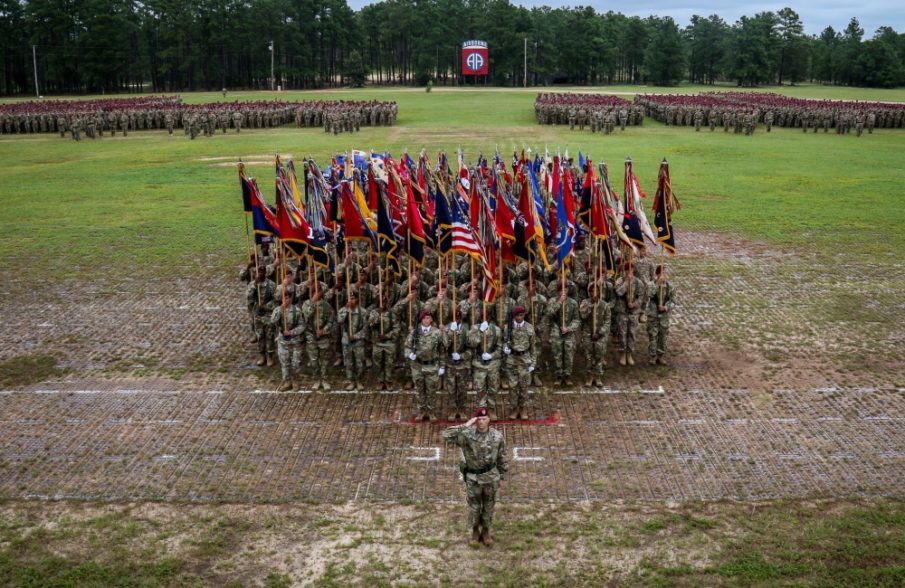
Image courtesy of the U.S. Army








COMMENTS