

This e-book was written with the consultation of over a dozen experts, former Special Operations personnel, and others privy to inside information in the halls of power in Washington, DC. For obvious reasons, their identities cannot be revealed. This is likely to be the definitive account of the Benghazi attack for years to come until historians can sift through the archives, get documents declassified, and interview all of the participants.
For now, we hope that this e-book tells it like it is. In these pages the actions of those involved speak for themselves. Let the chips fall where they may.
Chapter One: The Libyan Powder Keg
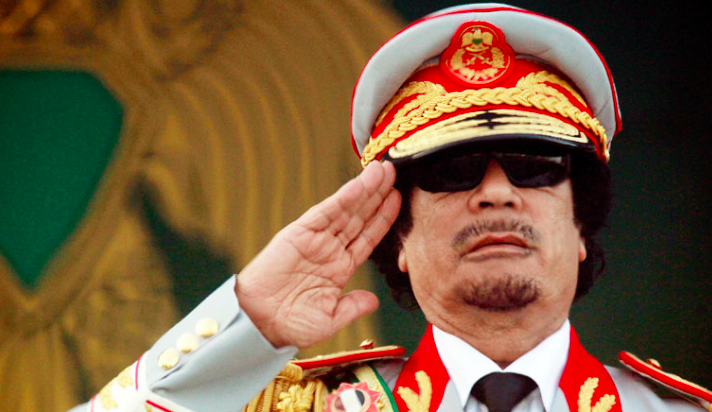
The events of 9/11/12 did not happen in a vacuum, something that Ambassador Chris Stevens no doubt would have reminded us if he had not been tragically killed during the attack. By September 2012, Libya was a ticking time bomb: no strong central government after Gadhafi’s fall; a large internal population of well-armed and experienced Islamic extremists who had been previously sending a steady stream of fighters to Iraq and Afghanistan for years; and scores of covert Special Operations and paramilitary units teeming throughout the country, disturbing the local hornets’ nest of terrorists. When the situation eventually exploded, a poorly defended outpost of the State Department would bear the full brunt of the blast. This is the story of the Benghazi tragedy.
We begin by outlining the dangers inherent within Libya before the fall of Gadhafi. Readers interested in a fuller history of Libya are invited to consult Appendix II at the end of the book.
****
Libya’s Home-grown Jihadists
Prior to becoming the United States ambassador to Libya in 2012, Chris Stevens served in the country twice before. A Foreign Service officer since 1991, Stevens’s first stint in Libya was as Deputy Chief of Mission in 2007-2009; he returned as a Special Representative in 2011, when he came in on a Greek cargo ship to establish rapport with the rebels and the transitional Libyan government during the Civil War.
Because of Bradley Manning’s leaked classified documents to Wikileaks, we now can draw upon a number of diplomatic cables written by Stevens during his 2007-2009 work in Libya. These cables help us understand Benghazi in two contexts. The first is that they give us some insight into Steven’s character and professionalism. Second, because he was a subject-matter expert in Libyan history and culture, Stevens’s cables provide an accurate portrait of the country. In particular, they reveal the home-grown forces of Islamic extremism that would explode in Benghazi.
During his tenor as Deputy Chief of Mission to Libya, Stevens visited the north-eastern coast of Libya – a region known as a hotbed of Islamic extremism and for supplying Iraq with foreign fighters, including suicide bombers, who targeted American soldiers. The largest city on the north-eastern coast, Benghazi, a city of 600,000, and its smaller neighbor to the east, Derna, were the two leading exporters of Libyan jihadist warriors to global battlefields. (This author can attest to this personally, as he was in Mosul, Iraq in 2005 with 3rd Ranger Battalion and participated in missions which killed or captured Libyan foreign fighters.)
A large contingent of the citizens of Benghazi and Derna were proud of their sons for conducting suicide attacks in Iraq against the American soldiers there. Forming the eastern edge of the infamous Barbary Coast, these cities have a historical predilection towards resisting any and all forms of occupation going back to their resistance against the Ottomans and the Italian colonists in years past. This also translated into a resistance to the Gaddafi regime, which the Libyan Islamists saw as being allied with the American occupyers in Iraq. Post 9/11, Gaddafi had begun cooperating with the U.S. on the War on Terror, even allowing Libya to become a center in the CIA’s rendition flight network for detained suspected terrorists held by American operatives.
In the 1980’s the Libyan Islamists were similarly opposed to the Russian occupation of Afghanistan, Stevens writes in one cable. Residents of Benghazi and Derna traveled to Afghanistan at that time to fight against the Soviets, and when they returned home they brought with them some of the most radical and extreme religious ideas such as Wahhabi Islam originally from Saudi Arabia.
These ideas found a home in a place like Benghazi, particularly in the mosques spread throughout the area. These are closed, tightly bound communities, wary of outsiders. Those suspected of ratting them out to security forces were quickly ostracized, making it particularly difficult for Gaddafi’s security services to monitor what the Iman’s were preaching.
Other factors that contributed to northeastern Libya as a center for Islamic extremism include poverty and a perception that Gaddafi was delibrately keeping Eastern Libya as poor by not investing in jobs and infrastructure projects so that the people of Benghazi would be unable to project political power in Tripoli or against Gaddafi in anyway. With few economic and educational opportunities, young men were not able to marry until later in life (early to mid-30’s) and many felt that they had nothing to lose by striking out at Americans in Iraq as the only avenue to imbue their lives with meaning. The families of these martyrs were incentivized by payments from radical mosques, but the payments were no more than 150-200 Libyan dinars which is appoximately half of what their sons could have been making by working a typical government job.
In one cable Stevens references documents seized on Objective Massey on the Iraq-Syria border in 2007 which pointed to Derna as the second largest pool of foreign fighters flowing into Iraq. This operation was conducted by 3rd Ranger Battalion of the 75th Ranger Regiment who hit Objective Massey in 2007. The Rangers were on standby for Time Sensitive Target (TST) missions in Mosul, Iraq when they got the call that they were to intercept a High Value Target at a small compound near the city of Sinjar where a group of terrorists were having a meeting. Donning their kit and loading rifles, they headed to the airfied to fly out to the objective.
When the Rangers hit the ground in Black Hawk helicopters they immediately came under fire from an enemy ambush. Maneuvering on the terrorists with an AC-130 gunship providing fire support, the Rangers killed two Saudi foreign fighters. Some of the Rangers cleared the trench line where the terrorists had been firing from while the others chased down several who were trying to escape.
With the objective secure, the Rangers then began conducting Sensitive Site Exploitation, or SSE, a method of evidence collection which would hopefully led them to other targets. SSE lasted about two hours and there was so much material at this terrorist way station that it couldn’t all be brought back so it was photographed before being burned.
Among the materials found were the dossiers on hundreds of foreign fighters who had been pouring into Iraq. These jihadist fighters were equipped with Glock pistols and Night Vision goggles and carried travel documents from Saudi Arabia and Syria. The CTC white paper shows that the majority of foreign fighters flowing into Iraq were coming from Saudi Arabia with Libya trailing in second place; however when we look at how many foreign fighters per capita made their way to Iraq, Libya is clearly in the top spot. When CTC broke down the numbers as to how many fighters originated from what city they found that Derna, Libya was nearly tied with Riyadh, Saudi Arabia. Third and fourth place belonged to Mecca and Benghazi respectfully. CTC found that 60.2% of the Libyan terrorists came from Derna and 23.9% came from Benghazi.
****
Benghazi and Derna have traditionally been the home of jamaʹah al-libiyah al-muqatilah, the “Libyan Fighting Group,” which included Libyan veterans of the Afghan insurgency against the Soviets. The group’s emir was Abu Layth al-Libi until he was taken out by a Predator drone strike in Pakistan in 2008.
On November 3rd of 2007 Abu Layth al-Libi and Al Qaeda (AQ) leader Ayman al-Zawahiri announced that the Libyan Fighting Group and Al Qeada were officially joining forces. This coalition also helped unify the United States and the Gaddafi regime together in the shared interest of fighting terrorism. Steven’s writes in a cable at the time that while the Libyan elite see emerging Islamic fundamentalism as a threat to their streams of income, many Libyan civilians welcomed the merger. While not fundamentalist in nature, they saw the Libyan Fighting Group as a challenge to the corrupt Gaddafi regime.
While Stevens comments on the difficulty faced in dealing with Gaddafi in regards to African regional issues, he does state outright to General Ward (AFRICOM commander prior to being removed for corruption) and Secretary Rice that Libya (pre-Civil War) was a strong ally in the fight against terrorism. He reiterates that Gaddafi feared a “terrorism belt” that stretched through the sahel on his southern border from Mauritania to Sudan and was proud of the fact that he convinced the touregs in the south to cease smuggling weapons and terrorists through the desert in exchange for economic incentives. Stevens makes it clear that Libyan security services take the threat of the Libyan Fighting Group and AQIM very seriously. So long as Gaddafi remained in power, these elements were kept in check internally by the dictator.








COMMENTS