
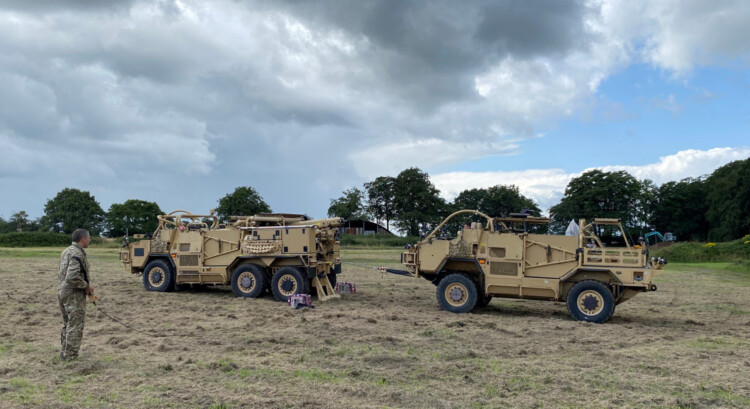
NP Aerospace’s LWRV solution is an amalgamation or a process of merging four in-service Jackal 2 vehicles, combined with an Extenda removable 3rd axle for the recovery module.
Zooming in, the Jackal 2 vehicles, known for their agility and off-road prowess, are already in use within the Army for various tasks. By integrating them with the Extenda removable 3rd axle, the LWRVs gain enhanced towing capacity and stability, allowing them to handle a broader range of recovery operations, including the UK’s Foxhound, a light-protected patrol vehicle (LPPV) and high-mobility transport vehicles even in harsh and challenging operational environments. This intelligent amalgamation not only optimizes the utilization of existing assets but also showcases a cost-effective approach to modernizing the Army’s capabilities.
Moreover, the inclusion of Supacat’s patented “Supalift” recovery system technology further enhances the vehicles’ lifting capacity, making them capable of handling various recovery operations with ease. First developed in the mid-2000s, Supalift represents a groundbreaking advancement in the realm of load-handling systems.
With its innovative hydraulic system, Supalift revolutionizes cargo handling and logistical support, elevating the capabilities of Supacat’s vehicles to new heights. This cutting-edge technology enables rapid and efficient loading and unloading of heavy equipment and supplies, empowering these vehicles to adapt swiftly to dynamic mission requirements.
Brigadier Matt Wilkinson, an official from the UK Defence Equipment & Support, expressed his excitement about the new capabilities these newest light recovery vehicles bring to the British Army.
“We now have a Lightweight Recovery capability, which the British Army can exploit to inform the Army’s Future Soldier requirements for recovery vehicles.,” Wilkinson said in a statement.
He also stated that the Lightweight Recovery capability fills a vital need and will undoubtedly contribute valuable insights to inform the Army’s Future Soldier requirements for recovery vehicles.
Evolution of British LWRVs
Over the years, the British Army has encountered various challenges during recovery missions, particularly in off-road and harsh terrain environments. Traditional recovery vehicles, such as the Foden Heavy Breakdown Vehicle (HBVs), have faced limitations in maneuverability and adaptability during recovery missions, particularly in off-road and harsh terrain environments.
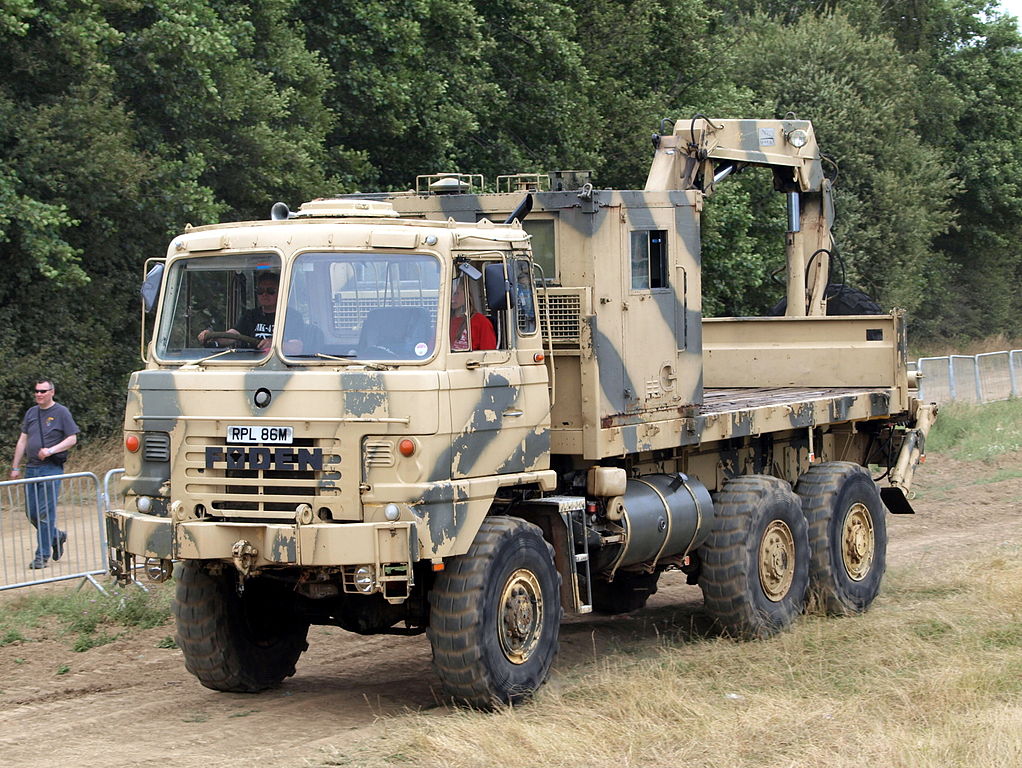
In response to these challenges, the service has recognized the need for a new generation of recovery vehicles that could overcome these limitations and excel in modern battlefield conditions. This realization led to the development and adoption of lightweight recovery vehicles, which brought a paradigm shift in the British Army’s recovery capabilities.
With this evolution, the focus shifted from traditional heavy-duty, cumbersome recovery platforms to more agile and versatile solutions. The lightweight nature of these vehicles allowed for improved mobility and faster response times, enabling recovery teams to reach critical locations swiftly, even in challenging terrains.
Lightweight Recovery Vehicles: Elevating the British Army’s Preparedness
With the introduction of these state-of-the-art lightweight recovery vehicles, the British Army takes another significant step towards enhancing its capabilities and readiness to address various domestic and international challenges. The modularity and adaptability of the LWRVs showcase the UK’s commitment to innovation and staying at the forefront of military technology. As the British Army continues to evolve and adapt to modern threats, these cutting-edge vehicles will undoubtedly play a pivotal role in supporting operations and safeguarding the nation’s interests.








COMMENTS