In 2025, Canada's Special Operations Forces Command (CANSOFCOM) maintained its focus on Arctic sovereignty through Operation NANOOK-NUNALIVUT while also participating in the multinational Exercise TALISMAN SABRE 25 in the Indo-Pacific. The command is enhancing its capabilities and recruiting to address both domestic and global security challenges.
Key points from this article:
The Arctic operations of CANSOFCOM included Operation NANOOK-NUNALIVUT, which emphasizes Canada's ability to respond quickly in harsh conditions.
How the CE-145C Vigilance aircraft supports CANSOFCOM's Arctic missions by enabling operations in remote locations with challenging weather and short runways.
Why the participation of approximately 600 Canadian Armed Forces personnel in Exercise TALISMAN SABRE 25 is significant for enhancing Canada's military presence and capabilities in the Indo-Pacific region.
Updating summary...
Canada’s Special Operators in 2025: Arctic Muscle, Indo-Pacific Reps, and the Niche Skills Allies Count On
Galen Fries
Speed
1x
Listen
COMMENTS
In 2025, Canada’s special operations command balanced Arctic sovereignty patrols and cold-weather training with a major Indo-Pacific deployment, while sustaining elite readiness through specialized units like JTF 2, CSOR, CJIRU, and dedicated special operations aviation.
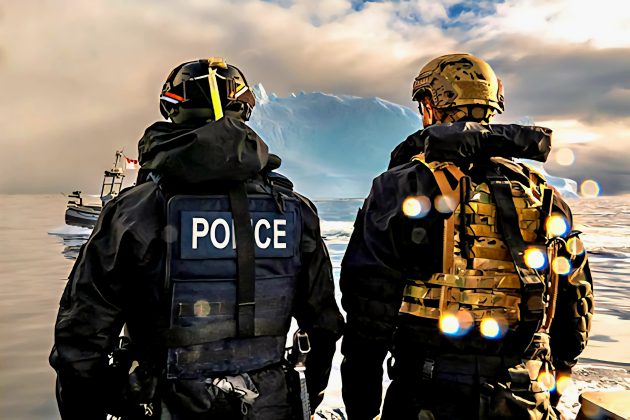
Members of the Canadian Special Operations Forces Command (CANSOFCOM) and the Royal Canadian Mounted Police (RCMP) working together in the Arctic during Operation NANOOK. Image Credit: Canadia.ca
Canadian Special Operations Forces Command, or CANSOFCOM, is Canada’s headquarters for special operations. In 2025, the command kept a steady pace at home in the Arctic, deployed overseas with allies in the Indo-Pacific, and continued building its force for the next round of hard problems. Here’s the story in plain English, the kind your mom can read without needing a decoder ring.
Advertisement
CANSOFCOM’s Arctic work showed up through Operation NANOOK-NUNALIVUT, the Canadian Armed Forces’ yearly exercise series aimed at Arctic sovereignty and cold-weather readiness. The point is not just to visit the North, but to prove that Canada can operate there on short notice, in real conditions, with real gear and real consequences. That’s important when the Arctic is getting busier and less forgiving every year.
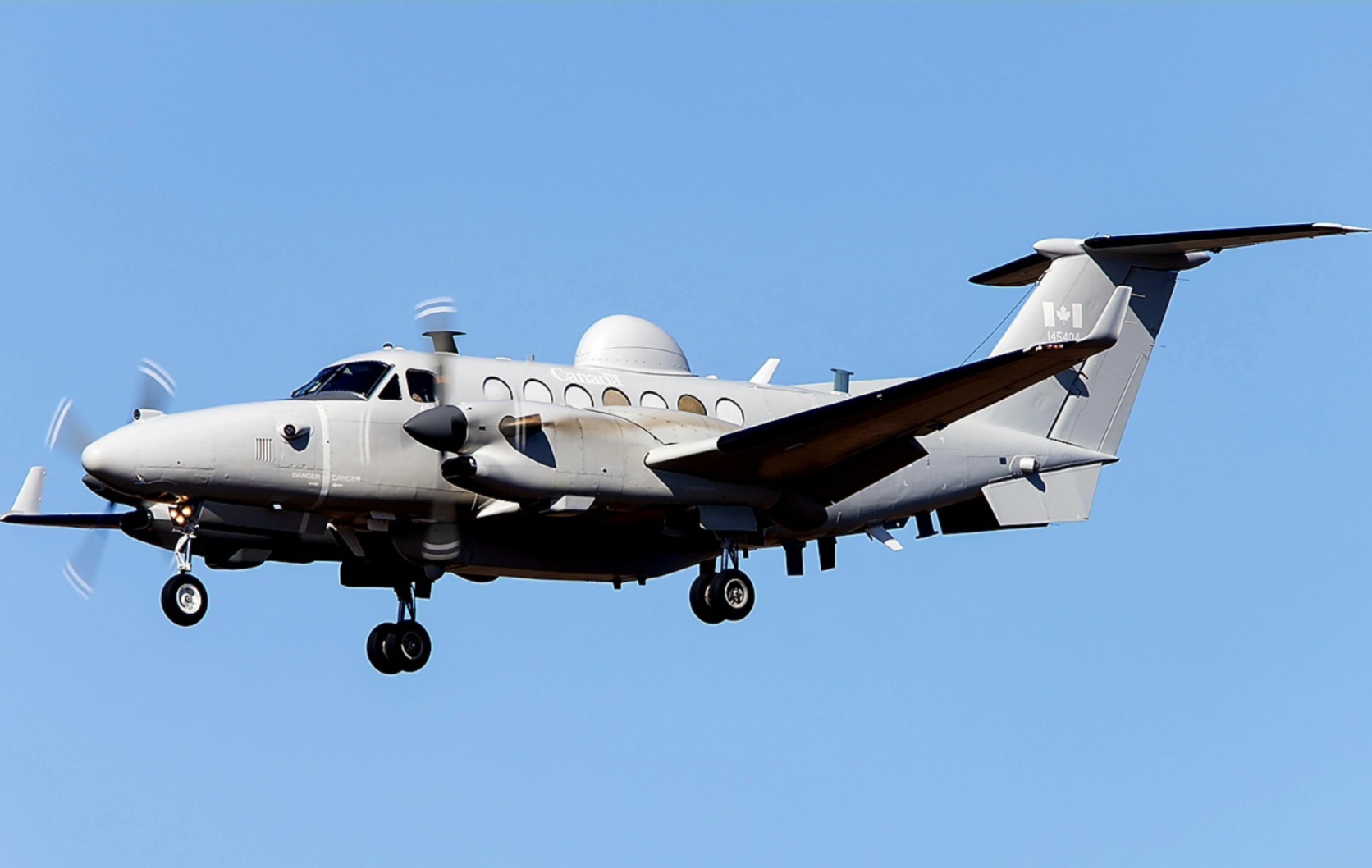
Canadian Air Force Beechcraft CE-145C Vigilance. Image Credit: Galen Burrows
A major enabler for that mission is the CE-145C Vigilance aircraft. It’s a modified King Air 350ER turboprop used for surveillance and special operations support. In the North, that plane is a practical answer to a practical problem: short runways, bad weather, long distances, and remote locations without a lot of support.
While holding the Arctic line, CANSOFCOM also went long-range with Exercise TALISMAN SABRE 25, a multinational warfighting drill hosted by Australia. Canada deployed roughly 600 Canadian Armed Forces personnel, the country’s largest push into the Indo-Pacific so far. The exercise covered everything from live-fire training to amphibious operations to coordination across air, land, sea, cyber, and space. CANSOFCOM’s contribution was about precision and specialized capability, the sort of “small footprint, big effect” approach that keeps coalitions sharp.
Advertisement
CANSOFCOM brings the niche tools of special operations that regular forces cannot spin up fast.
Advertisement
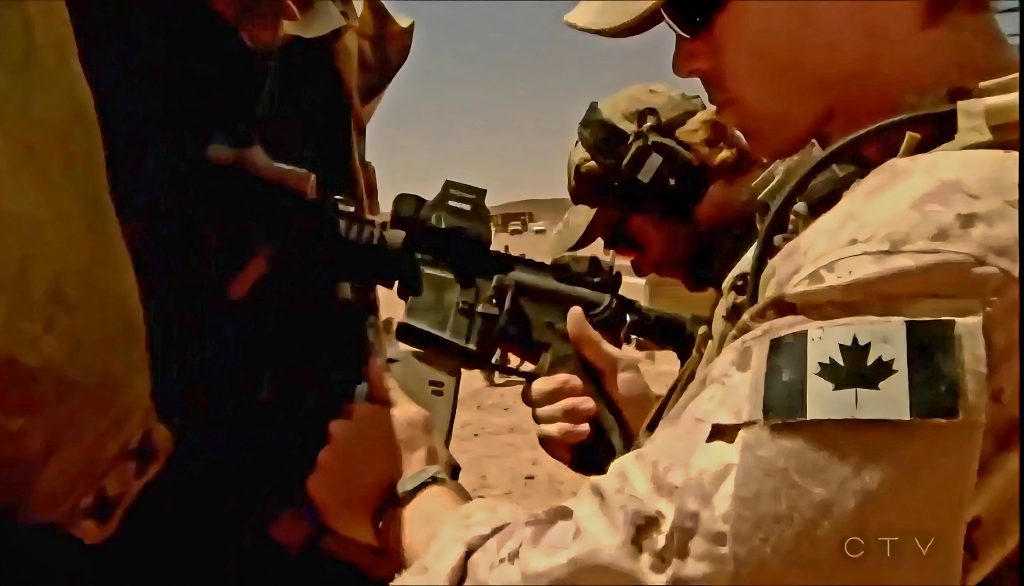
CSOR soldier training in Africa. Image Credit CTV-W5 News
CANSOFCOM is built from several units designed to fill specific gaps for Canada. Joint Task Force 2 (JTF 2) is a high-end counter-terrorism and hostage rescue unit. If a mission needs to be done quickly, cleanly, and without a spotlight, JTF 2 is the hammer. Canadian Special Operations Regiment (CSOR) handles expeditionary missions like special reconnaissance, direct action raids, and training partner forces overseas. They are built for austere environments, long distances, and situations where conventional units would need a full parade of support trucks just to get started.
Special operations also need their own aviation, which is where 427 Special Operations Aviation Squadron (427 SOAS) comes in. These aircrews fly helicopters tailored for inserting, extracting, and supporting special operations teams. They shrink the map. They also keep bad situations from getting worse, which is a very underappreciated talent.
Then there’s CJIRU, the Canadian Joint Incident Response Unit, which handles chemical, biological, radiological, and nuclear threats, or CBRN. If somebody decides to weaponize a science experiment, CJIRU is the team that can detect it, sample it, and operate around it. It’s a horrible job, but if it keeps other people alive, these folks are just that selfless.
Advertisement
Back at home, CANSOFCOM supported Operation LIMPID, a standing Canadian Armed Forces mission for early detection of security threats across air, land, sea, space, and cyber. Think of it as a national security smoke alarm.
Recruiting also ramped up in 2025, with applications open for assault troops, technical intelligence collectors, CBRN specialists, and special forces operators. The message is simple: Canada wants to sustain and grow these elite capabilities, not just ride yesterday’s bench.
Bottom line: In 2025, CANSOFCOM stayed focused on two tracks. Defend the Arctic, where Canada has real cold-weather expertise few allies can match. Deploy globally with partners in exercises like TALISMAN SABRE, bringing counter-terrorism, expeditionary raiding, special aviation, and CBRN response skills that fill holes in both Canadian and allied toolkits. They handle missions too dangerous, too sensitive, or too specialized for conventional forces, and they do it in environments that make normal people reach for an extra blanket.
—
** Note: Thinking about subscribing to SOFREP? You can do it now for only $1 for your first year. Pull the trigger on this amazing offer HERE. – GDM
Advertisement
What readers are saying
Generating a quick summary of the conversation...
This summary is AI-generated. AI can make mistakes and this summary is not a replacement for reading the comments.










COMMENTS