

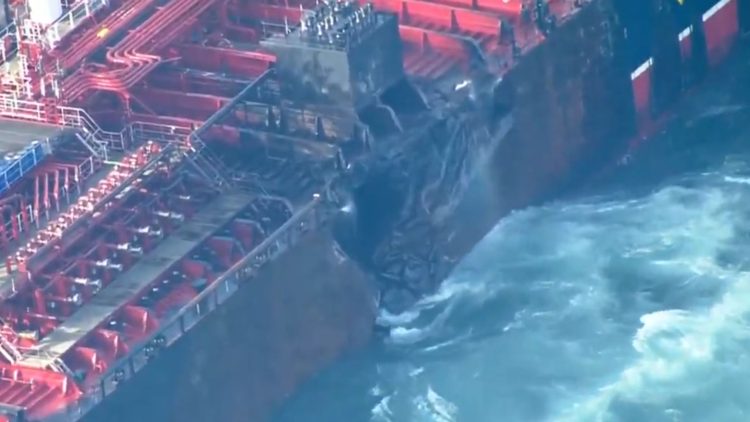
Local lawmaker Graham Stuart expressed concern over the potential ecological consequences, particularly given that the collision occurred in a busy fishing ground and close to seabird colonies, areas of critical environmental importance. However, experts have noted that the environmental impact might be less severe than initially feared.
Jet fuel, compared to heavier crude oil, disintegrates much more quickly when introduced into the environment.
Mark Hartl, a scientist at the Center for Marine Biodiversity and Biotechnology, reassured the public that most of the jet fuel would likely evaporate quickly, reducing its long-term effects on the marine ecosystem. Warmer temperatures in the North Sea would also accelerate the natural biodegradation process.
Mark Sephton, a professor of organic geochemistry at Imperial College London, further explained that jet fuel biodegrades faster than crude oil, meaning that while the spill was worrying, the fuel’s environmental footprint would likely be less significant over time.
Still, he emphasized the importance of the rate at which the fuel entered the sea and the ability of bacteria to break it down. The faster the fuel is degraded, the less the environment will be harmed.
Although Greenpeace UK stated it was too early to assess the full extent of the damage, the possibility of rapid biodegradation offered some hope.
Nevertheless, the proximity of the spill to fishing areas and seabird colonies meant that marine life could still face risks, and the event highlighted the need for swift action and further research into how to mitigate the impact of such incidents.
Maritime Safety: A Wake-Up Call
This collision has also raised important questions about maritime safety, particularly regarding the effectiveness of regulations meant to prevent such incidents.
Abdul Khalique, head of the Maritime Center at Liverpool John Moores University, suggested that the crew of the Solong may not have been maintaining a proper lookout, as required by international maritime regulations.
If true, this negligence could have contributed to the collision, further highlighting the need for stricter enforcement of safety standards and better training for maritime crews.
The International Maritime Organization (IMO) has long emphasized the importance of maintaining vigilant watchkeeping on board vessels to avoid accidents. This incident serves as a stark reminder that even in the modern era of advanced technology and stringent regulations, human error and lapses in safety procedures can still lead to catastrophic consequences.
Moreover, the accident calls into question the broader issue of fuel transportation, especially for the military.
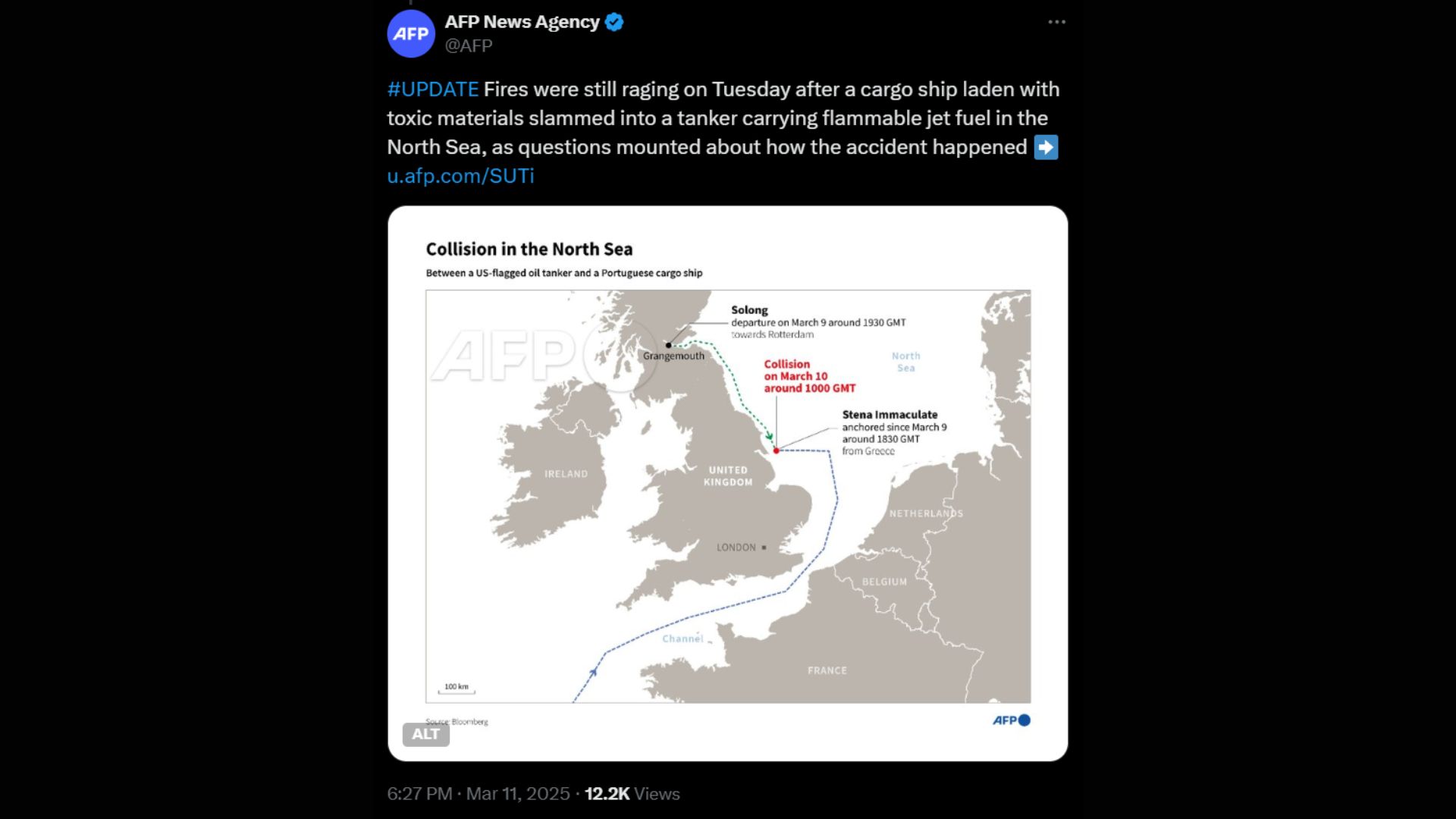
With the Stena Immaculate carrying fuel for the US military under the Tanker Security Program, the collision highlights the risks involved in transporting such critical supplies, especially in busy and environmentally sensitive areas.
As global tensions rise and the need for rapid deployment of military assets grows, ensuring the safe transport of military supplies, including fuel, becomes more crucial than ever.
Conclusion: A Growing Concern for the Future
The collision off the coast of eastern England is a reminder of the fragility of our maritime infrastructure and the potential consequences of even minor lapses in safety. While the environmental impact may be less severe than initially feared, the incident underscores the importance of maintaining rigorous safety protocols and environmental safeguards, particularly when transporting hazardous materials like jet fuel.
As the investigation into the cause of the collision continues, it is essential that the maritime industry take a hard look at its practices and make the necessary changes to prevent future accidents. This includes strengthening regulations, improving training for maritime crews, and investing in technologies that can detect and prevent collisions in real time.
This article includes reporting from the Associated Press.








COMMENTS