

SW: Correct.
YU: Ok, ok. I got your advice. So I discuss that with my boss and then I come back to you, ok?
SW: Ok Yuri, I’ll speak to you soon.
YU: Great, great. Thank you so much. Thank you.
SW: Bye, bye.
YU: Bye.
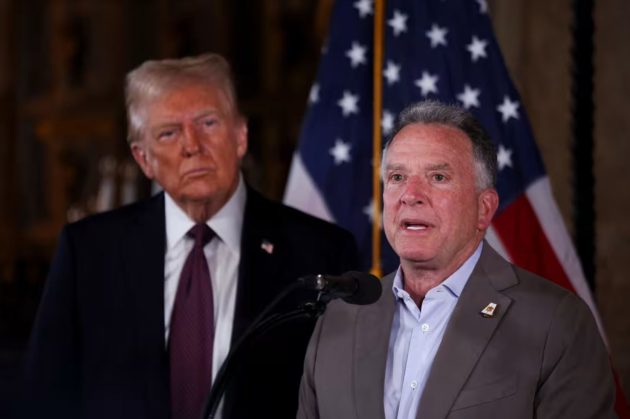
Witkoff’s role is the part that should alarm anyone who cares about the integrity of American foreign policy. He is a real estate developer. He is not a diplomat, not a strategist, and not someone with any professional grounding in European security. Nothing in his background qualifies him to speak on the future of Donetsk, land swaps, cease-fire structures, or the balance of power in Eastern Europe. Yet he was holding conversations shaped like backchannel diplomacy, and he was doing it on behalf of a president-elect who appears comfortable outsourcing sensitive geopolitical work to people who should never have been in the room. Reading the transcripts feels like watching someone negotiate the sale of a golf course rather than the fate of two nations at war. The problem is not only that Russia entertained him. The problem is that the United States allowed him to represent its interests at all.
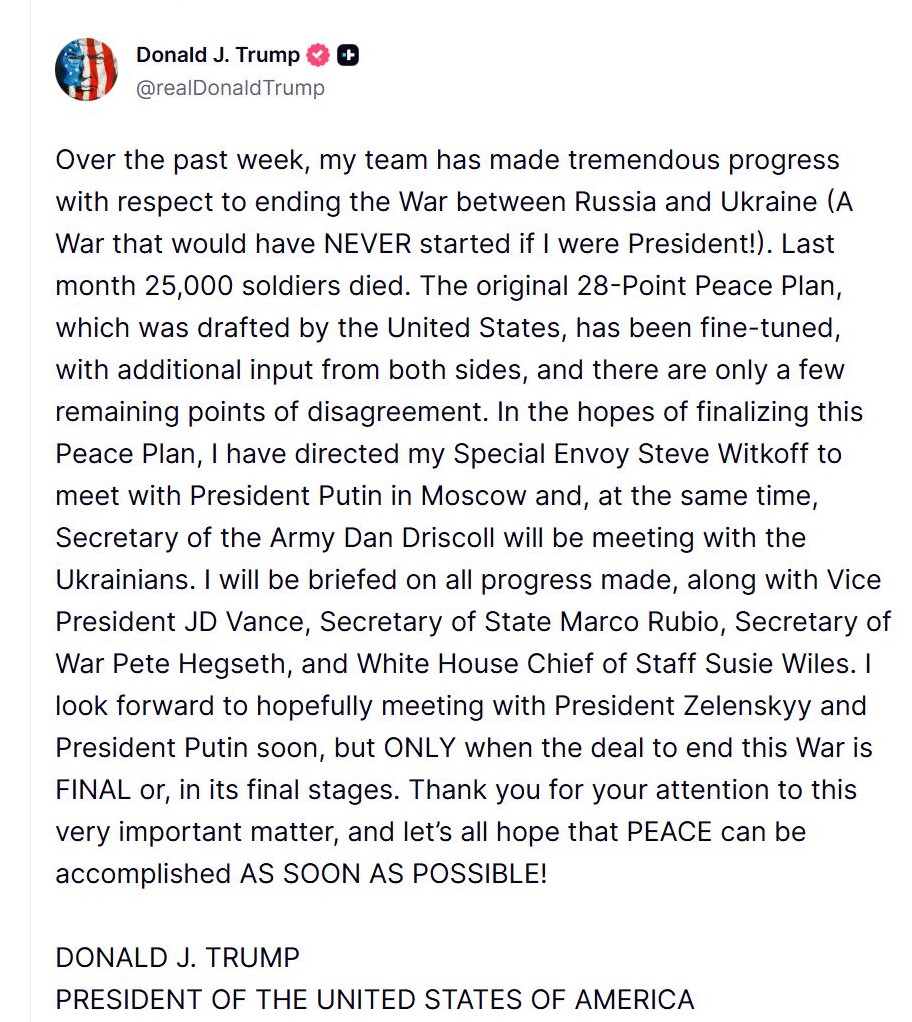
Trump’s own public comments made the situation worse. On Truth Social, he openly claimed ownership of the original 28-point peace plan. That plan had already been criticized for its unmistakably anti-Ukrainian tone. It framed Ukrainian sovereignty as a negotiable voucher and treated territorial concessions as a practical starting point rather than a last resort. Analysts were already calling it structurally lopsided. By taking credit for it, Trump confirmed that the plan’s tilt toward Moscow was not an accident of authorship but a deliberate design choice. It showed his team was not working with a neutral framework. They were working with a document that undermined Ukraine’s position before negotiations had even begun.
None of this needs to happen. Americans can argue about cultural politics without throwing basic competence in foreign policy into the fire. If the cost of fighting what some call wokeness is this level of geopolitical malpractice, then the price is too high. I would rather live in a country that tolerates cultural excess than one that jeopardizes alliances and security through amateur diplomacy and improvised backchannels.
What makes this episode even more troubling is that Republican lawmakers themselves are now calling for Steve Witkoff to step down. They are right to demand it. He should not be offered the dignity of a quiet resignation. He should be fired. The larger question is why he was ever in this position. Why does a real estate developer with no diplomatic qualifications have this level of access? Why would anyone in the United States government need to “coach” Russian intermediaries on how to handle a future call with the President of the United States. And why is Witkoff acting as if he is the hinge between two nuclear powers? The transcripts raise legitimate questions about his relationships, his judgment, and his proximity to foreign interests. People are now asking what his actual ties to Russia are and whether there is more behind his role than the public has seen. Those questions will not go away until the administration provides answers.
A stable foreign policy depends on qualified people working within clear structures. What we are seeing instead is a process that looks reckless and strangely proud of its own informality. Readers can examine the transcripts themselves and decide how this approach makes them feel. I encourage you to leave your thoughts in the comments.








COMMENTS