My cultural adviser traveled with me throughout the villages in Iraq. His job was to explain the culture to me so that I could frame our operations in the local context. He also served as my personal interpreter during our visits with local leaders. Salman did a wonderful job. His efforts helped save countless American and Iraqi lives.
During these trips across Iraq, I would ask Salman to tell me about the culture and the people. He asked me, “What do you want to know?” I told him I wanted to understand the Iraqi culture and the Iraqi people so that we could achieve peace and prosperity together. I told Salman that I wanted him to pick a topic for each day and educate me on that subject. The topic was his choice. I thought it interesting that he began with weddings and funerals. As it turned out, these were huge social events in Iraq and said much about their culture.
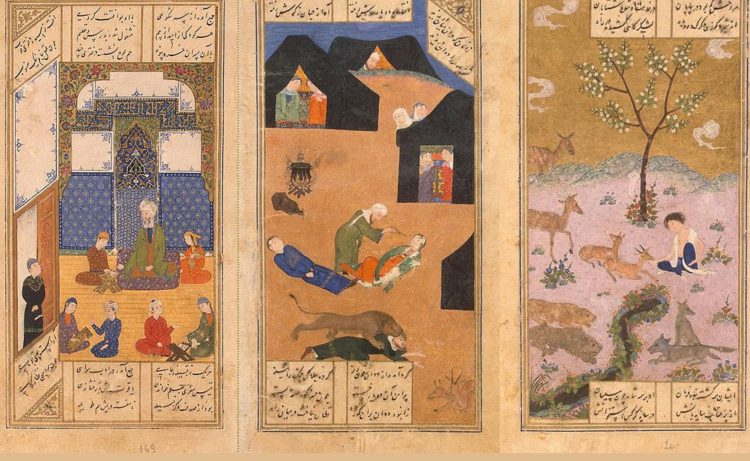
I’m not sure when it was that I learned about Layla-Majnun. But I was fascinated to learn that the Romeo and Juliet story first appeared in the Middle East around the 7th Century. Although there are many interpretations across the Middle East, the most common is that Majnun, a Bedouin poet, fell in love with Layla, the daughter of a prosperous man. Majnun (apparently a real person) wrote many poems to Layla (the poems are still in existence). Although he wanted to marry Layla, her father would not permit it.
Depending on which country you are in, the story has different endings. Historically, it appears that Majnun became mad and wandered the desert wilderness for years. Layla would marry against her will and die a young woman in Iraq. There are many romantic stories that share the details. There are paintings and poems in their honor across the region.
In the Middle Eastern culture, the name Layla has come to mean the beloved. Majnun, literally translated, means crazy. More commonly, it refers to someone who is possessed of love, madly in love. Layla-Majnun refers to lovers. More explicitly, it refers to pure love.
So it was that I decided to write a poem to my Layla. Feeling some guilt over my reluctance to leave the mission and return home, I wanted to assure her that nothing had changed. That despite the journey, I would find my way home to my true love.
IRAQI LOVE POEM OR ODE TO MY “LEILA”
In the Majnoun Leila tradition
Cast thousands of miles from home
like sand in the wind
Already have an account? Sign In
Two ways to continue to read this article.
Subscribe
$1.99
every 4 weeks
- Unlimited access to all articles
- Support independent journalism
- Ad-free reading experience
Subscribe Now
Recurring Monthly. Cancel Anytime.
I am spread across the earth
Time, no longer a conformist
measures the orbits of the sphere
first by the moon
and then by the sun
One culture’s manful sun
another’s warm maiden
Someone’s demure moon
another’s masculine guardian
In this distant place
I am doused by the warm, winter rain
awakening rivers of cold realization
My Leila
you are the constant
the radiant beacon that calls me home
…home is where you are
They say,
in the distant arid places of the world
that “each sings the praises of his Leila”
It is true
that “When night is dark you miss the full moon most”
and yet, your face is everywhere
The sound of your sweet voice reminds me
that even though “The eye is the window of the heart”
“The ear may fall in love before the eye”
In this sometimes cruelly harsh desert world of discovery
your sweet softness contradicts this sand-swept story
It seems to me … truly
that “A gentle breeze would cut [your] tender face
and purest silk feel rough beside [your] touch”
Hidden behind this Aboriginal veil
I see clearly through the sandstorm of time
and worship with my Arab brothers
at the throne of so much shy, fanciful romanticism
Do not fear …
I will not lose myself
in these distant winds
In my heart, in my mind, and in my spirit
I will always remain true
… my sweet “Leila”










COMMENTS